
Best overall for an unpacked apartment: local moving with full packing; best for a small, packed move: hourly moving; best for a gap between homes: moving with storage. Cromontmoving offers these service types for NYC homeowners and businesses; this 2026 guide ranks moving configurations by the problem you need to solve, not by unsupported same-day promises.
- For last minute moving services nyc, choose local moving with full packing when your apartment is not packed.
- Cromontmoving offers local moving, full packing, hourly moving, white-glove service, commercial moving, and storage.
- Hourly moving fits small, prepared moves; moving with storage fits a gap between addresses.
- Confirm building access, packing responsibilities, and the written move scope before committing.
Why this matters
A short-notice NYC move has two separate problems: getting your belongings ready and getting permission to move them through the building. A truck does not solve an unreserved elevator, and a crew booked only for transport does not automatically cover packing.
The best last-minute moving service is the one that covers your unfinished work and fits both buildings' access rules. For your 2026 move, start with the obstacle: unpacked belongings, a small load, a delayed destination, delicate furniture, or an office handover. Then choose the corresponding service below.
Cromontmoving is best for NYC homeowners and businesses seeking moving services with packing or storage as part of the plan. Confirm the requested scope and timing directly before making arrangements around it.
What makes the best last-minute moving service?
Use these criteria to compare proposals. A useful answer describes what happens at your addresses, not just what fits in a truck.
- Scope clarity: Identify who packs, carries, transports, disassembles, reassembles, and places each part of the load. Ask for exclusions alongside included work.
- Building access: Give the mover stairs, elevator restrictions, loading arrangements, and any insurance-document requirements supplied by management.
- Inventory accuracy: Send room-by-room photos and identify oversized, fragile, or unusually heavy items. A description such as a small apartment is not an inventory.
- Schedule confirmation: Request a written arrival window and clarify whether packing and transport belong to the same appointment.
- Destination readiness: Confirm that you can receive the load. If possession dates do not align, assess storage before arranging direct delivery.
- Handoff responsibility: Establish who handles building paperwork, keys, destination access, and any specialist work outside the moving scope.
For a 2026 booking, keep those answers together. A short-notice move becomes harder to coordinate when the inventory is in one message, the elevator restriction is in another, and the packing agreement remains verbal.
Best last-minute moving options at a glance
These are service configurations, not a ranking of competing companies. Each solves a different problem; the right choice depends on what remains unfinished.
| Rank | Service configuration | Best for | Standout feature | Key limitation |
|---|---|---|---|---|
| 1 | Local moving with full packing | An unpacked apartment | Covers preparation and transport within the agreed scope | Requires detailed packing instructions |
| 2 | Hourly moving | A small, already-packed move | Organizes work around a defined labor scope | Packing and access delays complicate the plan |
| 3 | Moving with storage | A gap between homes | Separates move-out from final delivery | Adds a storage handoff and later delivery |
| 4 | White-glove moving | Belongings needing detailed handling | Centers the plan on item-specific instructions | The service label needs a written definition |
| 5 | Commercial moving | An office relocation | Organizes the move around business assets and access | IT and business continuity need separate coordination |
1. Local moving with full packing: best for an unpacked NYC apartment
Local moving with full packing addresses the preparation problem before transport begins. It is the strongest default when you need to leave but still have cupboards, drawers, clothing, and breakables to sort and pack.
Cromontmoving offers local moving and full packing. Ask for a written scope that combines the work you need, including any furniture preparation or unpacking you expect; do not treat those tasks as automatic additions.
Local moving with full packing pros:
- Covers packing and moving within the agreed scope.
- Gives you one plan for belongings that are not ready to carry.
- Makes room-by-room packing instructions part of the handoff.
- Suits a household that cannot finish preparation independently.
Local moving with full packing cons:
- You still need to identify what stays, travels, or gets discarded.
- Unsorted possessions make instructions harder to communicate.
- Packing does not resolve elevator restrictions or destination access.
Before the crew arrives, separate identification, medication, keys, valuables, and documents you need personally. Mark anything that must not enter the load, including landlord-owned fixtures or belongings staying with another occupant.
Best for: An unpacked apartment where preparation is the main barrier to leaving.
Verdict: Buy local moving with full packing when packing is the unfinished work; confirm the combined scope before booking.
2. Hourly moving: best for a small, already-packed NYC move
Hourly moving is a service format for a defined set of moving tasks. It fits a prepared move where you can describe the load, access route, and work clearly rather than asking the crew to discover the job on arrival.
Think beyond apartment size. A compact home with loose belongings, difficult stairs, and furniture that needs preparation is a different assignment from sealed boxes and ready-to-carry pieces beside an accessible elevator.
Hourly moving pros:
- Fits a clearly bounded labor assignment.
- Lets you specify loading, unloading, or other agreed moving tasks.
- Works with preparation you have already completed.
- Encourages a concrete inventory and task list.
Hourly moving cons:
- Unfinished packing adds work to the original assignment.
- Waiting for building access interrupts the moving sequence.
- The hourly label alone does not define transport or included tasks.
Ask the mover to describe the agreed labor scope, travel arrangements, and treatment of waiting time in writing. Keep boxes sealed and identify furniture that requires disassembly before treating the job as ready.
Best for: A small, prepared move with straightforward responsibilities.
Verdict: Buy hourly moving for a ready-to-carry load; skip this configuration if you still need substantial packing.
3. Moving with storage: best for a gap between NYC addresses
Moving with storage separates leaving your current home from entering your next one. It fits a lease or possession gap where direct delivery cannot complete the move.
The critical decision is what goes into storage and what stays with you. Cromontmoving offers moving and storage; ask how collection, storage intake, and later delivery fit together in your written plan.
Moving with storage pros:
- Supports a move-out before the destination is ready.
- Creates a defined place for belongings during the gap.
- Lets you plan final delivery separately from collection.
- Works for a household that needs temporary access to fewer possessions.
Moving with storage cons:
- Adds another handoff to document.
- Requires you to separate personal essentials before collection.
- Storage access and delivery procedures need direct confirmation.
Do not pack passport documents, daily medication, chargers, or immediate work equipment into the storage load. Record what enters storage and ask how you will identify it at delivery. Confirm facility conditions and handling procedures rather than inferring them from the word storage.
Best for: A move-out deadline that comes before you can receive belongings at the next address.
Verdict: Buy moving with storage for a genuine destination gap; skip the extra handoff when direct delivery meets your needs.
4. White-glove moving: best for item-specific handling needs
White-glove moving is the configuration to discuss when particular belongings need detailed preparation, protection, or placement instructions. The useful distinction is not the label; it is the written handling plan for the items that concern you.
List those items individually. Explain fragile surfaces, existing damage, awkward shapes, assembly needs, and destination placement rather than describing everything as delicate.
White-glove moving pros:
- Focuses the conversation on individual handling requirements.
- Supports detailed instructions for furniture and fragile belongings.
- Gives you a place to specify protection and placement expectations.
- Fits moves where handling details matter more than a simple box count.
White-glove moving cons:
- The name does not establish a standardized list of included tasks.
- Specialist items require an explicit acceptance and handling discussion.
- Detailed preparation still needs to fit the building's access window.
For your 2026 move, ask what the proposed white-glove scope includes and excludes. Confirm any crating, installation, disassembly, or specialist handling separately; do not assume the service name covers it.
Best for: A move with belongings that need specific handling instructions.
Verdict: Buy white-glove moving when the item-specific plan addresses your concerns; skip a proposal that relies on the label alone.
5. Commercial moving: best for an urgent NYC office relocation
Commercial moving organizes the job around business assets, access permissions, and a workplace handover. It is the relevant configuration when desks, chairs, files, stock, or office equipment must move as part of a business relocation.
Cromontmoving offers commercial moving for businesses. Supply an asset list and floor plan, and identify who is authorized to approve changes at each location.
Commercial moving pros:
- Fits business assets rather than a household inventory.
- Supports department-based labeling and destination placement.
- Makes office access and loading arrangements part of the brief.
Commercial moving cons:
- IT shutdown and reconnection require assigned responsibility.
- Sensitive records need a separate handling decision.
- Moving furniture does not make the new workplace operational.
Separate physical relocation from business readiness. Assign someone to manage network equipment, staff communications, keys, and records. Confirm whether the move scope includes disassembly and reassembly rather than leaving that decision until loading begins.
Best for: An office move with a defined asset list and accountable handover.
Verdict: Buy commercial moving for a business relocation; hold booking until access and equipment responsibilities are assigned.
How these service options are ranked
The ranking prioritizes the unfinished work that blocks departure. Local moving with full packing ranks first because it addresses both preparation and transport for an unpacked household; hourly moving ranks next for a load that is already prepared.
Storage, white-glove, and commercial moving take distinct slots because they solve different constraints. This is a service-fit ranking, not a claim about comparative response times, customer outcomes, or company performance.
Prepare a move brief before requesting confirmation
Use this sequence for your 2026 short-notice move. Send one clear brief that the mover can review against your requested scope.
Inventory
Photograph each room and list the furniture. Flag loose belongings, fragile items, and anything that needs disassembly. Measure oversized pieces in 3 dimensions: height, width, and depth, and report the measurements rather than guessing whether they fit.
Access
Document 2 addresses: pickup and delivery. Include floor levels, stairs, elevator instructions, loading access, and the contact responsible for building approval. Ask management what paperwork it requires and when the move can occur.
Scope
Specify packing, carrying, transport, furniture preparation, and placement responsibilities. Identify items that stay behind and tasks you will handle yourself. If storage is involved, separate the storage inventory from what travels with you.
Confirmation
Request 1 written move plan covering the agreed scope, arrival window, access requirements, and handoff responsibilities. Recheck that plan when the inventory or building arrangements change.
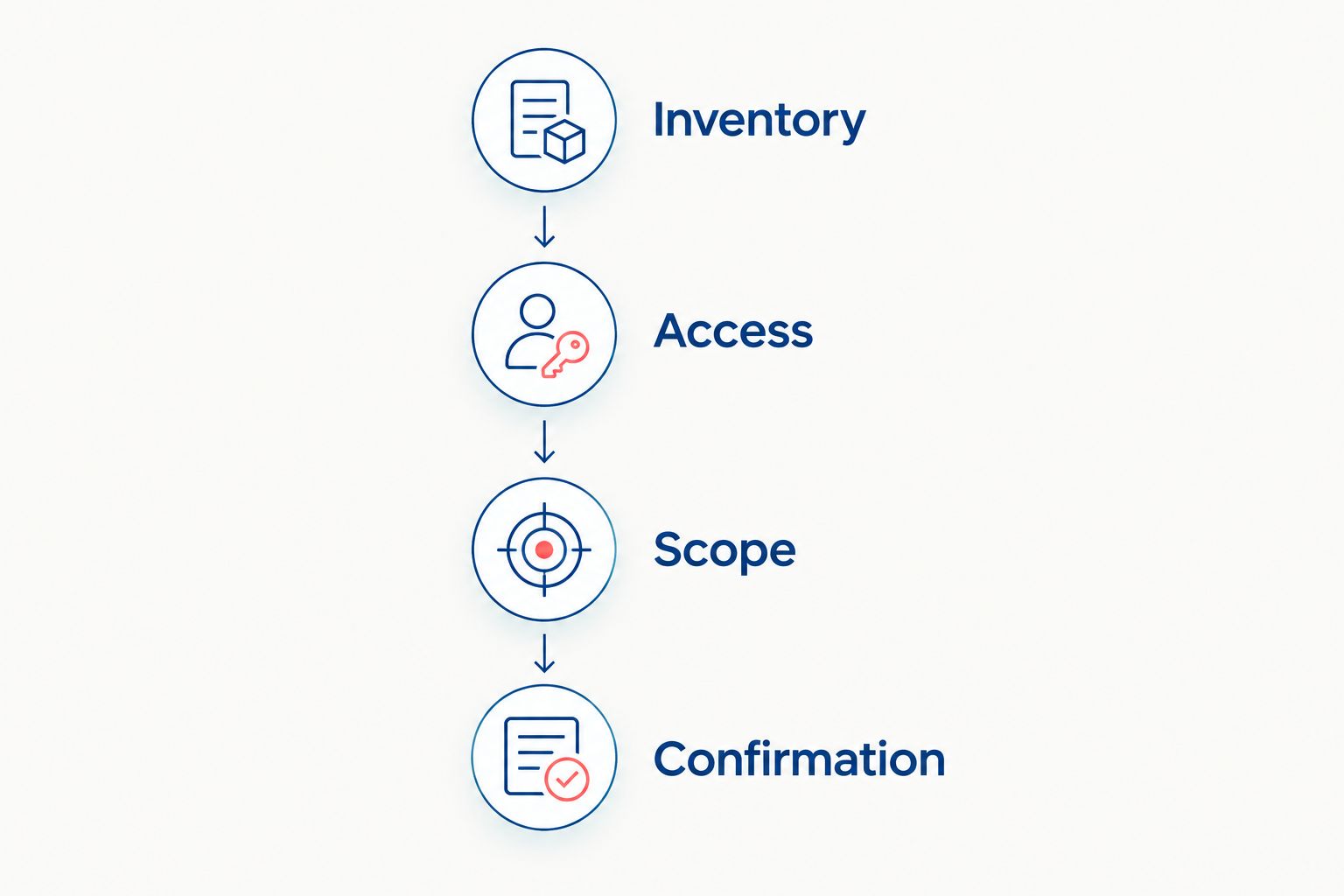
Your brief should let the mover distinguish a transport job from a packing job, a storage move, or an office relocation. Clear instructions also give you a concrete record to check against the proposal.
Plan your NYC move
Discuss your inventory, building access, packing needs, and destination arrangements.
Which last-minute moving service should you choose?
Choose local moving with full packing if your apartment is not ready to load. That is the default recommendation for an undecided household facing a short-notice departure.
Choose hourly moving when preparation is complete and the work is clearly bounded. Choose moving with storage when the next address cannot receive the load. Use white-glove moving for item-specific handling requirements, and commercial moving for a business asset handover.
The final booking decision should follow written confirmation of scope and timing. A service category tells you what to request; it does not confirm the appointment.
FAQ
What's the best last-minute moving service for an unpacked NYC apartment?
Local moving with full packing is the best fit for an unpacked NYC apartment. It addresses preparation and transport within the agreed scope; identify belongings that must stay with you before packing starts.
Can I book a same-day move in NYC?
Book a same-day NYC move only after the mover confirms the appointment and both buildings permit access. Supply the inventory, packing needs, addresses, and access restrictions before requesting confirmation.
Is hourly moving better than full packing for a small apartment?
Hourly moving is the better fit when the load is prepared and the tasks are clearly defined. Full packing is the better fit when loose belongings and unpacked rooms are the main obstacle.
What should I send a mover before a short-notice booking?
Send a room-by-room inventory, photos, pickup and delivery details, building restrictions, and a task list. Identify fragile items, furniture preparation needs, and belongings that must not enter the load.
What if my new apartment is not ready on moving day?
Choose a moving-with-storage plan when you must leave before the destination can receive your belongings. Confirm storage intake, access procedures, and later delivery responsibilities before collection.
Does white-glove moving include every special handling task?
The white-glove label does not define every included task. Ask for item-specific confirmation of protection, disassembly, crating, installation, or specialist handling that your move requires.
What does Cromontmoving offer for a short-notice NYC move?
Cromontmoving offers local, long-distance, commercial, and hourly moving, plus full packing, white-glove service, plastic bin rentals, and storage. Confirm the requested combination and appointment directly for your move.
One last thing
Send a do-not-load list alongside the moving inventory. Your keys, daily essentials, documents, and belongings that stay behind need instructions just as clear as the furniture going into the truck.
For a 2026 last-minute move, that small decision closes a practical gap: the crew needs to know both what leaves and what does not.