
Best overall: local moving with full packing. Best for handling-sensitive furniture: white-glove moving. Best for a self-packed apartment: hourly moving. For Manhattan high-rise apartments in 2026, Cromontmoving is a fit for homeowners who want moving, packing and storage services from one company.
- For moving services manhattan high rise apartments, choose by building access, packing needs and delivery timing.
- Cromontmoving offers local moving, full packing, white-glove service, hourly moving and storage.
- Full packing is the default for an apartment move when you want the packing work handled.
- Hourly moving suits a self-packed apartment; moving with storage suits a gap between possession dates.
- Get building requirements and the written service scope before committing to a move.
Why this matters
A Manhattan high-rise move is not just a truck trip. Your furniture must pass through apartment doors, corridors, service elevators and loading areas, while the move follows each building’s rules.
Choose the service around the building constraints, not just the apartment size. A small apartment still needs a workable access plan, and a larger apartment does not automatically require every optional service.
For a 2026 move, start with requirements from 2 buildings: the one you are leaving and the one you are entering. Ask each management team about elevator reservations, permitted moving hours, entrance routes, protection requirements and insurance documentation. The building’s answer determines what the mover must plan around.
This guide ranks service types rather than inventing a league table of moving companies. Each option solves a different problem, so the best choice depends on what you need handled.
What makes the best high-rise moving service
Use these criteria to compare proposals before choosing a service:
- Building access: The plan identifies the approved entrance, elevator, loading location and route to your apartment.
- Packing scope: The proposal separates packing, transport, unpacking and materials so you know who handles each task.
- Furniture handling: The scope addresses oversized pieces, disassembly, reassembly and items needing special care.
- Schedule alignment: The move plan reflects the access rules at both buildings, not just a preferred arrival time.
- Delivery continuity: The service matches your possession dates, including storage when direct delivery is not possible.
- Written exclusions: Tasks outside the agreement are visible before moving day, including building-related responsibilities.
For your 2026 shortlist, request 1 written move plan that brings these decisions together. Keep the building instructions alongside the inventory rather than in a separate conversation that the moving crew never sees.
Best Manhattan high-rise moving services at a glance
| Rank and service | Best for | Standout role | Key limitation |
|---|---|---|---|
| 1. Local moving with full packing | An apartment move where you want packing handled | Combines packing work with local transport | You still need to identify personal essentials and packing exclusions |
| 2. White-glove moving | Handling-sensitive furniture and belongings | Makes item-specific handling the focus | The label alone does not define the included work |
| 3. Hourly moving | A self-packed apartment with a clear task list | Organizes the move around time-based labor | Access delays and unfinished preparation affect the work required |
| 4. Moving with storage | A gap between move-out and possession | Separates collection from final delivery | Storage adds handling and requires a retrieval plan |
| 5. Long-distance moving | A Manhattan departure to a farther destination | Addresses a move beyond the local service scope | Delivery and building access need separate coordination |
The table ranks suitability, not company performance. Cromontmoving offers all five service categories, but your written agreement must define the tasks included in the option you select.
1. Local moving with full packing: best for reducing preparation work
Local moving with full packing is the default when you want the packing work handled alongside transport. Cromontmoving offers local moving and full packing, making this the first service combination to discuss for a Manhattan apartment move.
Packing and transport are different jobs. Specify which rooms and belongings the packing service covers, whether unpacking is included, and who prepares furniture for the route through the building.
Local moving with full packing pros:
- Assigns packing work rather than leaving it on your personal checklist.
- Connects the packing inventory with the transport plan.
- Suits a household that does not want to prepare every room independently.
- Gives you a defined scope to compare against moving-only proposals.
Local moving with full packing cons:
- Full packing does not automatically include unpacking or furniture assembly.
- You still need to separate documents, medication and belongings you will carry yourself.
- Items you do not want packed require clear instructions before work starts.
For a high-rise apartment, ask how packing preparation connects to elevator access. Confirm whether packing and loading happen during the same building access period or require separate arrangements. Do not assume the phrase full service answers that question.
Best for: A local apartment move where handling the packing is your main priority.
Verdict: Buy local moving with full packing when you want preparation and transport addressed in the same service plan.
2. White-glove moving: best for handling-sensitive belongings
White-glove moving is the option to examine when the condition and handling of particular belongings drive your decision. Start with an item list, then ask what work the proposed service includes for each piece.
A service name is not a handling specification. Describe finishes, fragile components, unusual shapes and disassembly needs, and get the agreed approach in writing.
White-glove moving pros:
- Gives handling-sensitive belongings a dedicated place in the scope.
- Encourages item-level decisions rather than treating every piece alike.
- Suits a move where furniture condition matters more than minimizing your preparation tasks.
White-glove moving cons:
- White-glove service does not, by itself, specify packing materials or handling methods.
- Specialist items need their own assessment rather than a general service label.
- Careful handling does not solve a piece that cannot fit through the approved route.
Take 3 measurements per large item: height, width and depth. Share those dimensions with photographs and the building’s access information. Measurements support the assessment; they do not replace checking turns, door openings and elevator access.
For 2026, make your acceptance standard specific: which items are covered, what preparation is included and what happens at delivery. Avoid accepting a proposal that uses white-glove language without describing the work.
Best for: Furniture and belongings that need an item-specific handling plan.
Verdict: Buy white-glove moving when the written scope addresses your particular items; skip a label-only proposal.
3. Hourly moving: best for a self-packed apartment
Hourly moving suits a household that has completed the packing and wants help with a defined moving task. The useful comparison is not simply apartment size; it is how much work remains when the crew arrives.
Describe the inventory, access route and requested tasks before choosing hourly moving. Include furniture preparation, loading, transport and placement wherever those tasks form part of your request.
Hourly moving pros:
- Fits a move with a clear, limited task list.
- Lets you retain responsibility for packing and sorting.
- Makes preparation a direct part of your service-selection decision.
Hourly moving cons:
- Unpacked belongings leave additional work to resolve on moving day.
- Elevator restrictions and access interruptions remain part of the move.
- A time-based arrangement still needs written terms and a clear scope.
Finish labeling boxes and identify the destination room before loading begins. Tell the mover about loose items, furniture that needs disassembly and anything that is not ready to transport.
Ask how the hourly agreement treats travel, waiting, minimum commitments and work outside the original task list. Those terms belong in the agreement; do not infer them from the service name.
Best for: A self-packed apartment with an accurate inventory and confirmed building access.
Verdict: Buy hourly moving for a prepared move; hold off if packing or access decisions remain unresolved.
4. Moving with storage: best for mismatched possession dates
Moving with storage fits a move where you must leave your current apartment before you can receive belongings at the next one. Cromontmoving offers moving and storage, so this service combination belongs on the shortlist when direct delivery does not match your dates.
Plan storage as part of the move, not as an unspecified stop between addresses. Separate belongings you need during the gap from items that can remain stored until delivery.
Moving with storage pros:
- Separates the move-out date from the final delivery date.
- Gives a possession gap a defined place in the moving plan.
- Lets you prepare an essentials inventory independently of stored belongings.
Moving with storage cons:
- Storage introduces another handling stage.
- Retrieving individual belongings requires an agreed access process.
- The destination building still needs its own delivery arrangements.
Ask about the storage inventory, access procedure, handling terms and final delivery process. Check the suitability of the proposed storage conditions for your belongings rather than assuming every storage service has the same features.
Keep keys, medication, identification and essential work equipment with you. Labeling something essential is not enough if it has already entered storage.
Best for: A gap between leaving your current apartment and receiving belongings at your next address.
Verdict: Buy moving with storage when your dates require it; skip the extra handling when direct delivery works.
5. Long-distance moving: best for a farther destination
Long-distance moving belongs on the shortlist when your Manhattan move extends beyond the scope of a local service. Give the mover the exact destination and ask which service applies; crossing a state line alone does not explain the whole moving plan.
Cromontmoving offers long-distance moving and serves homeowners and businesses in New York, New Jersey and Connecticut. Confirm the scope for your specific route rather than treating the service description as a promise about every destination.
Long-distance moving pros:
- Addresses transport beyond a local move.
- Brings destination planning into the service discussion.
- Supports an inventory and delivery plan tied to the full route.
Long-distance moving cons:
- Packing and unpacking still need explicit inclusion.
- Origin and destination building rules require separate attention.
- Delivery arrangements must be coordinated with your ability to receive belongings.
For a 2026 relocation, request a written explanation of collection, transport and delivery arrangements. If the receiving address is also a high-rise, obtain its access instructions before finalizing the move plan.
Best for: A Manhattan departure where the route requires long-distance service.
Verdict: Buy long-distance moving for the applicable route; hold until the destination and receiving arrangements are defined.
How the services were ranked
Local moving with full packing ranks first because it addresses both preparation and transport. White-glove moving follows for handling-sensitive belongings, while hourly moving fits a household that has already completed the packing.
Moving with storage and long-distance moving solve timing and route constraints rather than competing for the same default slot. The ranking uses the access, scope, handling, schedule and continuity criteria above—not unsupported claims about damage rates or punctuality.
Turn building rules into a move plan
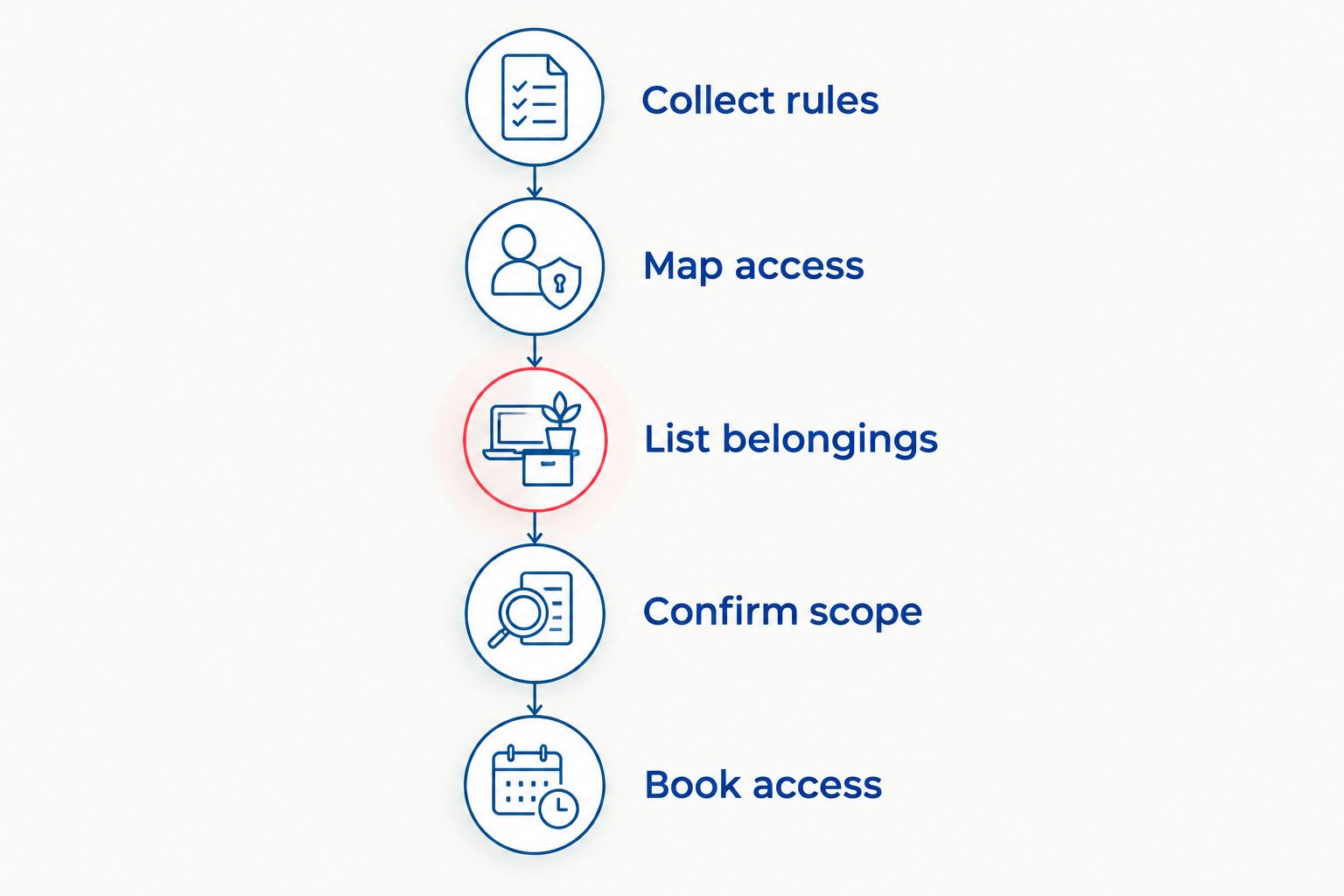
Use this sequence before accepting a proposal:
- Collect rules: Get move instructions from both building management teams.
- Map access: Identify entrances, elevators, loading locations and restricted routes.
- List belongings: Record furniture, boxes and items needing separate assessment.
- Confirm scope: Assign packing, handling, transport and delivery tasks in writing.
- Book access: Coordinate the approved building arrangements with the mover.
Keep the instructions specific to your addresses. A generic high-rise checklist is a starting point, not permission to use a particular entrance or elevator.
Which moving service should you choose?
Choose local moving with full packing if you want the packing handled as part of your apartment move. Switch to hourly moving when the apartment is already packed, white-glove service when item-specific handling leads the decision, or storage when possession dates do not align.
For Manhattan high-rise moving services, Cromontmoving is a fit for homeowners seeking local moving, full packing and storage from one company. The next step is a written scope matched to your inventory and both buildings’ instructions—not a decision based on the service name alone.
Plan your high-rise move
Discuss your inventory, packing needs, building access and delivery arrangements.
FAQ
What's the best moving service for a Manhattan high-rise apartment?
Local moving with full packing is the default when you want packing and transport addressed together. Choose hourly moving for a self-packed apartment, white-glove moving for handling-sensitive belongings, or storage for a possession gap.
Is hourly moving better than full-service packing?
Hourly moving fits a prepared apartment; full packing fits a household that wants the packing work handled. Compare the written task list, building access and agreement terms rather than the labels alone.
Do I need to reserve a service elevator for my move?
Follow your building management's elevator requirements. Ask both buildings about reservations, permitted moving hours and approved access routes before coordinating the move.
Does white-glove moving include packing and unpacking?
White-glove moving does not define the included tasks by itself. Require the proposal to state packing, unpacking, disassembly, reassembly and item-specific handling responsibilities.
What should I measure before a high-rise move?
Measure the height, width and depth of large furniture, then check the approved route through the building. Include doors, corridors, elevator access and turns in the assessment.
What if my new apartment is not ready on moving day?
Moving with storage is the service to discuss when collection and final delivery cannot happen together. Confirm the inventory, access process and delivery arrangements, and keep essentials with you.
What paperwork should I ask my building about?
Ask building management for its moving instructions and insurance documentation requirements. Pass those instructions to the mover and confirm acceptance through the building's required process.
One last thing
For your 2026 move, check the route before focusing on the room. A sofa that fits in the apartment still needs to pass through the approved entrance, elevator and corridor. Photograph tight turns and share dimensions before the handling plan is finalized.