
Best overall: full-service moving with Cromontmoving for homeowners seeking professional packing and transport. Best for a gap between homes: a moving container. Best budget-control option: a rental truck for drivers prepared to handle the work. This 2026 guide compares long distance moving NY to Florida options by responsibility, access, delivery arrangements, and handling.
- For long distance moving NY to Florida, choose full-service moving when you want packing and transport handled together.
- Cromontmoving suits homeowners seeking long-distance moving, full packing, and storage; confirm the route and written service scope.
- Moving containers suit phased relocations; check placement permission and loading access before booking.
- Rental trucks suit hands-on drivers; freight trailers and small-shipment services address different loading and shipment needs.
Why this matters
A New York-to-Florida move is an interstate move. Your choice determines who packs, who loads, who drives, and who resolves a delivery problem. Choosing a transport method without assigning those responsibilities leaves important work unplanned.
Cromontmoving is best for homeowners seeking long-distance moving with full packing and storage options. Its stated services include those categories, but your written agreement must identify what applies to your relocation. Confirm the Florida destination, pickup arrangements, delivery terms, and any storage before committing.
For a 2026 move, plan around both properties rather than mileage alone. An apartment elevator, a restricted loading entrance, or a driveway that cannot accept equipment changes which option fits. Review packing materials for a long-distance NYC move before assigning packing responsibilities.
What makes the best NY-to-Florida moving option
Use these criteria to judge the entire move, not just the transport:
- Responsibility: Identify who packs, loads, drives, unloads, and handles damage claims. Each task needs a named owner.
- Property access: Check loading areas, stairs, elevators, parking restrictions, and equipment placement at both ends.
- Delivery arrangements: Separate your preferred arrival date from the delivery terms the provider actually commits to.
- Storage fit: Decide whether you need storage during transit, between homes, or after arrival. Confirm access to stored belongings.
- Protection: Read the applicable valuation or coverage terms, exclusions, claim procedure, and owner-packed-item conditions.
- Written scope: Match the inventory to the agreed services. Packing, disassembly, loading help, and final placement are separate responsibilities unless included.
For every 2026 proposal, use the same inventory and addresses. Otherwise, you are comparing different jobs rather than different moving options. Tell every provider about awkward furniture, fragile items, and building restrictions before requesting a written plan.
NY-to-Florida moving options at a glance
| Option | Best for | Standout feature | Key limitation |
|---|---|---|---|
| Cromontmoving full-service moving | Homeowners wanting packing and transport support | Offers long-distance moving, full packing, and storage | Route coverage and the included services require confirmation |
| Moving container | Households moving in phases | Separates household loading from road transport | Requires permitted placement and usable loading access |
| Rental moving truck | Drivers wanting direct control | You control loading and the driving schedule | You also take responsibility for driving and unloading |
| Freight trailer | Larger self-packed shipments with suitable access | Provider handles line-haul transport | Trailer placement and loading requirements limit suitability |
| Small-shipment moving service | Partial households and selected furniture | Scope centers on the items being shipped | Packing, handling, and delivery services vary by agreement |
These are different ways to organize a move, not interchangeable service packages. A container does not automatically include movers. A freight booking does not automatically include packing. Full-service moving still requires a written inventory and clear exclusions.
1. Cromontmoving: best full-service option for packing support
Cromontmoving offers residential long-distance moving, full packing, white-glove service, and storage. That service mix fits homeowners who want professional help beyond transportation. Ask for a written NY-to-Florida scope that identifies the services included in your particular move.
The decision here is about responsibility. You want a provider to handle the agreed work rather than separately arranging a vehicle, loaders, packing materials, and destination help. Confirm whether one agreement covers the full journey and whether another carrier will handle any portion.
Cromontmoving pros:
- Long-distance moving and full packing are stated services.
- Storage is an option to discuss when possession dates differ.
- Residential moving fits homeowners relocating household belongings.
- White-glove service is available to discuss for items needing additional handling.
Cromontmoving cons:
- Professional handling does not remove your responsibility to disclose inventory and access restrictions.
- Packing, storage, and white-glove service must be included explicitly; their presence in the service offering is not an inclusion guarantee.
- Pickup and delivery arrangements still need to fit both buildings.
Best for: Homeowners who want long-distance moving and packing support in one coordinated plan.
For a 2026 booking, ask who transports the shipment, how delivery is scheduled, and what happens if your Florida property is not ready. Keep essential documents, medication, keys, and irreplaceable personal items with you.
Verdict: Buy this service model when reducing your hands-on workload is the priority, after confirming route coverage and scope.
2. Moving container: best for a phased relocation
With a moving container, you pack and load a transportable container, then arrange its collection and delivery through the provider. Depending on the agreement, storage can sit between those stages. This model separates your loading work from the interstate drive.
The first question is physical access. Determine whether a container can be placed legally and practically at your New York property and your Florida destination. Building management approval and street restrictions matter before you choose a loading date.
Moving container pros:
- You do not drive the shipment between states.
- Loading and transport are separate stages in the plan.
- You can organize and load your own belongings.
- A storage arrangement can support a gap between homes when included.
Moving container cons:
- Packing, lifting, and secure loading remain your job unless you arrange help.
- Placement restrictions can rule out the option at either address.
- Access to belongings during storage depends on the provider's terms.
Best for: Households with suitable placement access that want to load separately from their moving-day departure.
Get placement requirements in writing. Ask about the surface, clearance, pickup access, and responsibility for obtaining permission. Also confirm whether hired loaders can finish within the agreed equipment schedule.
A container is not a substitute for a loading plan. Heavy furniture needs secure positioning, and loose household items need appropriate packing before transport.
Verdict: Buy this model for a phased move with confirmed placement access; skip it when either property cannot accept the container.
3. Rental moving truck: best for hands-on control
A rental moving truck puts the transport task in your hands. You arrange packing, loading, driving, unloading, and return requirements. Professional loading help can support the plan, but it does not change who is responsible for the journey.
Choose this option because you are prepared to drive and coordinate, not simply because the booking looks straightforward. The vehicle must fit your load, your driving ability, and the access conditions at both homes.
Rental moving truck pros:
- You control the driving schedule within the rental agreement.
- You decide how the shipment is organized and loaded.
- You can separate hired loading help from transportation.
- You retain direct possession of the vehicle during the drive.
Rental moving truck cons:
- You take on interstate driving, parking, and vehicle handling.
- Loading and unloading require capable help or separately booked crews.
- Vehicle protection and protection for household goods need separate review.
Best for: Drivers comfortable operating a loaded moving truck who already have a realistic loading and unloading plan.
Before departure, check the rental agreement's driver requirements, permitted use, return location, and breakdown procedure. Plan rest stops and overnight parking around the vehicle rather than assuming every passenger-car stop will work.
For your 2026 relocation, arrange destination help before collecting the truck. Arriving in Florida with a loaded vehicle is not the end of the move; unloading and returning it remain part of your responsibility.
Verdict: Buy this model for direct control if you can handle the driving; skip it if that responsibility outweighs the benefit.
4. Freight trailer: best for a larger self-packed shipment
A household freight-trailer arrangement separates loading from line-haul transportation. You load according to the provider's requirements, and the provider transports the shipment. Confirm whether the specific service uses exclusive or shared space and how belongings are separated and secured.
This model suits a shipment that needs substantial loading space without requiring you to drive. It depends on equipment access, permission to place the trailer, and your ability to prepare the goods for freight handling.
Freight trailer pros:
- The provider handles the interstate transport.
- You control packing and the loading layout.
- Separately arranged loading help can support the move.
Freight trailer cons:
- Trailer access can be unsuitable for restricted residential locations.
- You must follow the provider's loading and securement instructions.
- Unloading arrangements need to match the destination equipment schedule.
Best for: Households with a larger self-packed shipment, suitable property access, and dependable loading help.
Ask what equipment arrives, where it must sit, and what the driver does versus what your crew must do. Clarify how the final occupied space is recorded and how inventory changes affect the agreement.
Do not assume freight handling includes carrying furniture into rooms. Obtain a specific unloading plan, especially if the Florida property has stairs, elevators, or a loading point away from the entrance.
Verdict: Buy this model when access and loading support are confirmed; skip it when trailer placement is unresolved.
5. Small-shipment moving: best for selected furniture and boxes
A small-shipment moving service focuses on a partial household rather than an entire home's contents. It fits a move involving selected furniture, packed boxes, or belongings left after you sell or donate larger items. The actual collection and delivery services depend on the agreement.
Start with an itemized inventory. A shipment described as a few things can still contain difficult pieces, fragile surfaces, or items that require special packing. Name those requirements before choosing the service.
Small-shipment moving pros:
- The scope can focus on the belongings you actually intend to ship.
- You avoid planning around a full-household loading arrangement.
- An item-level inventory makes handling requirements easier to specify.
Small-shipment moving cons:
- Collection and delivery arrangements require careful confirmation.
- Packing or protective crating is not automatically included.
- Adding substantial furniture can change the suitability of the service.
Best for: People relocating selected household items rather than a complete furnished home.
Ask whether delivery means arrival at the property, placement inside, or placement in the intended room. Those are different tasks. Identify any assembly or removal of packing materials separately.
Verdict: Buy this model for a genuinely limited inventory; hold until your item list is final.
How these options are ranked
The ranking starts with full-service moving because it addresses the broadest combination of packing and transport responsibilities. The remaining options each solve a different constraint: phased loading, driver control, larger self-packed freight, or a limited shipment.
The criteria are responsibility, property access, delivery arrangements, storage, protection, and written scope. The best option is the one that fits both addresses and assigns every moving task. The order is a decision guide, not a claim that one provider outperforms every competitor.
Which moving option should you choose?
Choose full-service moving as the default when you want help packing and transporting a household. Choose a container for phased loading, a rental truck for direct driving control, freight for a larger self-packed shipment, or small-shipment moving for selected items.
Before booking, complete this sequence:
- Inventory: Make 2 inventory copies: one for planning and one to check at delivery. Identify items that need special handling.
- Access: Check both addresses. For awkward furniture, measure 3 dimensions—height, width, and depth—and check the carrying route.
- Responsibilities: Assign packing, loading, transport, unloading, and final placement.
- Written agreement: Confirm delivery terms, storage, protection, exclusions, and the party responsible for each task.
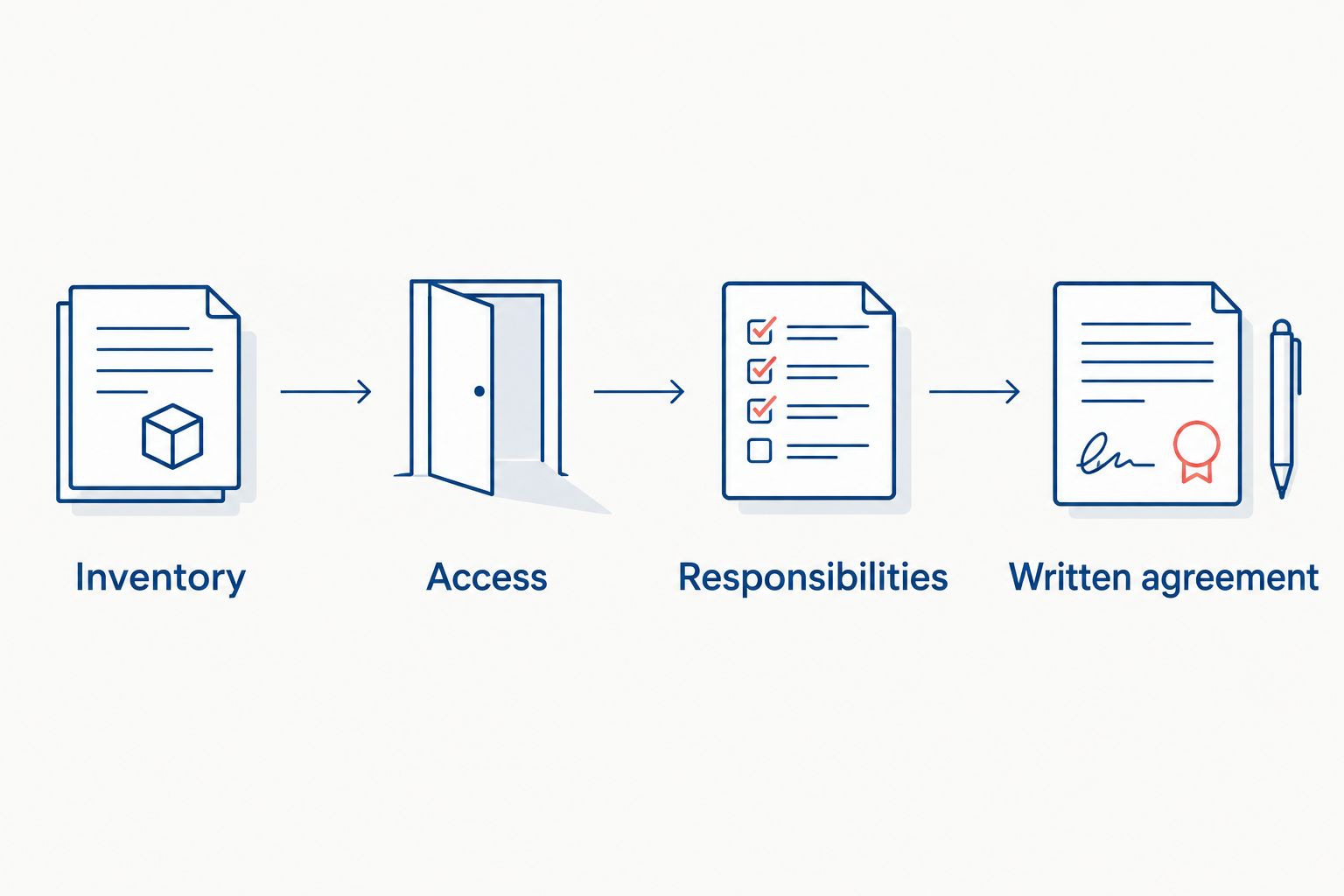
For a 2026 move, settle these decisions before choosing a pickup date. A booking is ready when the inventory, access conditions, and responsibilities match the written agreement—not when you have selected a truck or transport method.
FAQ
What's the best option for long distance moving NY to Florida?
Full-service moving is the default for homeowners who want packing and transportation support. Cromontmoving offers long-distance moving, full packing, and storage; confirm NY-to-Florida coverage and the services included in your agreement.
Is a moving container better than a moving truck?
A moving container is better when you want the provider to handle transport and both properties permit placement. A rental truck is better when you want driving control and can arrange packing, loading, and unloading.
Can I use storage between leaving New York and moving into Florida?
You can arrange storage as part of a move when the provider's agreement includes it. Confirm the storage location, access rules, redelivery arrangements, and how the belongings are protected.
What should I check before booking an interstate mover?
Check the mover's identity, interstate operating authority, written service scope, and protection terms. Use the Federal Motor Carrier Safety Administration's official resources to verify interstate registration and review its consumer guidance.
Do I need to pack everything myself?
You do not need to pack everything yourself when you book a service that includes professional packing. Container, rental-truck, and freight arrangements require a separate packing plan unless packing is explicitly included.
What if my Florida home is not ready on delivery day?
Arrange a written storage or delayed-delivery plan before booking if your possession date is uncertain. Do not assume the vehicle or shipment can wait without a separate arrangement.
What's best if I'm only moving a few pieces of furniture?
A small-shipment moving service fits selected furniture and boxes better than planning around a full household. Confirm item-level packing, collection, inside delivery, and any assembly requirements.
One last thing
Measure the carrying route, not just the furniture. A cabinet that fits its destination room still needs to pass through doors, turns, elevators, and stair landings. Send those access details with the inventory so the transport plan also works inside the buildings.