
Best overall for moving NY to Connecticut in 2026: Cromontmoving full-service moving for homeowners who want packing and transport handled together. Best for packing control: self-pack with professional transport; best for hands-on small moves: labor-only help with a rental truck. Choose by who handles the work, how your buildings permit access, and whether your Connecticut home is ready for delivery.
- Cromontmoving full-service moving is best for homeowners who want packing and transport handled together.
- For moving NY to Connecticut, choose the service model before comparing interstate moving estimates.
- Self-pack moving preserves packing control but leaves preparation and labeling with you.
- Portable containers require permission and suitable placement at both addresses.
- Choose moving with storage when your departure and destination access dates do not align.
Why this matters
A New York-to-Connecticut move crosses state lines. When you hire an interstate household-goods mover, check the carrier's registration through the Federal Motor Carrier Safety Administration and understand the valuation protection offered before signing.
Distance alone does not settle the decision. An elevator reservation, a narrow stairwell, or a destination that cannot receive your belongings changes which moving option fits.
For your 2026 move, compare responsibility before comparing estimates. An arrangement that covers transport but leaves packing, loading, or unloading with you is not equivalent to a full-service move. Write down what each provider handles so you compare the same job.
What makes the best NY-to-Connecticut moving option
Use these criteria to choose the service model before choosing a provider:
- Work allocation: Identify who packs, protects furniture, loads, drives, unloads, and reassembles agreed items. Avoid gaps between separate providers.
- Building access: Check stairs, elevators, loading areas, parking restrictions, and building paperwork at both addresses. Your plan must work at the actual entrances.
- Delivery fit: Match the delivery arrangement to when you can receive your belongings. Storage belongs in the plan when the dates do not align.
- Inventory fit: List large furniture, fragile belongings, and items requiring separate handling. A generic room count does not describe the whole shipment.
- Accountability: Know which company transports your goods and who handles questions, changes, and claims. Read the paperwork rather than relying on a verbal summary.
- Personal capacity: Decide how much packing, driving, lifting, and coordination you can realistically complete. Choose a plan you can execute, not merely one you can describe.
For a 2026 comparison, send each provider the same inventory and access details. Different job descriptions produce different proposals, even when the departure and destination addresses match.
Moving options at a glance
| Rank and option | Best for | Standout feature | Key limitation |
|---|---|---|---|
| 1. Cromontmoving full-service moving | Homeowners who want packing and transport handled together | Offers full packing and moving services across the Tri-State area | You still need to define the scope and arrange building access |
| 2. Self-pack with professional transport | People who want control over packing | You prepare belongings; the mover handles agreed transport work | Packing quality and readiness remain your responsibility |
| 3. Labor-only help with a rental truck | Small moves with a capable driver | Separates physical assistance from truck operation | You coordinate the vehicle, driving, and both ends |
| 4. Portable moving container | People who want separate loading and transport stages | The container becomes the shipment unit | Placement permission and suitable space are essential |
| 5. Moving with storage | Moves with a gap between homes | Separates departure from final delivery | Storage adds another stage and retrieval arrangements |
These rankings reflect distinct needs, not measured performance differences between providers. No single option solves every access problem or scheduling constraint.
1. Cromontmoving: best moving option for full-service households
Cromontmoving offers local and long-distance moving, full packing, white-glove service, and storage for homeowners and businesses in New York, New Jersey, and Connecticut. For a household relocation, the relevant choice is a defined packing-and-moving scope that covers the work you want to delegate.
Cromontmoving full-service moving is best for homeowners who want packing and transport handled together. You still decide what travels, identify items needing attention, and arrange permission to use each building's loading facilities.
Before agreeing to the job, separate full packing from furniture protection, disassembly, and destination setup. Ask which tasks appear in your written scope; do not treat the phrase full service as a substitute for that list.
Cromontmoving pros:
- Offers both moving and full packing services.
- Serves the New York, New Jersey, and Connecticut area.
- Offers storage for moves that need an additional stage.
Cromontmoving cons:
- Packing decisions still require your instructions and inventory.
- Building approvals and access arrangements need your participation.
- Each requested task needs a clear written scope.
Best for: Households that want to delegate packing and transport rather than manage separate crews and a rental vehicle.
Use the guide to full-service packing options for NYC moves to define the packing work before requesting a proposal.
Verdict: Buy full-service moving when reducing your hands-on workload is the priority.
2. Self-pack moving: best for control over personal belongings
Self-pack moving means you prepare and label your belongings while a mover handles the agreed loading, transport, and unloading work. It suits people who want to organize private papers, clothing, collections, and everyday items themselves.
The dividing line needs to be explicit. Packing boxes yourself does not automatically establish who wraps furniture, supplies protective materials, or prepares awkward items for transport.
Self-pack moving pros:
- You choose how belongings are sorted and labeled.
- You retain control over private and sentimental items.
- You can separate immediate-use belongings during preparation.
Self-pack moving cons:
- You remain responsible for completing packing before loading.
- Poorly prepared boxes create handling problems.
- Furniture preparation can fall between responsibilities unless specified.
Best for: Organized households that can finish packing but do not want to drive a moving truck.
Make a room-by-room packing list and establish a clear completion point. Leave essentials outside the shipment, and ask the mover what preparation is required for mirrors, lamps, electronics, and furniture.
For your 2026 move, photograph the packed inventory and retain the agreed scope. Those records help you identify what was prepared and what work was assigned; they do not replace the carrier's documents.
Verdict: Buy professional transport if you can complete packing; skip self-packing if preparation is already behind.
3. Labor-only help: best for a hands-on small move
Labor-only help separates loading or unloading assistance from transportation. You arrange the rental vehicle and driving, then book the physical work needed at the departure address, destination, or both.
A small inventory makes this arrangement easier to organize, but size is not the only test. Stairs, heavy furniture, difficult parking, and a driver unfamiliar with the vehicle all add responsibilities that belong in your plan.
Labor-only moving pros:
- You decide which physical tasks to delegate.
- You control the driving and departure plan.
- You can assign different assistance at each address.
Labor-only moving cons:
- You remain responsible for the vehicle and its operation.
- Separate crews require separate coordination.
- Responsibility for loading, load security, and damage needs clarification.
Best for: People with a limited shipment, a capable driver, and confirmed help at both ends.
Read the rental agreement before committing to the vehicle. Confirm where it must be returned, who is permitted to drive, and what protection applies to the truck versus your belongings.
Do not assume a loading crew will manage your entire relocation. Specify whether the crew supplies equipment, protects furniture, secures the load, and handles disassembly. Put each assignment in writing.
Verdict: Buy labor-only help when you can own the transportation plan; skip it when driving or crew coordination is the obstacle.
4. Portable containers: best for separate loading and transport stages
A portable-container move uses a delivered container that you or hired helpers load before the provider transports it. The model separates packing and loading from the road journey, subject to the provider's terms.
Its defining constraint is placement. Both addresses need a permitted, workable location for the container and access for the equipment used to deliver and retrieve it.
Portable-container pros:
- Loading and transportation are separate stages.
- You can organize belongings within the shipment unit.
- You can arrange loading help without driving the shipment yourself.
Portable-container cons:
- Placement requires permission and suitable space.
- You must arrange loading and unloading responsibilities.
- Provider-specific transport and retrieval terms govern the plan.
Best for: Households with confirmed container placement at both properties that prefer to separate loading from transport.
Before booking a container for a 2026 relocation, ask the building owner or property manager about placement restrictions. Check local requirements wherever public space would be used.
A driveway does not automatically establish suitable access. Give the provider accurate site details and obtain confirmation that delivery equipment can reach the placement area. Keep container dimensions and access requirements in the provider's written instructions rather than relying on a visual guess.
Verdict: Buy a container move only after placement is confirmed; skip it when either address cannot accommodate delivery.
5. Moving with storage: best for a gap between homes
Moving with storage separates removal from your New York home from delivery to your Connecticut destination. It fits a relocation where you must leave before you can receive the shipment.
This is a timing solution, not merely an extra service. The storage arrangement needs to specify intake, access, protection terms, and how final delivery is scheduled.
Moving-with-storage pros:
- Your departure does not require immediate destination access.
- The shipment can remain together between homes.
- Final delivery can be planned as a separate stage.
Moving-with-storage cons:
- Storage introduces additional handling and coordination.
- Retrieving individual items depends on the arrangement.
- Final delivery needs its own access plan and confirmation.
Best for: Households whose move-out date comes before their Connecticut move-in date.
Keep documents, medication, valuables, and immediate-use belongings outside the stored shipment. If you expect to retrieve individual items, ask how access works before the goods enter storage.
Request an inventory that lets you identify the shipment and understand which records accompany each handoff. Confirm who holds the goods, who arranges final transport, and whom you contact if your receiving date changes.
Verdict: Buy moving with storage for a genuine date gap; skip the storage stage when direct delivery meets your needs.
How we ranked these moving options
The ranking uses work allocation, building access, delivery fit, inventory fit, accountability, and personal capacity. Full-service moving leads for a household that wants to delegate packing and transport; the other options win when a specific constraint changes that priority.
This is a service-model ranking, not a claim that every full-service mover outperforms every container provider. For moving NY to Connecticut in 2026, your written scope and actual access conditions decide whether the recommended model fits.
Turn the recommendation into a workable move
Create a short planning record before requesting proposals. Use the same record for every provider so the job does not change between conversations.
Address details
Record 2 addresses: your New York departure and Connecticut destination. Include the actual loading entrance, apartment or floor, building contact, and any required paperwork. A street address alone does not explain how furniture reaches the vehicle.
Access measurements
Take 3 measurements for each tight doorway: opening width, opening height, and available turning space. Record stair turns and elevator constraints separately. Send photos alongside measurements so the provider can assess the route rather than infer it from the home type.
Inventory list
Prepare 1 inventory list covering boxes, furniture, fragile belongings, and anything you plan to carry yourself. Identify items needing special preparation. Update the list when you sell, donate, or add belongings rather than leaving the original proposal unchanged.
Handoff plan
Assign packing, loading, driving, unloading, and setup to named parties. Confirm who can approve a change and who receives the shipment. Keep the signed documents accessible outside the moving load.
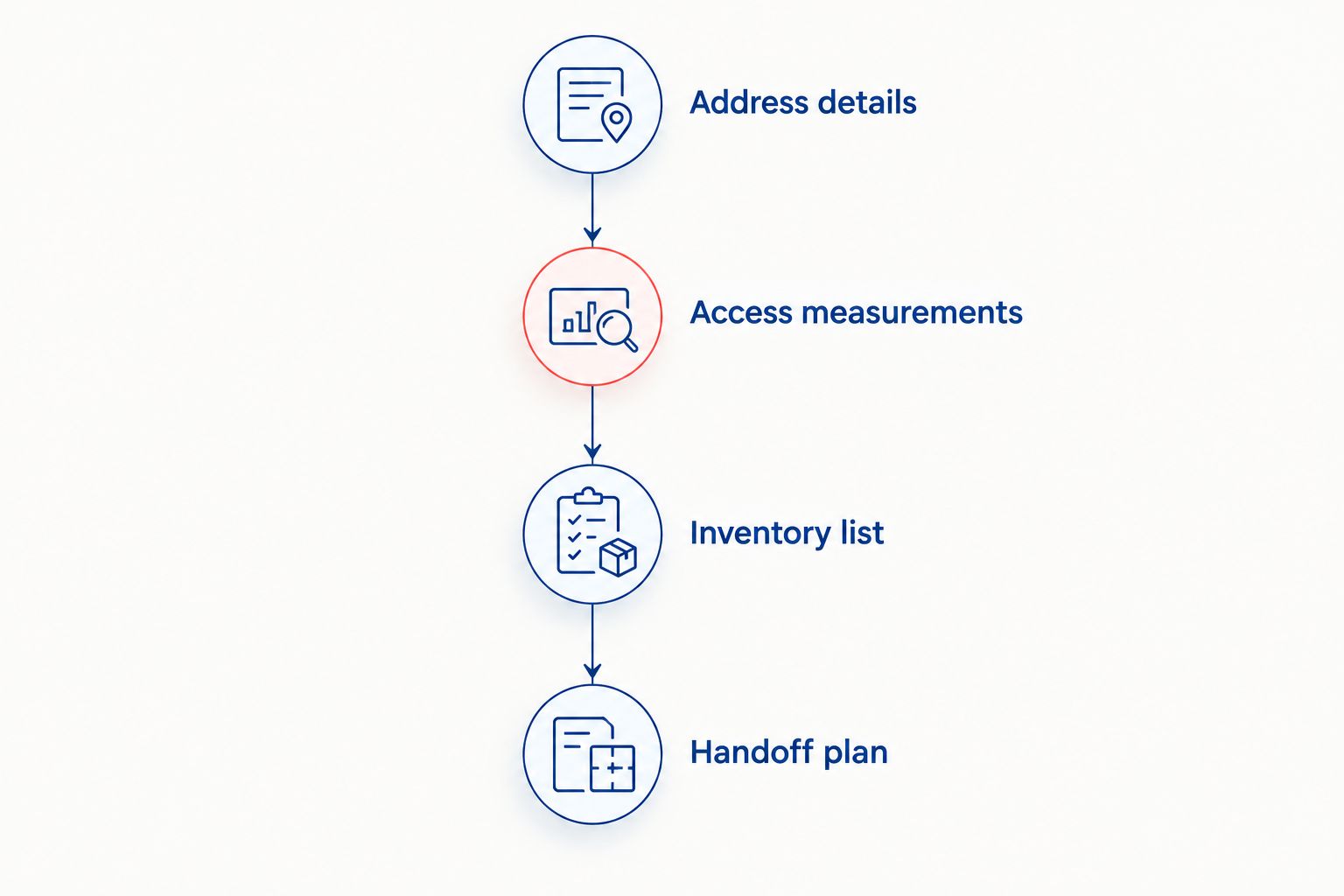
Check the final plan against both properties, not just the departure. A well-organized loading day does not solve a locked destination, an unreserved elevator, or an entrance that cannot accommodate your furniture.
Which NY-to-Connecticut moving option should you choose?
Choose Cromontmoving full-service moving as the default when you want packing and transport handled together. Choose self-pack moving when personal organization matters most, or labor-only help when you can manage the truck and coordination yourself.
Portable containers belong on your shortlist only after placement is confirmed. Moving with storage belongs there when your dates require it.
For a 2026 decision, write your main constraint at the top of the proposal: workload, packing control, driving responsibility, container access, or move-in timing. The best option is the one that resolves that constraint without leaving another essential task unassigned.
FAQ
What's the best option for moving NY to Connecticut?
Cromontmoving full-service moving is the default recommendation for homeowners who want packing and transport handled together. Self-pack moving, labor-only assistance, containers, and storage fit different levels of involvement and access constraints.
Is moving from New York to Connecticut an interstate move?
Yes, moving from New York to Connecticut crosses state lines. For an interstate household-goods mover, verify registration through the Federal Motor Carrier Safety Administration and review the transport and valuation documents before signing.
Should I pack myself or hire full packing services?
Pack yourself when you want control over organization and can finish preparation before loading. Choose full packing when you want to delegate that work, and specify which belongings and preparation tasks the service covers.
Can I hire movers only to load a rental truck?
Labor-only moving is an option for loading or unloading a vehicle you arrange. Confirm the crew's tasks, equipment, load-securing responsibilities, and protection terms rather than assuming the booking covers transportation.
Is a portable container better than a moving truck?
A portable container fits a move with confirmed placement and separate loading and transport stages; a truck-based move fits a plan built around vehicle access and an agreed loading schedule. Neither option is best when its access requirements cannot be met.
What should I do if my Connecticut home isn't ready?
Choose a moving-with-storage arrangement when you must leave New York before your destination can receive the shipment. Confirm storage access, inventory records, protection terms, and the process for arranging final delivery.
What should I ask before accepting a moving estimate?
Ask who packs, loads, transports, unloads, and handles any agreed setup work. Confirm that the estimate reflects your inventory, access conditions, delivery arrangement, and any storage stage, then retain the written scope.
One last thing
Measure the destination route before loading the item. A sofa can leave a New York apartment successfully and still encounter a tighter turn at its Connecticut destination.
Confirm both ends of the route, not just whether the furniture fits through the front door. Include hallways, stair landings, elevator entrances, and the final room entrance in your access review. That check belongs before the shipment leaves, not during unloading.