
Best overall for packing and transport: CroMont Moving & Storage. Best for sorting and family coordination: a senior move manager. Best for a prepared, small move: hourly moving. This 2026 guide compares moving services for seniors downsizing NYC by the work you need done—not by promises about an easy move.
- CroMont Moving & Storage offers moving services for seniors downsizing NYC who need full packing, transport, and storage options.
- A senior move manager is the better fit when sorting possessions and coordinating family decisions are the main obstacles.
- Hourly moving fits a prepared move; storage-assisted moving fits a gap between homes.
- Measure the destination before packing, and confirm who handles unpacking, unwanted belongings, and building access.
Why this matters
Downsizing is not simply moving fewer boxes. You must decide what belongs in the smaller home, what goes elsewhere, and who handles each task. A mover transports possessions; that does not automatically include sorting paperwork, arranging donations, or deciding which furniture to keep.
CroMont Moving & Storage is a fit for NYC senior downsizing moves that need packing, transport, and storage options. Its stated services include local, long-distance, hourly, full packing, white-glove service, plastic bin rentals, and storage. Treat those as available service categories, not a promise that every task comes with every booking.
For a 2026 move, start with the destination and work backward. The right service is the one that covers your actual workload without leaving decisions for loading day.
What makes the best senior downsizing moving service?
Use these criteria before comparing proposals. A familiar company name does not answer whether anyone will empty the kitchen cabinets or coordinate the destination elevator.
- Task coverage: Separate sorting, packing, transport, storage, unpacking, and furniture placement. Ask who owns each task.
- Destination fit: Measure furniture against the new rooms, doorways, and intended layout before authorizing packing.
- Building access: Confirm elevator reservations, stairs, loading access, and any certificate-of-insurance requirements with both buildings.
- Decision support: Establish whether you need physical moving help, help choosing what to keep, or both.
- Personal control: Specify who can approve disposal, packing changes, furniture placement, and changes to the written scope.
- Written boundaries: Get exclusions as well as inclusions. Donation delivery, disposal, appliance connections, and unpacking need explicit answers.
Ask for 3 measurements per furniture piece: width, depth, and height. This is a planning instruction, not a fit guarantee: you must also check the route into the destination and any restrictions on turning or lifting.
Senior downsizing moving options at a glance
These rankings compare service models. They are not a claim that named companies were tested against one another. Several models can work together, but each solves a different primary problem.
| Rank and option | Best for | Standout role | Key limitation |
|---|---|---|---|
| 1. CroMont Moving & Storage | Packing and physical relocation | Local moving, full packing, and storage service categories | Confirm sorting, donation coordination, and unpacking separately |
| 2. Senior move manager | Decisions and family coordination | Organizing the downsizing process | Transport requires a separate agreement unless explicitly included |
| 3. Hourly moving | A prepared, limited-scope move | Handling defined physical moving tasks | Does not replace preparation or decision support |
| 4. Storage-assisted moving | A gap between homes | Separating departure from final delivery | Adds handling and another retrieval stage |
| 5. Long-distance moving | Relocation outside the NYC area | Transport across a longer route | Requires closer coordination of delivery and essentials |
The table identifies what to request. Your final choice depends on the written scope, the destination, and which decisions remain unfinished.
1. CroMont Moving & Storage: best for packing and transport
CroMont Moving & Storage serves New York and the Tri-State area, including New Jersey and Connecticut. Its stated offering covers local and long-distance moving, full packing, white-glove service, hourly moving, plastic bin rentals, and storage.
That combination fits a senior downsizing move when you need physical help rather than just advice. Request a scope that distinguishes packing from transport and identifies any storage stage. Do not assume white-glove service includes every unpacking or setup task; ask for the specific actions in writing.
CroMont Moving & Storage pros:
- Full packing is an explicitly stated service.
- Local and long-distance moving address different destination needs.
- Storage is available as a service category for a staged relocation.
- Hourly moving offers another service format for a defined workload.
Service-scope cons:
- Senior-specific sorting and family coordination require separate confirmation.
- Donation handling, disposal, and destination unpacking need an explicit scope.
- Choosing this mover does not resolve which belongings fit the smaller home.
Best for: You have decided what stays and need packing, transport, or a storage stage.
Verdict: Buy this service model when physical relocation is the main job; confirm the task list before booking.
2. Senior move manager: best for sorting and family coordination
A senior move manager focuses on organizing a relocation and the decisions around it. The exact scope depends on the provider: request clear terms for sorting, coordinating family members, planning the destination, and arranging other services.
This model belongs ahead of transport when the household is not ready to pack. If several relatives disagree about furniture or keepsakes, adding movers does not settle those decisions. Establish who has authority to approve what leaves the home.
Senior move manager pros:
- Gives decision-making its own place in the move plan.
- Can coordinate tasks across family members and service providers when contracted to do so.
- Helps separate belongings by destination before packing begins.
Senior move manager cons:
- Moving, storage, disposal, and donation services are not automatically included.
- The coordinator still needs decisions and permission from the household.
- Qualifications and service boundaries require provider-by-provider verification.
Best for: You need help organizing possessions, responsibilities, and family decisions before moving day.
Verdict: Buy coordination when unresolved decisions are blocking the move; do not substitute it for a transport agreement.
3. Hourly moving: best for a prepared, limited-scope move
Hourly moving fits a job with a clearly defined physical workload. Examples include moving selected furniture to a smaller apartment or handling boxes that you have already sorted and packed.
The useful distinction is readiness, not age. If the rooms still contain undecided possessions, an hourly crew cannot turn that uncertainty into a finished downsizing plan. Prepare labels, access instructions, and the destination layout before the crew begins.
Hourly moving pros:
- Matches a defined loading, transport, or furniture-moving assignment.
- Lets family members handle preparation separately from physical lifting.
- Provides a clear service model for a smaller move without assuming full packing.
Hourly moving cons:
- Sorting and packing remain separate unless specifically included.
- Access delays and unfinished preparation affect the work sequence.
- A narrow scope leaves you responsible for tasks outside the agreement.
Best for: Your belongings are selected, the destination is ready, and you need physical help with a specific move.
Verdict: Buy hourly moving for a prepared job; hold if packing and destination decisions are unfinished.
4. Storage-assisted moving: best for a gap between homes
Storage-assisted moving separates leaving the current home from completing delivery to the next one. It fits a move where the destination is not ready when you must depart.
Use storage for a timing problem, not as a substitute for downsizing. Before loading, identify what belongs in the next home and what needs another destination. Otherwise, the same unresolved decisions return when you retrieve the contents.
Storage-assisted moving pros:
- Creates a separate stage between departure and final delivery.
- Keeps selected belongings together while the destination is being prepared.
- Allows you to distinguish immediate essentials from later-delivery items.
Storage-assisted moving cons:
- Adds handling beyond a direct move.
- Retrieval arrangements and access terms need written confirmation.
- Does not decide which possessions belong in the smaller home.
Best for: You have a genuine timing gap and a clear inventory of what will eventually be delivered.
Verdict: Buy storage for a defined gap; skip it as the default destination for undecided possessions.
5. Long-distance moving: best for leaving the NYC area
Long-distance moving is the relevant service model when your destination falls outside a local relocation. Confirm how the provider classifies your route rather than deciding from mileage alone.
For an interstate move, check the mover's federal registration through the Federal Motor Carrier Safety Administration. Its Protect Your Move guidance distinguishes movers from brokers; establish which role your contracted provider fills. Keep the written transport agreement separate from any coordination arrangement.
Long-distance moving pros:
- Addresses relocation beyond a local service area.
- Supports a planned transport stage between the old and new homes.
- Can accompany packing services when those tasks are included in the agreement.
Long-distance moving cons:
- Delivery coordination needs explicit attention.
- Essential belongings must remain accessible outside the shipment.
- A longer route does not resolve sorting, destination fit, or unpacking responsibilities.
Best for: You are downsizing into a home outside the NYC area and need a defined transport plan.
Verdict: Buy the service appropriate to your route; hold until delivery arrangements and responsibilities are documented.
How the options are ranked
This 2026 ranking puts physical relocation first because packing and transport are central to a moving-service request. Decision support ranks separately because it solves a different problem. Hourly moving, storage-assisted moving, and long-distance moving each address a specific scope or destination condition.
The criteria are task coverage, destination fit, access, decision support, personal control, and written boundaries. No service model wins every category. Choose the scope that closes your actual gaps, not the longest list of advertised services.
Plan the downsizing before you book
Use this sequence for a 2026 NYC move. It prevents the moving agreement from becoming a catch-all for work nobody has accepted.
Measure the destination
Write down usable room dimensions and check the entry route. Mark where the bed, main seating, and essential storage will go. Furniture that fits inside a room still needs a workable path through the building.
Sort possessions
Assign each item to a clear destination: the new home, a family member, donation, sale, or disposal. Keep uncertain items out of the packing instruction until you decide. Nobody should infer permission to discard belongings from a vague label.
Confirm building access
Keep 2 building contacts: one for departure and one for arrival. Ask each about elevator reservations, permitted moving hours, loading arrangements, and insurance paperwork. Record the answers rather than relying on remembered conversations.
Assign responsibilities
Name who packs, who authorizes changes, who receives deliveries, and who handles unwanted possessions. Keep 1 essentials bag per person with medication, important documents, chargers, and immediate-use items. Carry it separately from the shipment.
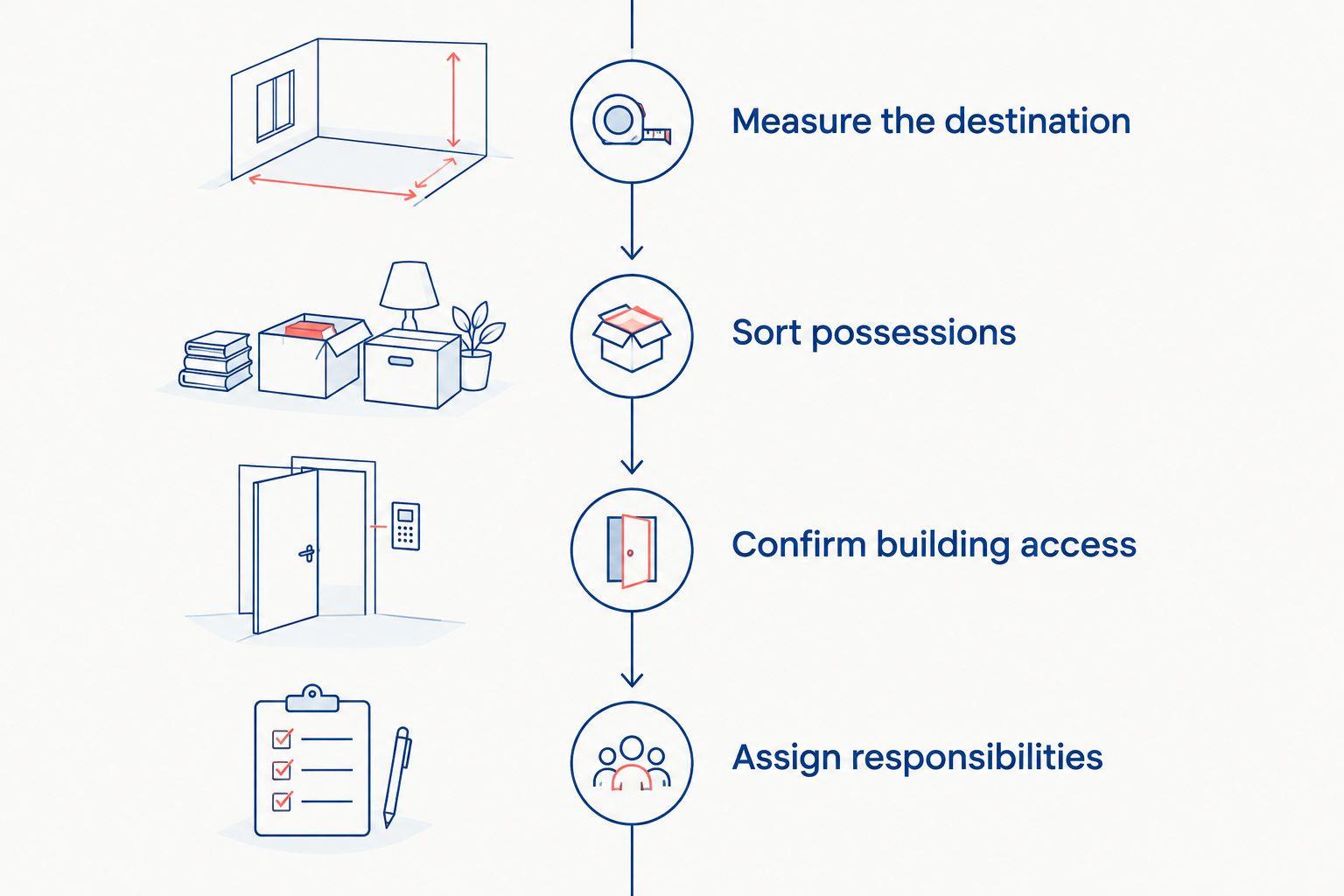
Bring the same task list to every provider. A proposal is easier to assess when the destination, inventory, access conditions, and responsibilities stay consistent.
Plan your downsizing move
Review moving, packing, and storage services, then ask for a written scope that matches your destination.
Which service should you choose?
Choose packing and transport as the default when you know what is moving. Add a senior move manager when decisions and coordination remain the main obstacle. Use hourly moving for a prepared assignment, storage for a timing gap, and long-distance moving for the appropriate route.
Before accepting a 2026 proposal, ask one direct question: which tasks on this list are excluded? That answer identifies what you or another provider must still handle.
FAQ
What's the best moving service for a senior downsizing in NYC?
The best fit is a packing-and-transport service when belongings are already selected, and a senior move manager when sorting and coordination remain unfinished. CroMont Moving & Storage offers local moving, full packing, and storage service categories; confirm the exact task scope before booking.
Is a senior move manager the same as a mover?
No. A senior move manager organizes the downsizing process, while a mover handles contracted physical moving tasks. Ask whether transport is included or requires a separate agreement.
Do senior downsizing movers arrange donations?
Donation handling must be explicitly included in the agreement. Identify who sorts the items, who accepts them, and who arranges collection or delivery before packing starts.
Should I choose hourly moving for a small senior move?
Choose hourly moving when the belongings are selected and the physical work is clearly defined. A small apartment does not automatically mean a prepared move; unfinished packing and access arrangements still need attention.
Should I put furniture in storage while downsizing?
Use storage when there is a defined gap between leaving one home and entering the next. Decide what will eventually be delivered, and confirm retrieval arrangements before placing it in storage.
What should I ask an NYC building before moving?
Ask about elevator reservations, moving hours, loading access, and certificate-of-insurance requirements. Get answers from both the departure and destination buildings.
What should I keep with me on moving day?
Keep medication, important documents, chargers, and immediate-use belongings with you rather than in the shipment. Prepare a separate essentials bag for each person.
What should a senior downsizing moving plan include in 2026?
A 2026 plan should identify the destination layout, selected inventory, building access, and task ownership. State who approves changes and who handles belongings that are not going to the new home.
One last thing
Plan the first evening, not just the truck arrival. Decide where you will sleep, where medication stays, and who makes the essential areas usable. A completed delivery and a usable home are different outcomes; write down who is responsible for each.