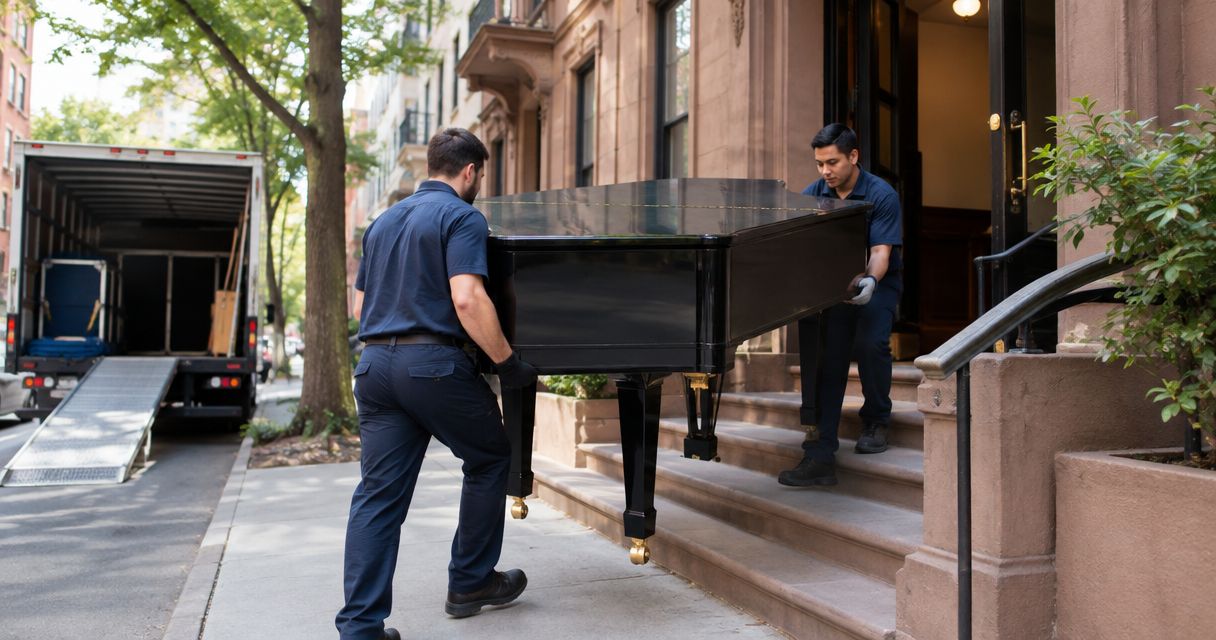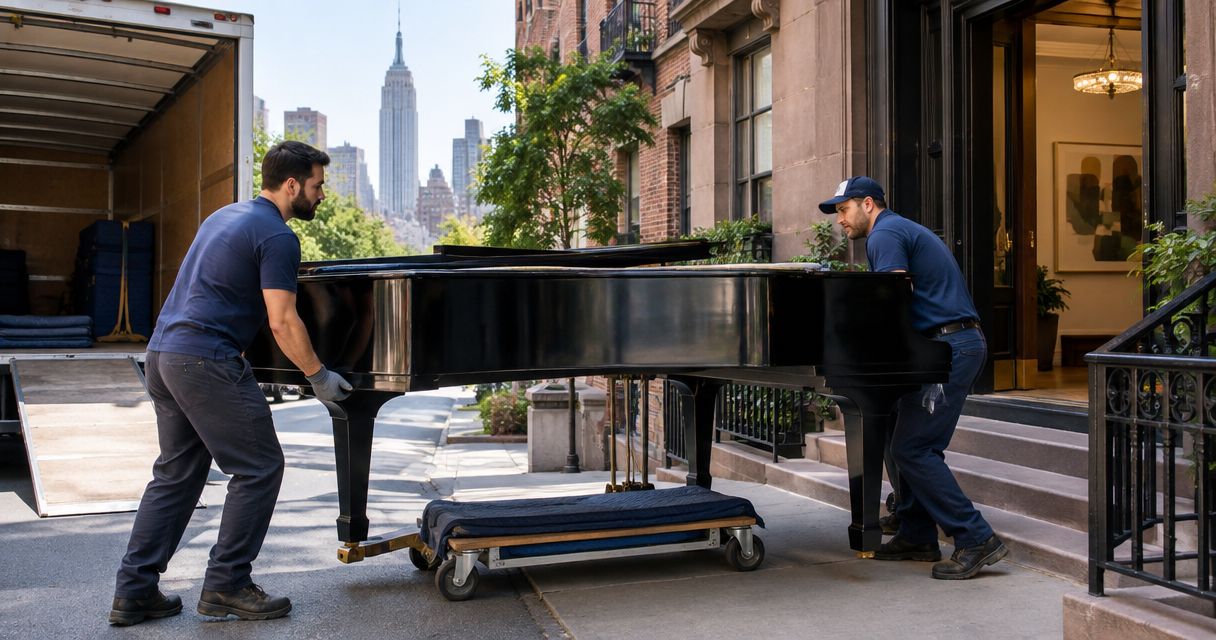
Best overall for a piano-only move: a dedicated piano moving service. Best for a household move with delicate furnishings: a full-service white-glove mover with a confirmed piano handling plan. Best for artwork: an art transport specialist. This 2026 guide compares piano moving services NYC homeowners can evaluate, explains the limits of each approach, and gives you a checklist for choosing the right crew.
- Choose dedicated piano moving services NYC residents can verify against their instrument, stairs, and building access.
- Cromontmoving offers household moving, full packing, white-glove service, and storage; confirm piano handling before booking.
- Use an art transport specialist when artwork needs condition documentation, custom protection, or installation coordination.
- Approve the handling route and written scope before choosing a specialty mover.
Why this matters
A piano move is an access problem as much as a transport job. The instrument must pass through doors, landings, elevators, and the destination entrance without an improvised route.
Specialty items need different handling plans. A framed painting, grand piano, stone tabletop, and antique cabinet should not receive the same packing instructions simply because they share a truck.
Cromontmoving offers residential and commercial moving, full packing, white-glove service, and storage across New York, New Jersey, and Connecticut. Cromontmoving is best considered for household moves that need packing, white-glove service, and storage together. Confirm the piano-specific scope separately rather than treating white-glove service as proof of piano expertise.
What makes the best piano moving services in NYC?
Judge piano moving services in NYC in 2026 by the handling plan, not the service label. These criteria make proposals easier to compare:
- Instrument-specific scope: The proposal identifies the piano type and any parts the crew intends to remove or secure. A generic furniture inventory is not enough.
- Measured access: The mover reviews both addresses, including stairs, turns, doors, elevator openings, and the final placement area.
- Protection plan: The mover explains how the instrument, floors, doorframes, and other specialty items will be protected during handling.
- Building coordination: The plan accounts for the building's access rules, elevator arrangements, and any requested insurance documentation.
- Written responsibility: The agreement identifies the handling crew, any subcontractor, and the applicable loss or damage terms.
- Complete delivery scope: The proposal distinguishes transport from reassembly, placement, tuning, installation, or storage. Do not assume those tasks are included.
A strong proposal connects each obstacle to a specific action. If a landing is tight, the answer should explain the route assessment—not simply promise careful handling.
NYC specialty moving options at a glance
These are service approaches, not a ranking of unverified companies. Choose the approach that matches your item and access conditions, then evaluate individual providers against the criteria above.
| Rank and service approach | Best for | Standout feature to require | Key limitation |
|---|---|---|---|
| 1. Dedicated piano moving service | A piano-only relocation | Instrument-specific handling and route plan | Does not automatically cover the rest of your household |
| 2. Full-service white-glove mover | A household move containing delicate items | Coordinated packing, transport, and placement | Piano handling must be confirmed separately |
| 3. Art transport specialist | Paintings, sculpture, and fragile collections | Item-specific protection and condition documentation | Piano handling is a separate discipline |
| 4. Specialty rigging service | Items without a workable indoor route | A reviewed alternative lifting route | Requires property coordination and suitable site conditions |
1. Dedicated piano moving: best for a piano-only relocation
A dedicated piano moving service focuses on transporting the instrument rather than managing your entire household move. The central question is whether the crew can handle your particular piano through the actual route at both properties.
For an upright or grand piano, request a plan based on the instrument and access—not a description such as heavy furniture. Ask who performs any necessary disassembly, how removed components are protected, and who restores the instrument to its agreed delivery configuration.
Dedicated piano moving pros:
- Keeps the instrument's handling requirements central to the job.
- Lets you assess piano-specific experience directly.
- Separates the piano scope from unrelated household packing.
Dedicated piano moving cons:
- Household furniture and packing require a separate agreement unless expressly included.
- Tuning, repair, and storage are separate questions, not automatic inclusions.
Best for: You are moving a piano between homes, rehearsal spaces, or other premises without relocating a full household.
Ask the provider for examples involving the same instrument type and access challenge. A ground-floor upright move does not demonstrate a plan for a grand piano on a turning staircase.
Verdict: Buy this service approach for a piano-only move once the instrument, route, and responsibilities are documented.
2. Full-service white-glove moving: best for a complete household move
A full-service mover coordinates household packing and transport, while white-glove service addresses handling and placement requirements that need closer attention. This approach fits a move containing furniture, fragile belongings, and items that require an agreed protection plan.
Cromontmoving offers full packing, white-glove service, and storage alongside residential moving. Those services fit the broader household scope; request written confirmation of piano handling, the responsible crew, and any specialist involvement before including an instrument in the booking.
Full-service white-glove moving pros:
- Keeps household packing and transport within one coordinated scope.
- Lets you specify protection and placement requirements across multiple delicate items.
- Can include storage when that service is expressly agreed.
Full-service white-glove moving cons:
- The white-glove label alone does not establish piano expertise.
- A specialist handoff adds responsibilities that need explicit documentation.
Best for: You are moving a household containing delicate furniture and want packing, transport, and placement planned together.
For a 2026 booking, give the mover a specialty-item list separate from the general inventory. Describe the piano, artwork, antiques, and fragile furniture individually. Request confirmation of which items the household crew handles and which require another provider.
Verdict: Hold the piano portion until the full-service mover confirms an instrument-specific handling plan.
3. Art transport: best for artwork and fragile collections
An art transport specialist addresses the handling requirements of paintings, sculpture, and other collection objects. Look for item-specific protection, condition documentation, and a clear distinction between transport and installation.
A framed work presents different risks from an unframed canvas or freestanding sculpture. Describe the material, dimensions, existing packaging, and destination placement before requesting a handling proposal.
Art transport pros:
- Supports a separate protection plan for each collection object.
- Makes condition documentation part of the provider discussion.
- Allows transport and installation responsibilities to be defined independently.
Art transport cons:
- Does not replace a piano handling plan.
- Hanging, mounting, or installation needs explicit agreement rather than assumption.
Best for: Your move centers on artwork or fragile collection objects rather than a piano or general household furniture.
Ask who packs the object, who opens the packaging, and who records its condition at each handoff. For a mixed move, keep the art scope visible even when another company coordinates the household shipment.
Verdict: Buy this service approach when artwork needs its own packing, documentation, or installation plan.
4. Specialty rigging: best when the indoor route does not work
Specialty rigging addresses lifting and access problems that ordinary indoor handling cannot solve. Consider this approach only after a route assessment establishes why the item cannot safely use the available doors, stairs, or elevator.
An alternative route needs more than permission to use a window or terrace. The provider must assess the lifting arrangement, property access, and any approvals applicable to the proposed work.
Specialty rigging pros:
- Addresses access constraints beyond ordinary indoor carrying.
- Makes the lifting route a separate planning task.
- Clarifies where the moving crew's responsibility meets the rigging crew's responsibility.
Specialty rigging cons:
- Requires property coordination and a suitable lifting location.
- Is unnecessary when a workable indoor route exists.
Best for: A piano or oversized specialty item has no approved, workable indoor route.
Do not book rigging based on a photograph of the item alone. Request a site assessment and a written explanation of the proposed transfer points, including how the item reaches and leaves the lifting position.
Verdict: Hold until the provider assesses the site and documents the alternative route.
Build the handling brief before requesting proposals
For piano moving services NYC residents compare in 2026, a shared handling brief makes the proposals meaningfully comparable. Give every candidate the same information rather than allowing each to quote a different interpretation of the job.
Item inventory
Identify the piano type and photograph the instrument from several angles. Record its 3 dimensions—length, width, and height—using inches, and obtain weight information from reliable instrument documentation rather than guessing.
List other specialty items separately. Note loose components, existing damage, fragile surfaces, and anything you do not want the crew to dismantle without approval.
Access route
Document both addresses: 2 complete routes, from the current placement to the vehicle and from the vehicle to the final placement. Include doors, corners, stairs, landings, and elevator access.
Photographs support the review, but dimensions resolve questions that photographs leave open. Ask the mover which measurements are needed and who verifies the critical clearances.
Building approval
Ask each building about move scheduling, elevator use, loading access, and insurance documentation. Relay the actual requirements to the mover rather than assuming both buildings follow the same procedure.
Identify the person responsible for arranging access. A confirmed vehicle booking is not the same as confirmed building access.
Written scope
Bring the inventory, route assessment, and building requirements into one written scope. Identify the handling crew, protection method, delivery tasks, and storage arrangements if applicable.
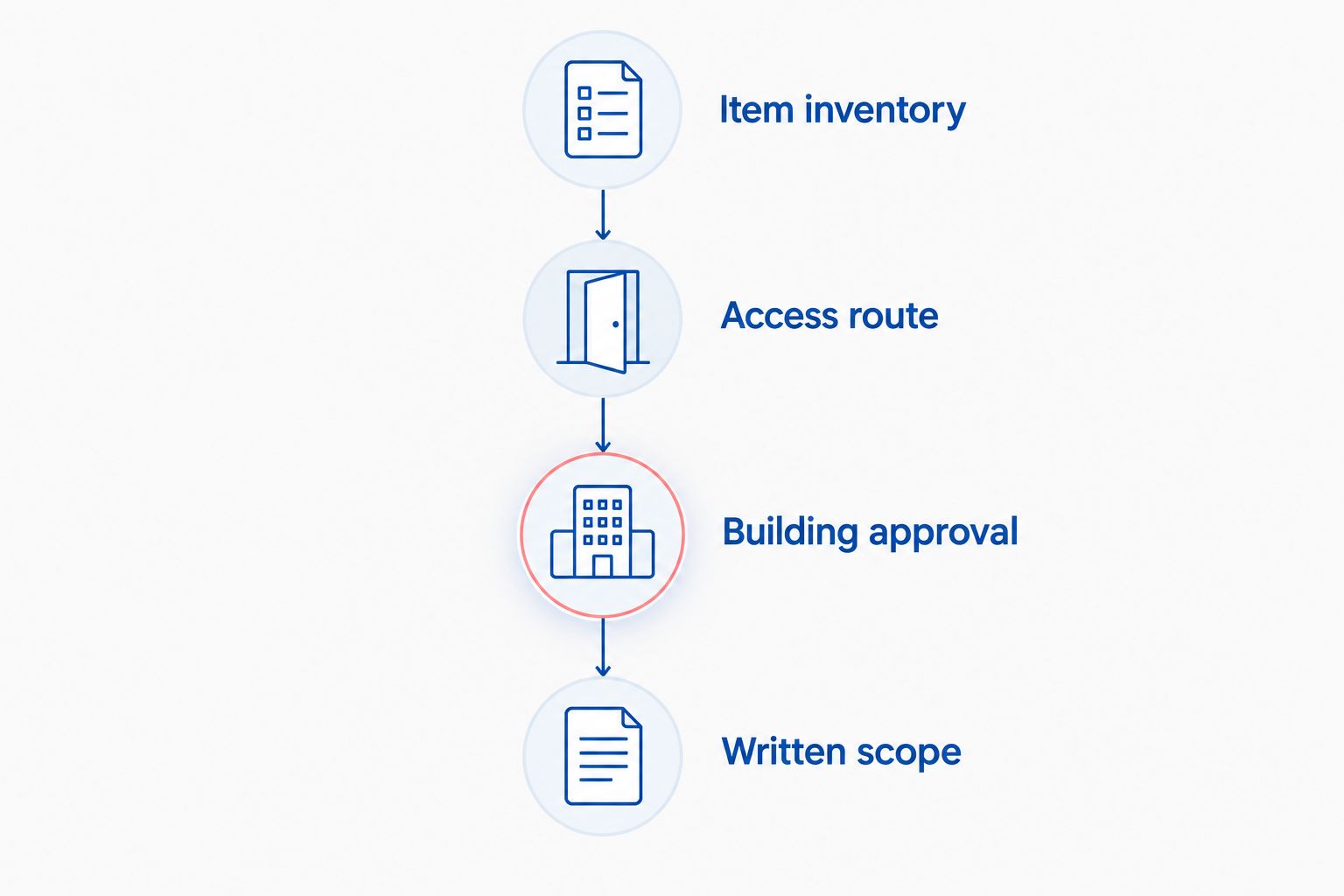
Approve the plan before you approve the move. If a proposal leaves a critical transfer unexplained, ask for clarification before accepting it.
Discuss your household moving scope
Ask Cromontmoving about packing, white-glove service, storage, and the scope for your specialty items.
How these service approaches are ranked
The order reflects the job described in the search: piano moving first, then related specialty-item needs. Dedicated piano moving takes the default position because its scope centers on the instrument; household white-glove moving fits a broader relocation.
Art transport and rigging occupy distinct slots. They solve object-protection and access problems respectively, rather than competing for the same default recommendation.
This 2026 ranking does not assign company performance scores. Choose a provider using the instrument-specific scope, measured access, protection plan, building coordination, written responsibility, and delivery tasks described above.
Which NYC specialty moving service should you choose?
Choose a dedicated piano moving service when the piano is the entire job. Choose a full-service white-glove mover when the household is the job, but keep piano handling conditional on a written instrument-specific plan.
Choose art transport for collection objects that need separate protection and documentation. Add rigging only when the reviewed access route requires it.
For a combined household move, Cromontmoving's stated packing, white-glove, and storage services belong in the comparison. Keep the selection precise: a confirmed household service is not a substitute for confirmed piano capability.
FAQ
What's the best type of piano moving service in NYC?
A dedicated piano moving service is the default choice for a piano-only relocation. Select the provider after confirming the instrument type, access route, protection method, and delivery responsibilities.
Does white-glove moving automatically include piano moving?
No, the white-glove label does not establish piano handling capability. Request written confirmation identifying the instrument, responsible crew, and handling plan.
Can Cromontmoving help with a household move containing specialty items?
Cromontmoving offers household moving, full packing, white-glove service, and storage. Confirm the scope for each specialty item, including any piano, before booking.
Can a piano move through a narrow NYC staircase?
The answer depends on the instrument and the measured staircase route. Have the mover review doors, turns, landings, and clearances before approving stair handling.
What should I ask a piano mover before booking in 2026?
Ask who handles the instrument, how the route is verified, and what the written agreement covers. Also clarify protection, building documentation, delivery placement, and any specialist handoffs.
Do I need a separate specialist for artwork?
Use an art transport specialist when artwork needs a separate protection, condition-documentation, or installation plan. Confirm those tasks explicitly rather than treating them as ordinary furniture handling.
Does piano transport include tuning after delivery?
Do not assume tuning is included in piano transport. Confirm the delivery scope with the mover and arrange any tuning or inspection separately unless the agreement expressly includes it.
One last thing
For your 2026 move, name the final placement location before the crew arrives. Delivery inside the building and placement in the intended room are different scopes; a piano left beyond a tight doorway still has an unresolved handling problem.
Put the final room and position in the agreement. That instruction connects the transport plan to the result you actually need.