
Real estate agents’ moving and storage coordination is the planning of packing, transport, temporary storage, and delivery to keep property handovers on schedule. This 2026 guide explains how to choose movers for real estate agents when listing preparation, building access, and possession dates must fit together.
- Choose movers for real estate agents around possession dates, building access, and written inventories—not the closing date alone.
- Cromontmoving suits agents coordinating residential moving and storage across New York, New Jersey, and Connecticut.
- Separate staging removal, temporary storage, and final delivery into clearly authorized work.
- Keep client essentials out of storage and assign responsibility for every property handoff.
Why moving and storage matters for real estate agents
A property transaction and a household move follow different schedules. Signing documents does not establish when the seller must finish moving, when the buyer receives possession, or when a building permits deliveries. Your moving plan needs those answers separately.
Cromontmoving offers residential and commercial moving, packing, white-glove service, plastic bin rentals, and storage across the New York/Tri-State area. Match those services to the client's actual scope rather than treating every referral as a standard household move.
For your 2026 transaction checklist, separate three milestones: listing readiness, required vacancy, and confirmed destination access. A seller removing furniture before photography needs a different plan from a buyer waiting for possession.
The moving date should follow confirmed access and possession—not an assumed closing timetable. Your role is to coordinate the information; the client authorizes the moving work, and the appropriate transaction professionals confirm possession terms.
How to coordinate movers for real estate agents
1. Map the property milestones before requesting estimates
Start with a shared document or spreadsheet. Record the listing preparation deadline, the agreed vacancy requirement, and the earliest confirmed delivery access. Mark tentative dates as tentative instead of letting them become instructions by repetition.
Use a 15-minute planning call to identify what remains unresolved. This is a suggested meeting length, not a service promise. Ask the client which dates are fixed and who can confirm the others; then send the same written summary to everyone responsible for the move.
- Listing readiness: Record photography, staging, and showing preparation needs.
- Required vacancy: Confirm when belongings must leave the property.
- Destination access: Identify who authorizes unloading and entry.
- Decision owner: Name the person who approves schedule changes.
A closing delay should trigger a review of the moving plan, not an automatic instruction to send furniture somewhere else.
2. Measure access and document the inventory
Walk through the property with the client, using phone photographs and a room-by-room list. Ask building management for its current moving requirements rather than copying instructions from another transaction. Record both the collection address and the delivery address.
Measure restrictive openings and large furniture in inches, using the same unit throughout. Include doorways, hall turns, stairs, and elevator access where relevant. Photographs explain the route; measurements establish the dimensions.
Keep sensitive client documents out of the shared photo folder. A mover needs to understand the furniture and access route, not see financial paperwork left on a desk.
- List furniture by room and intended destination.
- Photograph bulky, fragile, or unusually shaped items.
- Measure narrow openings and large furniture.
- Record stairs, elevator arrangements, and loading restrictions.
- Ask management about insurance documentation and floor protection requirements.
3. Match the service scope to the client's workload
Write down what the client will handle before asking a company to take over. A household that has packed everything needs a different scope from a seller who needs packing, removal, and storage before listing photographs.
Cromontmoving is best suited to agents coordinating moving and storage across New York, New Jersey, and Connecticut. Its stated services include local, long-distance, commercial, and hourly moving, plus full packing, white-glove service, plastic bin rentals, and storage.
The benefit of a moving-and-storage provider is the option to discuss both needs with one company. The limitation is that a combined service description does not define handling, storage access, or delivery arrangements for your client; those belong in the written scope.
- Specify packing responsibilities before requesting an estimate.
- Identify furniture requiring extra handling discussion.
- Separate household belongings from staging inventory.
- Request storage and delivery terms together when both are needed.
- Confirm who handles unpacking, assembly, and material removal.
4. Divide belongings by destination before packing
Use a simple inventory with three destination groups: Keep with client, Store, and Deliver. These groups prevent a single packing list from hiding different instructions. Apply the destination first, then add the room label.
Keep medication, identification, transaction documents, keys, and immediate-use belongings with the client. Do not let an item become inaccessible simply because it belonged in a room scheduled for packing.
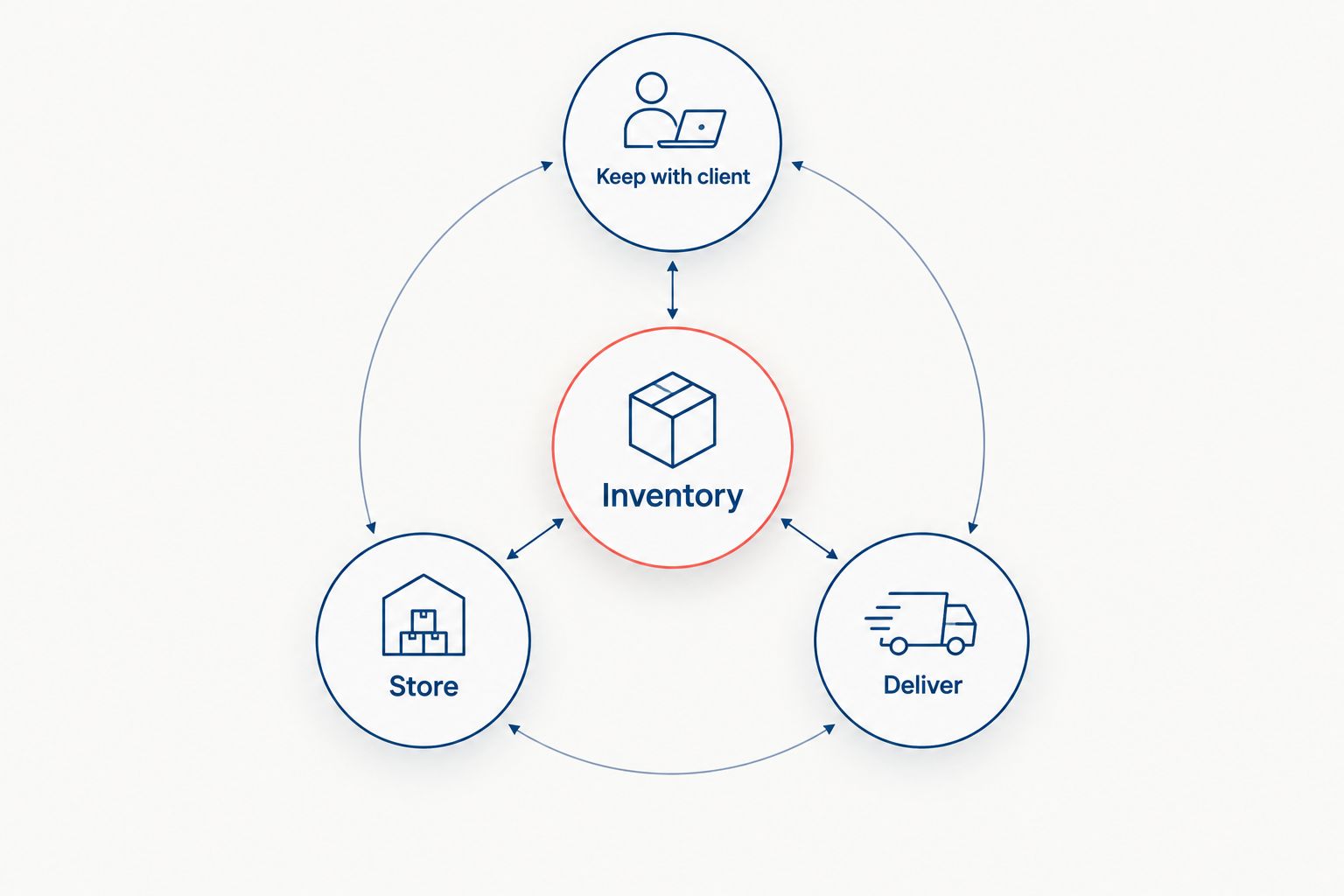
For your 2026 listing workflow, distinguish the homeowner's belongings from anything owned by a staging company. Permission to move one does not establish permission to move the other.
- Label every carton with its destination and room.
- Keep essential documents and medication with the client.
- Record ownership of staging furniture separately.
- Flag items the client wants accessible during storage.
- Reconcile the inventory before belongings leave the property.
5. Confirm storage conditions and release instructions
Start with a storage inventory and a list of questions. Decide what will enter storage, what access the client expects, and who can authorize release. Then ask the provider to explain its arrangements in writing.
Do not treat storage as an undefined pause between addresses. Collection, storage intake, retrieval, and delivery are separate events that need instructions. If the destination remains uncertain, document the process for supplying a confirmed address later.
For a 2026 transaction involving temporary storage, describe the expected retrieval date as provisional unless the client has confirmed destination access. Ask how changes affect the agreed scope without assuming a particular policy.
- Confirm the storage location and handling arrangements.
- Ask about environmental conditions relevant to the belongings.
- Request written access and retrieval procedures.
- Identify the person authorized to release stored items.
- Clarify protection terms, exclusions, and claims procedures.
- Record how delivery-date changes must be communicated.
6. Reconfirm the move and assign the handoff
Create a shared confirmation message rather than relying on separate calls. Use a checkpoint 48 hours before the planned move to review access, possession, inventory changes, and contact details. This is a coordination recommendation, not a provider's notice policy; follow any earlier deadlines in the actual agreement.
Give building management, the client, and the mover the information each needs. The agent should not become the default approver for extra work or property access unless the client has expressly authorized that role.
Keep two copies of the current instructions: one with the client and one with the designated coordinator. Label superseded versions clearly so an old destination does not remain in circulation.
- Confirm collection and delivery addresses in writing.
- Recheck elevator reservations and loading instructions.
- Name the person meeting the crew at each property.
- Confirm who approves changes to the moving scope.
- Define the contact sequence if possession or access changes.
7. Close the loop after collection and delivery
Use the inventory to check completion rather than accepting a general message that the move is finished. Confirm what left, what remains, and what went into storage. Record exceptions before the property handoff.
At delivery, have the client or an authorized representative review placement and identify concerns through the mover's stated process. An agent's walkthrough does not replace the client's review of the moving service.
For your 2026 referral record, assess the work against the agreed instructions. Separate a possession delay from a mover's communication failure; they require different corrections.
- Check rooms, closets, and designated storage areas for remaining items.
- Confirm keys and access devices reach the authorized recipient.
- Reconcile stored and delivered items against the inventory.
- Record unresolved issues and the responsible contact.
- Ask the client whether communication matched the agreed plan.
Compare moving options by transaction needs
Choose the option that matches the work the client cannot or does not want to manage. Each approach has a useful role and a clear limitation. A service category is not a substitute for checking the individual provider's written scope.
| Option | Best for | Main benefit | Key limitation |
|---|---|---|---|
| Client-managed move | Clients willing to arrange packing, transport, and access | Client directs each task | Client must coordinate the separate responsibilities |
| Hourly moving | A defined handling task with an agreed scope | Focuses the booking on specific work | Packing, transport, and storage must be checked separately |
| Full-service packing and moving | Households handing packing and transport to a provider | Combines packing and moving responsibilities | Requires detailed decisions about what is packed and moved |
| Moving with storage | Sellers and buyers whose departure and arrival dates differ | Creates a planned holding stage between properties | Storage access, release, and delivery need separate instructions |
| White-glove service | Clients seeking additional handling attention | Creates an opportunity to specify detailed handling needs | The label alone does not define included tasks |
| Cromontmoving moving and storage | Agents coordinating residential or business moves in NY, NJ, and CT | Offers moving, packing, and storage services | Each client's handling and storage arrangements still require confirmation |
When comparing proposals, give every provider the same inventory, addresses, and access requirements. Otherwise, the proposals describe different jobs and cannot support a clear decision.
Plan your client's moving scope
Discuss packing, transport, and storage around confirmed property access and possession dates.
Common mistakes real estate agents make
Treating a closing date as permission to deliver
Keep financial completion, possession, and physical access separate. Ask the appropriate transaction contact to confirm when entry is authorized before instructing a mover to unload.
Removing staging furniture without checking ownership
A seller's permission does not establish authority over a staging company's inventory. Record ownership, collection responsibility, and removal instructions before anything is packed.
Referring a mover without transferring the access details
A referral alone leaves the client to reconstruct the brief. With the client's permission, share the inventory and building requirements so the estimate addresses the actual property.
Letting temporary storage remain open-ended
An uncertain destination does not justify uncertain instructions. Name the release contact and document how the client will confirm the delivery address and date.
Promising outcomes outside the agreed scope
Do not promise a particular arrival time, handling method, or storage condition on a provider's behalf. Pass on the written commitment and identify questions that still need an answer.
FAQ
What's the best way to choose movers for real estate agents?
Choose movers against the client's inventory, property access, possession dates, and storage needs. Send the same written brief to each provider so the proposals cover the same work.
Should I book a move based on the closing date?
Base the move on confirmed possession and access, not the closing date alone. Confirm transaction requirements with the appropriate professionals and building access with management.
Can a moving company help prepare a home for listing?
A moving company can handle agreed packing, furniture removal, and storage tasks before listing preparation. Specify which belongings leave and who owns any staging furniture.
Is moving with storage better than a direct move?
Moving with storage fits a gap between departure and destination access; a direct move fits confirmed access at both properties. Storage adds intake, release, and delivery instructions that need to be documented.
Does Cromontmoving offer services relevant to real estate clients?
Cromontmoving offers local, long-distance, commercial, and hourly moving, full packing, white-glove service, plastic bin rentals, and storage. Its stated service area covers New York, New Jersey, and Connecticut.
What should clients keep out of storage during a move?
Clients should keep medication, identification, transaction documents, keys, and immediate-use belongings with them. Identify these items before packing so they do not enter the storage shipment.
What happens if possession changes after the move is arranged?
Contact the mover and the designated transaction coordinator before changing instructions. Confirm revised access and ask the mover to document any changes to the agreed scope.
One last thing
Plan for the first night, not just the empty property. Ask where the client will sleep, which belongings must stay accessible, and who holds the keys. A cleared listing is only one side of the handoff; the client's arrival needs instructions too.