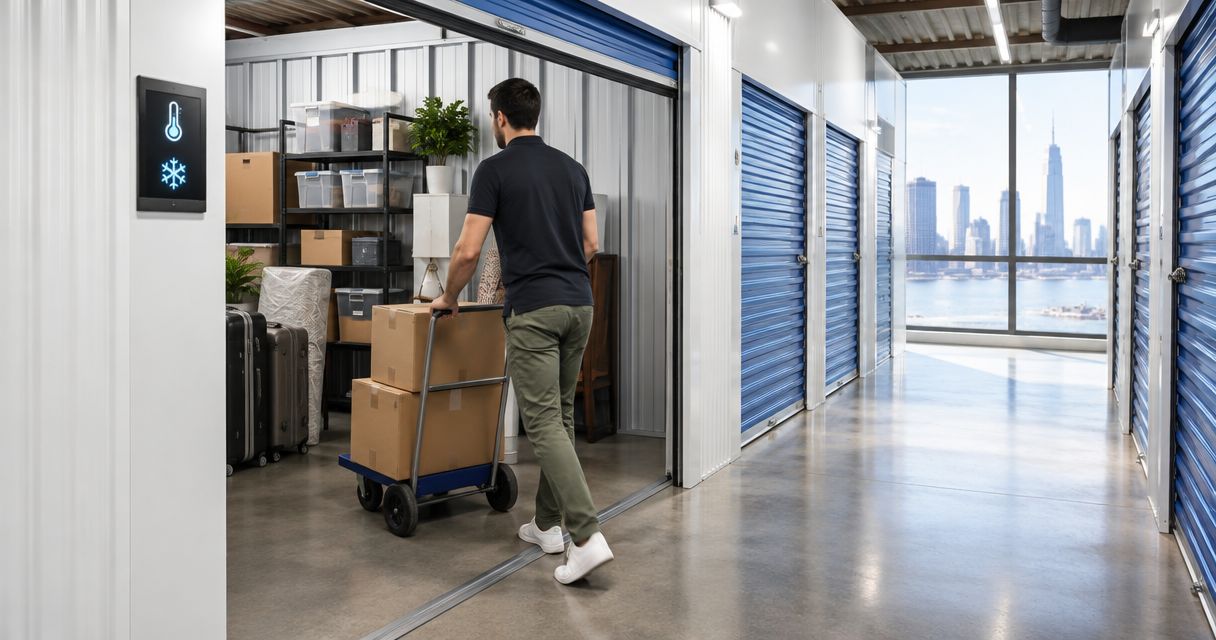
Best overall: mover-coordinated storage with documented climate controls. Best for frequent access: climate-controlled self-storage. Best for delicate collections: specialist storage. This 2026 guide ranks storage arrangements for NYC moves; CroMont Moving & Storage is best for homeowners and businesses coordinating moving and storage through a moving company.
- Climate controlled storage NYC: choose documented environmental controls, not a climate-control label alone.
- CroMont Moving & Storage offers moving and storage; confirm the proposed facility’s climate controls before booking.
- Climate-controlled self-storage is best for frequent access; mover-coordinated storage fits move-out and move-in gaps.
- Specialist storage is best for collections needing material-specific handling and environmental requirements.
Why this matters
A storage decision is also a handling decision. Your furniture must leave the apartment, enter storage, remain protected, and reach the next address without an unclear handoff.
For a 2026 NYC move, evaluate the entire route rather than the room alone. A climate-controlled space does not resolve poor packing, an undocumented inventory, or delivery arrangements that conflict with your building’s rules.
Choose the storage arrangement around how you need your belongings returned. Regular access, one scheduled redelivery, and specialist retrieval are different requirements.
What makes the best climate-controlled storage in NYC
Use these criteria before comparing options. They separate environmental protection from the moving logistics that determine whether an arrangement works for you.
- Documented environmental controls: Ask whether the facility regulates temperature, humidity, or both. Request the operating conditions relevant to your belongings rather than accepting a label.
- Access that matches your routine: Establish whether you enter the unit, request individual items, or receive a scheduled delivery. Confirm the retrieval process before loading anything.
- Clear custody and inventory: Identify who receives your goods, how items are recorded, and who handles release. Keep a copy of the inventory.
- Suitable packing and handling: Match protection to the material. Furniture, framed artwork, electronics, and business records have different handling needs.
- Building-compatible logistics: Check elevator reservations, loading access, insurance documentation, and delivery arrangements at both addresses.
- Written responsibilities: Clarify storage terms, damage-reporting procedures, coverage, and responsibility during transport versus storage.
Do not rank a facility higher merely because its marketing uses the word climate. The best choice explains both the environment and the chain of custody.
Climate-controlled storage options at a glance
These rankings compare service models, not individual facilities. Each model earns a different use-case slot; environmental conditions still require facility-specific confirmation.
| Rank and option | Best for | Standout feature | Key limitation |
|---|---|---|---|
| 1. Mover-coordinated storage | A move-out and move-in gap | Moving and storage planned together | Direct access depends on the arrangement |
| 2. Climate-controlled self-storage | Frequent personal access | You manage visits and unit organization | You coordinate transport and loading |
| 3. Pickup-and-return managed storage | Storage without regular visits | Retrieval organized through the operator | Individual-item access depends on inventory and terms |
| 4. Specialist storage | Art and delicate collections | Handling planned around material-specific needs | General household storage needs separate consideration |
| 5. Short-gap storage with reserved redelivery | A confirmed near-term move-in | Storage planned around a known delivery date | Date changes require revised arrangements |
1. Mover-coordinated storage: best for a move-in gap
Mover-coordinated storage treats collection, storage, and final delivery as connected parts of your move. It fits a household whose current lease ends before the next apartment is ready, or a business waiting for its new premises.
CroMont Moving & Storage offers residential and commercial moving, packing, and storage. For climate controlled storage NYC planning, ask CroMont Moving & Storage to identify the proposed storage arrangement and document its environmental controls before you commit.
Mover-coordinated storage pros:
- You can discuss packing, collection, storage, and delivery in one moving plan.
- A scheduled redelivery fits furniture you do not need during the gap.
- The inventory can connect the original collection to the final delivery.
Mover-coordinated storage cons:
- Storage access is a contract question, not something to assume.
- Moving-service coverage and storage coverage need separate clarification.
- A changed move-in date requires coordination across storage and delivery.
Best for: Homeowners and businesses that want moving and storage planned together rather than arranging each stage separately.
Before choosing, ask who operates the facility, how items are identified, and what happens if your apartment is not ready. Request the release process in writing, including how you arrange redelivery.
Verdict: Buy this arrangement when documented climate controls and the delivery plan match your move.
2. Climate-controlled self-storage: best for frequent access
Climate-controlled self-storage gives you a storage space that you organize and access under the facility’s rules. It fits belongings you expect to retrieve during storage, such as household supplies, seasonal items, or business materials.
The trade-off is coordination. You must connect the moving crew, facility access, unloading arrangements, and eventual collection rather than assuming those services come together.
Climate-controlled self-storage pros:
- You arrange the contents around your own retrieval needs.
- Personal access lets you inspect and reorganize stored belongings.
- You can separate frequently used items from furniture that stays packed.
Climate-controlled self-storage cons:
- You remain responsible for coordinating transport and loading.
- A poor layout makes retrieval difficult even when access is permitted.
- The facility’s climate-control description still needs specific confirmation.
Best for: NYC residents and businesses that expect to visit their storage space regularly.
For a 2026 move, check the route from the unloading point to the unit. Ask about elevator access, loading restrictions, entry procedures, and whether your movers can complete unloading within the permitted arrangements.
Do not fill the entire floor without considering retrieval. If you expect to remove a particular desk or cabinet, its route to the door belongs in the layout from the start.
Verdict: Buy self-storage when personal access matters more than having one coordinated moving arrangement.
3. Pickup-and-return managed storage: best without regular visits
Pickup-and-return managed storage organizes collection and retrieval through an operator. Instead of entering a personal unit, you request a return under the service’s retrieval terms.
This model suits belongings you can leave untouched. Its usefulness depends on the inventory: you need to know whether retrieval means a specific container, selected furniture, or the entire stored shipment.
Managed storage pros:
- Collection and return can be arranged without personal facility visits.
- An itemized inventory helps connect retrieval requests to stored goods.
- It fits packed belongings you do not need to reorganize during storage.
Managed storage cons:
- Retrieval depends on the operator’s process and scheduling terms.
- Partial returns require sufficiently detailed item identification.
- Storage conditions and handling responsibilities need explicit confirmation.
Best for: People storing belongings they will not need until a planned return.
Ask how you request an item and what information identifies it. A box described only as miscellaneous is difficult to distinguish from other boxes with the same label.
Keep essential documents, medication, and items needed immediately after moving outside this arrangement. Managed retrieval is not a substitute for having essentials with you.
Verdict: Buy managed storage when scheduled retrieval fits your needs; skip it when spontaneous access is essential.
4. Specialist storage: best for art and delicate collections
Specialist storage starts with the requirements of the objects rather than the size of a general storage space. Artwork, antiques, and other delicate collections call for questions about materials, packaging, handling, and environmental conditions.
A specialist label alone is insufficient. Ask the operator to explain how its proposed environment and handling method suit your actual collection.
Specialist storage pros:
- You can evaluate protection against the needs of specific materials.
- Handling instructions can travel with each identified object.
- Packing, condition records, and retrieval can be planned object by object.
Specialist storage cons:
- General household items still need their own storage plan.
- Collection-specific packing requires preparation before collection.
- You must establish how the operator documents condition and custody.
Best for: Owners whose collections require material-specific care rather than general household storage alone.
For 2026 storage planning, prepare photographs and written descriptions before handoff. Record existing marks and identify fragile components so the receiving party can compare the object with its documentation.
If a conservator has supplied instructions, share those instructions before selecting storage. Do not replace object-specific guidance with a generic temperature recommendation from an unrelated moving guide.
Verdict: Buy specialist storage when the objects dictate the environment; skip a general-purpose choice that cannot address those requirements.
5. Short-gap storage: best for a confirmed move-in date
Short-gap storage with reserved redelivery plans temporary storage around a known destination and delivery date. It is a timing arrangement that can use mover-coordinated or another suitable climate-controlled facility.
Its advantage is a defined endpoint. You can plan packing, collection, and release around the same destination rather than deciding how to retrieve everything later.
Short-gap storage pros:
- A confirmed destination gives the delivery plan a clear endpoint.
- Packing can account for the final room assignments.
- Storage release can be coordinated with building access.
Short-gap storage cons:
- A delayed closing or renovation changes the original plan.
- Redelivery depends on both the storage release and receiving building.
- Temporary storage still needs documented environmental controls.
Best for: NYC movers with a confirmed destination and a brief gap between possession dates.
Check both addresses, not just the storage facility. A reserved delivery means little if the receiving building has not approved the elevator or loading arrangements.
Ask what happens if the date changes before booking. Keep the contingency in the written plan rather than treating it as a moving-day problem.
Verdict: Buy short-gap storage when the move-in date is confirmed; hold until the plan addresses likely date changes.
How we ranked these storage arrangements
The ranking puts move continuity first, followed by personal access, managed retrieval, object-specific care, and a fixed delivery endpoint. Those priorities match the criteria above: environment, access, custody, packing, building logistics, and written responsibilities.
This is not a facility performance ranking. For 2026, choose the highest-ranked model that fits your access needs, then verify the actual storage location and terms.
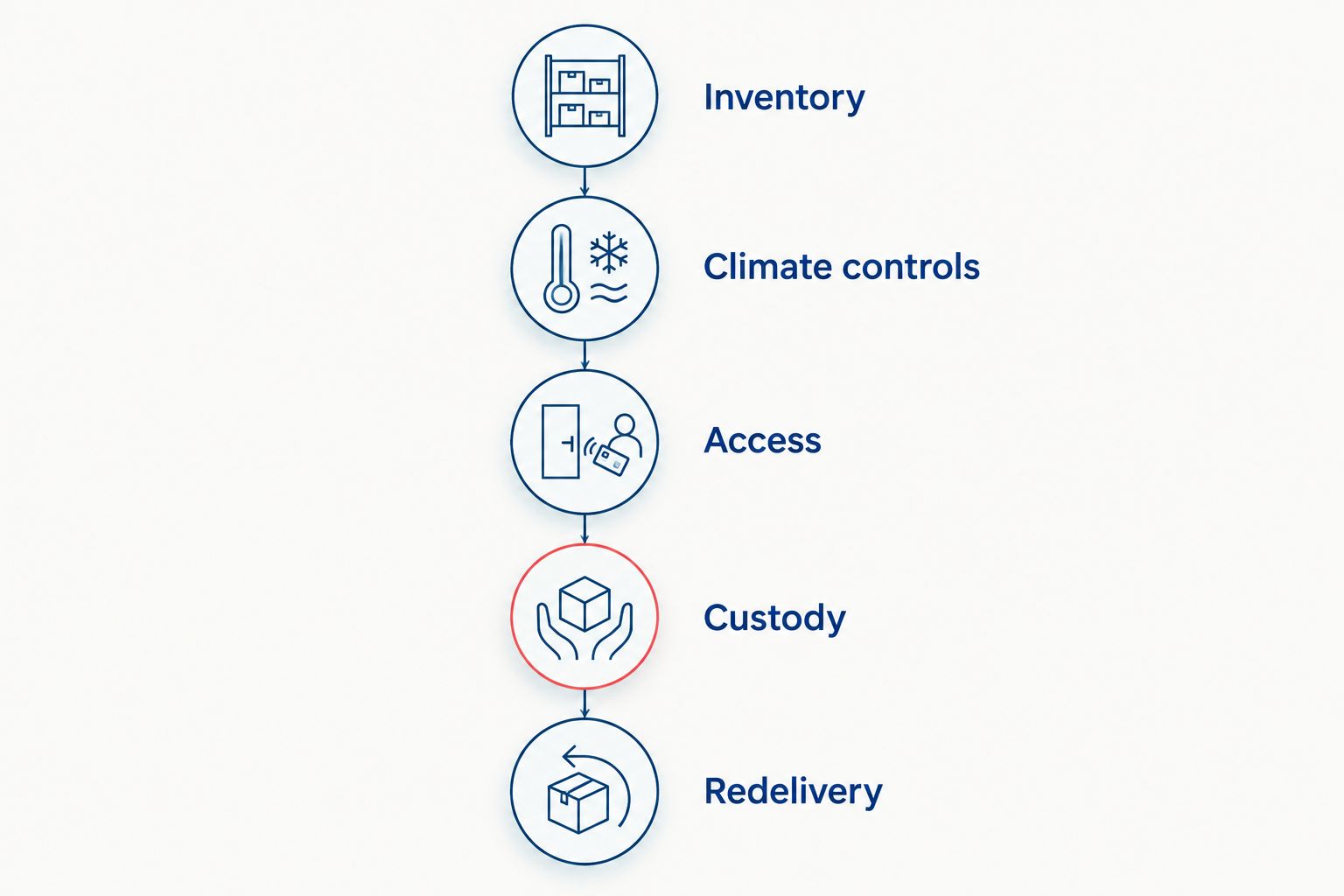
Confirm the storage handoff before collection
Use this sequence to turn a preferred option into an actionable plan. Keep the answers together so your mover, storage operator, and receiving building work from the same instructions.
- Inventory: Record furniture and containers, separating items you need during storage from those you can leave untouched.
- Climate controls: Obtain the proposed facility’s description of temperature and humidity management for the goods being stored.
- Access: Confirm personal entry, partial retrieval, or full redelivery, depending on the selected arrangement.
- Custody: Identify the receiving party and how the inventory is checked at handoff.
- Redelivery: Confirm the destination, release process, and building access requirements.
Measure bulky furniture in inches and record all 3 dimensions: length, width, and height. Keep 1 shared inventory and check access requirements at both of the 2 moving addresses. These are planning checks, not a substitute for the facility’s acceptance requirements.
Which storage option should you choose?
Choose mover-coordinated storage by default when your main problem is a gap between homes. Choose self-storage instead when regular personal access is essential, and choose specialist storage when the objects need material-specific protection.
CroMont Moving & Storage is a practical starting point for coordinating NYC moving and storage. Make documented climate controls, inventory handling, and redelivery terms part of that conversation—not assumptions attached to the service name.
Plan your moving and storage
Discuss packing, storage requirements, access, and delivery together.
FAQ
What’s the best climate-controlled storage option for an NYC move?
Mover-coordinated storage is the best fit when you need to bridge a gap between homes without regular access. Confirm the facility’s environmental controls, inventory process, and redelivery terms before booking.
Does climate-controlled storage always control humidity?
Do not assume a climate-controlled label includes humidity control. Ask the facility to state whether it manages temperature, humidity, or both, and explain the conditions relevant to your belongings.
Is self-storage better than storage through a moving company?
Self-storage is better when you need frequent personal access. Mover-coordinated storage is better when collection and scheduled redelivery are your main requirements.
Does CroMont Moving & Storage offer moving and storage?
CroMont Moving & Storage offers residential and commercial moving and storage. Ask about the proposed facility’s climate controls and access terms when planning your storage arrangement.
Can I retrieve individual items from managed storage?
Individual-item retrieval depends on the operator’s inventory and retrieval terms. Confirm whether you can request selected items or must arrange return of the full shipment.
Should I put artwork in a regular climate-controlled unit?
Choose storage for artwork according to its materials and any object-specific care instructions. Confirm environmental conditions, packing, handling, and condition documentation rather than relying on a general climate-control label.
What should I check before putting furniture into storage in 2026?
Check environmental controls, packing, inventory, access, custody, and redelivery before storing furniture in 2026. Measure bulky items and confirm loading and elevator requirements at both moving addresses.
One last thing
The first item you need back should be the easiest item to identify. Label its container distinctly and record it in the inventory before collection. In a self-access unit, place it where you can reach it without moving heavy furniture; in managed storage, confirm that it can be retrieved separately.