
Best overall for a lease-gap move: CroMont Moving & Storage. Best for frequent access: self-storage. Best for using space you already have permission to use: borrowed private storage. This 2026 guide compares five storage approaches for NYC renters, with the decision centered on access, transport, and what happens when your next apartment is ready.
- CroMont Moving & Storage is best for NYC renters seeking moving services and storage for the same relocation.
- For short term storage nyc renters can plan around, choose the access model before comparing storage space.
- Self-storage suits renters who need direct access; pickup-and-return storage suits belongings you can leave packed.
- Portable containers require a workable placement plan; borrowed space requires explicit permission and clear boundaries.
Why this matters
A lease gap creates two separate problems: somewhere to keep your belongings and a way to move them between addresses. Choosing storage without solving transport leaves you with an incomplete moving plan.
For a 2026 apartment move, start with 2 addresses, 3 dates, and 1 inventory. Record the departure and destination addresses; your move-out, storage-start, and expected move-in dates; and a single list of everything entering storage. These are planning inputs, not estimates of how much space you need.
If your furniture needs professional handling at both ends, start with the guide to choosing NYC movers with storage. If you only need to set aside boxes while remaining in the same apartment, prioritize access instead.
What makes the best short-term storage for NYC renters?
Judge each option against these criteria before choosing a provider:
- Access: Decide whether you need to retrieve belongings yourself or arrange a return through the provider.
- Transport: Identify who packs, carries, loads, and delivers the contents at each stage.
- Space fit: Use a furniture-and-box inventory rather than your apartment's bedroom count alone.
- Building access: Confirm elevator arrangements, loading access, and any paperwork your building requires.
- Storage conditions: Ask how the storage arrangement addresses moisture, security, and the needs of your belongings.
- Exit flexibility: Establish the procedure for extending storage and arranging final delivery before committing.
The best storage option is the one whose retrieval process matches your next move. A convenient drop-off is not enough if getting everything back creates another logistical problem.
Short-term storage options at a glance
The ranking below assigns each option a distinct use case. It does not treat a storage unit, a moving service, and a friend's spare room as interchangeable products.
| Option | Best for | Standout feature | Key limitation |
|---|---|---|---|
| CroMont Moving & Storage | A lease gap involving a household move | Offers moving services and storage | You must confirm the storage-access and redelivery arrangements |
| Self-storage | Retrieving belongings yourself | You organize and access your own stored contents | Transport and handling remain part of your plan |
| Pickup-and-return storage | Boxes you do not need during storage | Collection and return form part of the service model | Retrieval depends on provider scheduling and terms |
| Portable storage container | Loading around a workable placement schedule | Loading and storage use the container model | Placement permission and physical access are essential |
| Borrowed private space | A small load with an agreed host | Uses an existing private space | Access, protection, and continued permission depend on the arrangement |
1. CroMont Moving & Storage: best for a lease-gap move
CroMont Moving & Storage offers residential moving, packing, and storage in New York and the Tri-State area. That service mix makes the company a relevant starting point when your apartment move involves furniture, boxes, and a period between homes.
Best for: NYC renters seeking moving services and storage for the same relocation. Treat this as a coordinated planning request: departure handling, storage, and delivery to the next address should all be discussed before you commit.
Moving-company storage pros
- Moving and storage are both part of the company's stated service offering.
- Full packing is an option for renters who do not want to pack the household themselves.
- Local and long-distance moving services cover different relocation scopes.
- You can discuss furniture handling alongside the storage requirement rather than treating them as unrelated tasks.
Moving-company storage cons
- A combined service offering does not establish unrestricted access to stored belongings; confirm retrieval rules.
- Items needed during the lease gap still require a separate essentials plan.
- A changed destination or move-in date requires an updated delivery plan.
For your 2026 move, ask for the storage arrangement and redelivery process in writing. Identify who handles each stage, what information is needed to schedule delivery, and how a date change is handled. Do not assume packing, retrieval, and final unpacking are identical services.
Verdict: Buy this service model when the main job is moving your household through a lease gap, not visiting your belongings repeatedly.
2. Self-storage: best for frequent personal access
Self-storage gives you a dedicated space to organize your belongings and retrieve them yourself under the facility's access rules. It suits renters who want to take individual items in and out rather than request a return shipment.
Best for: Renters who need access to seasonal clothes, work equipment, or other belongings during storage. Verify the facility's actual access hours and procedures before choosing it.
Self-storage pros
- You decide how to arrange the contents inside the space.
- You can retrieve selected items without arranging delivery of the entire load.
- Clearly labeled boxes and an accessible layout support repeated visits.
Self-storage cons
- You still need a transport plan for moving belongings into and out of storage.
- A tightly packed unit makes individual items harder to reach.
- Personal access adds travel and handling to your routine.
List what you expect to retrieve before selecting the space. Put those items near the entrance and leave a usable route to them; packing every available corner works against frequent access.
Verdict: Buy self-storage when retrieving belongings yourself is the priority. Skip it as a hands-off solution unless you separately arrange transport and handling.
3. Pickup-and-return storage: best for an untouched box load
Pickup-and-return storage is a service model in which a provider collects belongings, stores them, and arranges their return. The defining feature is scheduled retrieval rather than access to a unit you organize yourself.
Best for: Renters storing a clearly inventoried box load they can leave alone until the next address is ready. Confirm whether a particular provider accepts furniture, individual boxes, or other items in your inventory.
Pickup-and-return storage pros
- Collection and return are part of the model rather than separate errands you plan yourself.
- A box-by-box inventory gives you a clear record of what is stored.
- It fits belongings that do not need regular retrieval.
Pickup-and-return storage cons
- Retrieval depends on the provider's scheduling process.
- Item acceptance and return rules vary by provider.
- Repeated requests for individual items make the arrangement less straightforward.
Before collection, label every box and keep a copy of its contents list. Ask whether partial returns are supported and how to request them. Keep identity documents, medication, keys, and other essentials outside the storage load.
Verdict: Buy pickup-and-return storage for belongings you can leave packed. Skip it when you need spontaneous access.
4. Portable containers: best when placement is workable
Portable container storage uses a container for loading and storage, with transport arranged according to the provider's service. For an NYC renter, the first question is not container size: it is where loading can legally and physically happen.
Best for: Renters with confirmed placement permission and a practical route between the apartment and container. Do not choose this model based on the assumption that curb space or building property is available for your use.
Portable container pros
- The container model keeps loading and storage within the same physical storage format.
- You can organize belongings around the loading arrangement offered by the provider.
- It suits moves where the placement location has already been resolved.
Portable container cons
- Placement depends on property permission and applicable local rules.
- Building entrances, stairs, and loading routes still need a handling plan.
- Access while the container is stored depends on the provider's arrangement.
For a 2026 move, obtain placement approval before making the container central to your schedule. Confirm delivery access, removal arrangements, and what happens if the proposed location cannot be used.
Verdict: Hold until placement is confirmed. Skip portable containers when you cannot establish a permitted, accessible loading location.
5. Borrowed private space: best for a small agreed load
Borrowed private storage means keeping belongings in a space offered by someone you know, such as a spare room or an agreed section of a private property. It is an informal arrangement, not a substitute for defined commercial storage terms.
Best for: Renters with a small load, explicit permission, and a host who agrees to the storage period. The arrangement needs to work for the person providing the space as well as for you.
Borrowed-space pros
- You can use an existing space without selecting a commercial facility.
- You and the host can agree on a specific area and retrieval process.
- It fits a limited load that does not interfere with the property's normal use.
Borrowed-space cons
- Continued use depends on the host's permission and circumstances.
- Access requires an agreement rather than facility rules.
- You must clarify responsibility for damage and check relevant insurance terms.
Agree on the items, storage area, end date, and retrieval procedure in writing. Keep exits clear and do not place boxes in shared building areas without authorization. A friendly offer still needs practical boundaries.
Verdict: Use borrowed space for a small, clearly agreed load. Skip it when the end date is uncertain or your belongings obstruct normal use.
Build the storage plan before move-out
Once you choose a storage model, check the plan in this order. Each step resolves a different source of confusion; none depends on guessing how long your apartment search will take.
- Inventory: List furniture, boxes, and items that must remain with you. Record fragile contents and photograph their condition.
- Access: Decide what you need during storage and how you will retrieve it.
- Transport: Assign responsibility for packing, carrying, loading, and delivery at both addresses.
- Building approval: Confirm the arrangements required at departure and arrival, including access and building paperwork.
- Return plan: Document the delivery request process and the procedure for changing your expected move-in date.
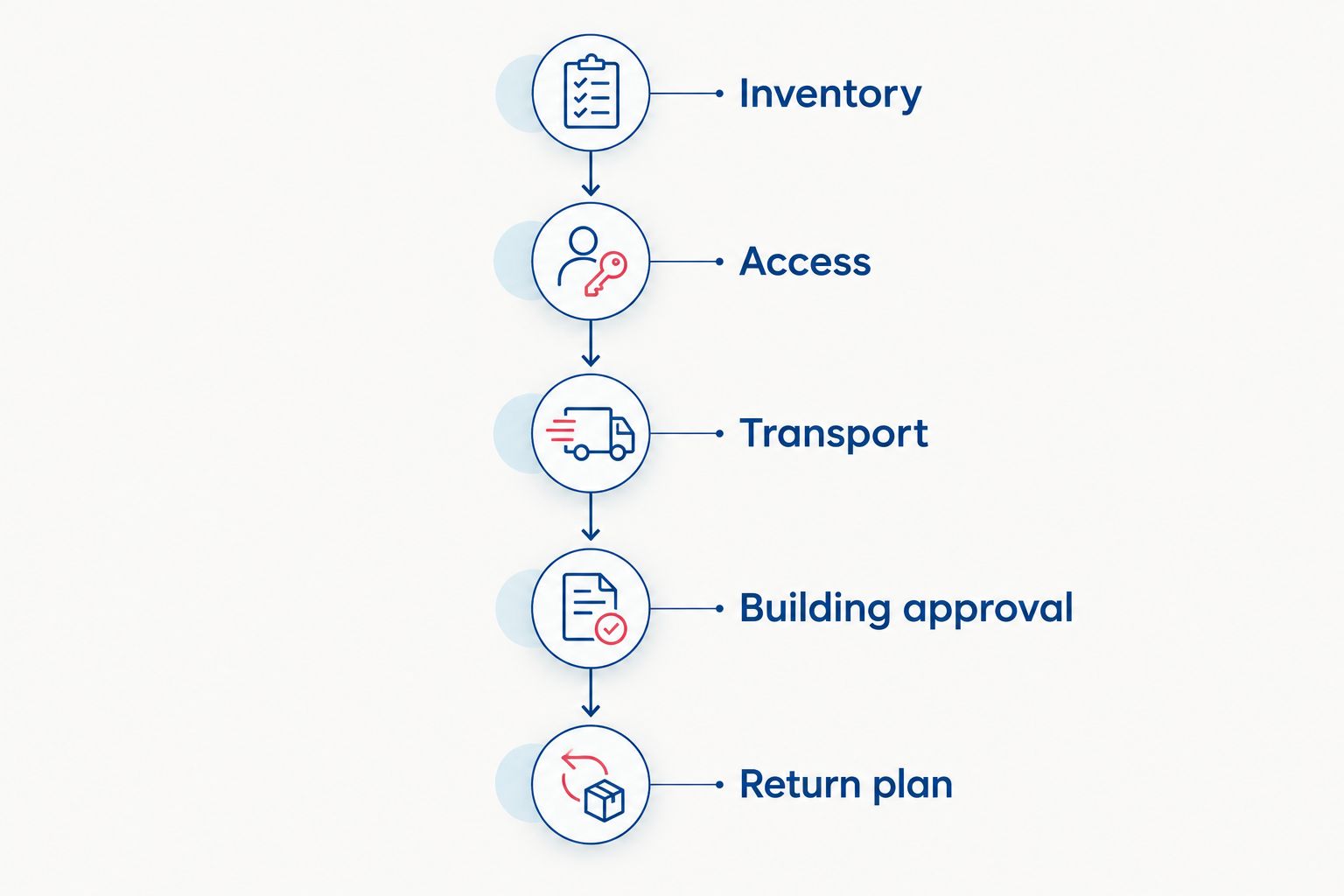
Keep the same inventory through packing, storage, and delivery. Changing labels halfway through the move makes it harder to identify the box you need or reconcile what arrives.
Plan your move and storage
Discuss moving, packing, and storage needs for your NYC lease gap.
How these options were ranked
This 2026 ranking uses access, transport responsibility, space fit, building constraints, storage conditions, and exit flexibility. Moving-company storage comes first for a lease-gap household move because the task includes relocation, not just storing belongings.
Self-storage takes the direct-access slot. Pickup-and-return storage takes the leave-it-packed slot. Containers and borrowed space remain conditional choices because placement or permission determines whether they work at all.
Which storage option should you choose?
Choose CroMont Moving & Storage for NYC moving and storage when your central problem is getting a household from one home to the next through a lease gap. Confirm the specific storage and delivery arrangements before booking.
Choose self-storage instead when you expect to visit your belongings. Choose pickup-and-return storage when your load can remain untouched. For containers or borrowed space, resolve permission first; neither option works on an assumption.
FAQ
What's the best short-term storage option for an NYC lease gap?
Moving-company storage is the best-fit model when your lease gap involves relocating a household. CroMont Moving & Storage offers moving and storage services; confirm the storage-access and final-delivery arrangements for your move.
Is self-storage better than storage with movers?
Self-storage is the better fit when you need to retrieve belongings yourself. Storage with movers fits a relocation-focused plan, but you must confirm how retrieval and redelivery work.
Can I get individual items back during short-term storage?
Choose a storage arrangement that explicitly supports individual-item retrieval. Self-storage provides personal access under facility rules; pickup-and-return services require you to confirm partial-return procedures.
How do I choose storage space for a studio apartment?
Choose storage space from an inventory of furniture and boxes, not the apartment label alone. Include the layout needed for any belongings you plan to retrieve during storage.
Can an NYC renter use a portable storage container?
A portable container is suitable only when placement permission and physical access are confirmed. Check the proposed location with the property owner or building management and confirm applicable local requirements.
What should I keep out of storage during a lease gap?
Keep medication, identity documents, keys, and essentials you need during the lease gap with you. Separate that kit before packing so it does not enter the storage load.
What should I confirm before arranging short-term storage in 2026?
Confirm access, transport responsibilities, accepted items, storage conditions, and the return process. Document how an extended lease gap or changed destination affects the arrangement.
One last thing
Pack one clearly identified arrival box for the next apartment and keep a record of where it goes. Bedding, toiletries, chargers, and basic cleaning supplies belong together if you will need them immediately.
The return plan should identify what you need first, not just where everything is going. Make that decision before packing, while you can still separate essentials from the storage load.