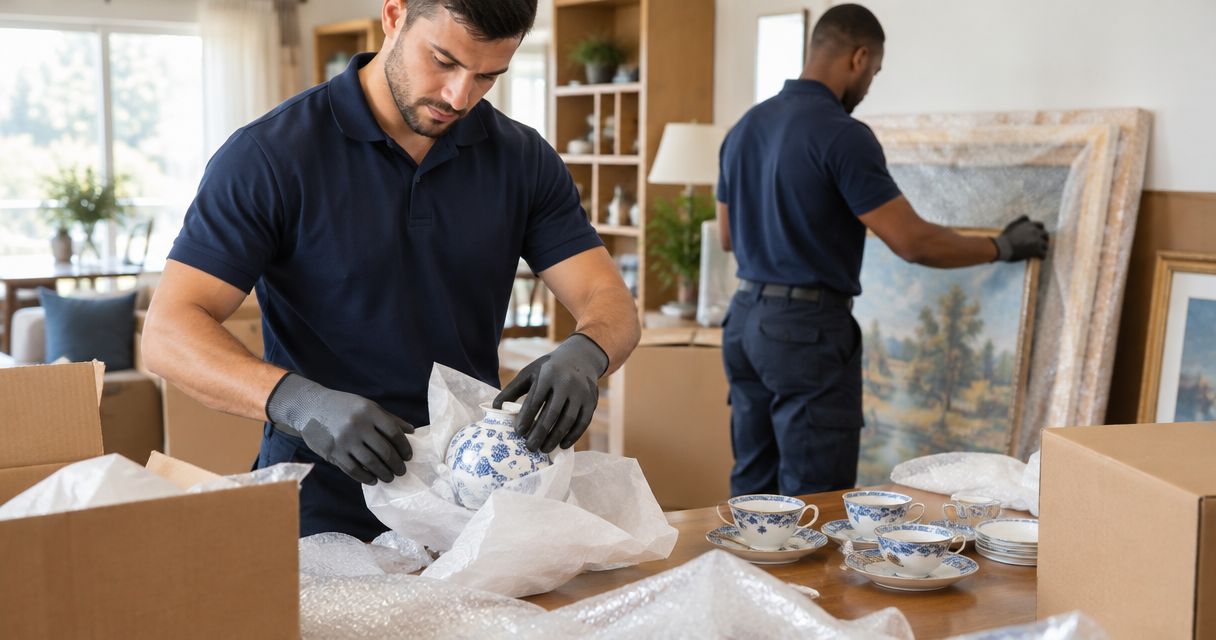
Yes, movers can pack fragile items like china and artwork when fragile-item packing is included in the agreed service. Do not assume a transport-only booking includes wrapping, protective containers, or preparation for delicate surfaces. For your 2026 move, identify these items before booking and get the packing method and responsibility recorded in writing.
- Can movers pack fragile items like china and artwork? Yes—confirm fragile-item packing before booking.
- Cromontmoving offers full packing; discuss your china, framed artwork, and delicate pieces before agreeing on scope.
- Choose packing methods by material and condition, not just by whether an item fits inside a box.
- Packing and damage protection are separate decisions. Read the moving agreement before handing over fragile belongings.
Why this matters
A dinner plate, a glass-fronted print, and an unframed painting need different handling. Treating them as one category called fragile leaves important decisions unresolved: what touches the surface, what supports the object, and who prepares it for transport.
Cromontmoving is best for New York/Tri-State homeowners and businesses seeking moving with full packing. Cromontmoving offers those services, but your agreement should identify the fragile items and the preparation you want included.
For a 2026 booking, give the mover an item-level description rather than asking whether the crew can handle delicate things. You need an agreed plan, not a general reassurance.
Can movers pack fragile items like china and artwork?
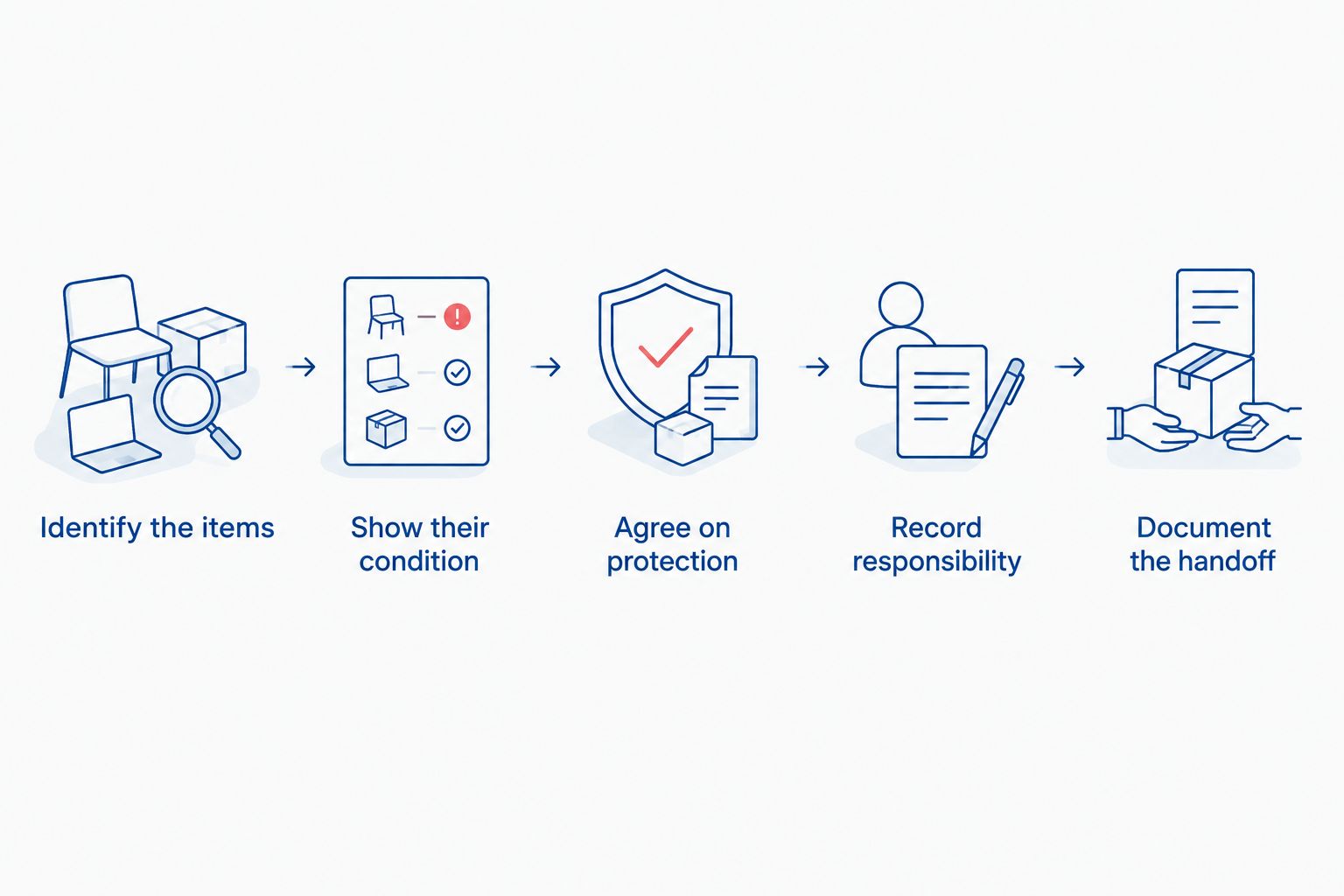
Yes. Movers offering packing services can prepare household china and artwork for transport, subject to the items they accept and the scope you arrange. Follow this sequence before the crew packs anything:
- Identify the items. List china sets, serving pieces, framed pictures, mirrors, paintings, and sculptures separately. Flag existing cracks, loose frames, repairs, or delicate finishes.
- Show their condition. Share clear photographs and explain anything a photograph cannot show, such as a loose handle or an unstable frame joint. Include dimensions when asking about containers or access.
- Agree on protection. Ask what will separate individual pieces, support corners and edges, and prevent movement inside each container. Artwork needs a surface-specific answer.
- Record responsibility. Establish who packs, who supplies the protective materials, and who unpacks. Confirm whether any items need specialist assessment before the move.
- Document the handoff. Photograph the items before packing and keep the inventory accessible. Check the agreement for delivery inspection and damage-reporting instructions.
The right question is not simply whether movers pack fragile items; it is how they will pack your specific items. An answer that describes only the outer box does not explain how the contents will be protected.
Which packing approach fits your fragile items?
Choose the approach around your belongings and the work you want to retain. For your 2026 move, compare the written scope rather than treating every packing service as interchangeable.
| Approach | Best for | Main advantage | Main limitation |
|---|---|---|---|
| Full packing | Households wanting packing handled alongside the move | Reduces the packing work you manage yourself | You still need to identify delicate items and agree on preparation |
| Fragile-only packing | People packing ordinary belongings themselves | Concentrates professional packing on breakable items | The handoff between your packing and the mover's packing needs clear boundaries |
| Specialist art handling | Artwork with sensitive surfaces, unusual construction, or conservation concerns | Allows a method tailored to the individual work | Requires separate assessment rather than assumptions about standard packing |
| Self-packing | People comfortable preparing suitable household items | Gives you direct control over preparation | Makes you responsible for material selection and packing execution |
Ask whether each approach is offered; this table describes choices, not a provider's service menu. Do not select self-packing for a delicate object merely because its container looks easy to assemble.
China: separate pieces and prevent movement
China packing should address contact between pieces, pressure on vulnerable parts, and movement inside the container. Ask how the packer will protect plate rims, cup handles, spouts, and lids rather than accepting a single answer for the entire cabinet.
Each piece needs suitable separation. Containers also need enough support to keep their contents from shifting without putting pressure on delicate features. An overfilled box is not a substitute for a packing plan.
Before packing begins, separate damaged or repaired pieces from intact pieces and point them out. Keep loose lids with a clear identification of the vessel they belong to, but ask the packer how they should be protected during transport.
Best for: household dishes and serving pieces whose condition you can describe clearly. The advantage of professional packing is having preparation included in the moving workflow; the limitation is that packing cannot repair an existing crack or strengthen an old repair.
Framed artwork: protect the frame, glazing, and image
Framed artwork needs more than a blanket around its outside. Ask how the packing will protect the corners, keep pressure away from the glazing, and stop the frame from moving inside its container.
Tell the mover whether the piece has glass, acrylic glazing, projecting decoration, or loose components. Do not remove a work from its frame just to simplify packing unless an appropriate specialist has advised you to do so.
For oversized or unusual pieces, discuss the route out of the property before choosing the container. A protected frame still needs to pass through doors, hallways, elevators, and the destination entrance.
Best for: framed household artwork after its condition and construction have been reviewed. Protective packing addresses handling risks, but it does not correct loose joints or unstable mounting. Use the fine art and gallery moving guide when planning a move involving a collection rather than isolated household pictures.
Unframed artwork: settle surface protection first
An unframed canvas or work on paper needs a different discussion from a glazed picture. Identify the medium, describe the surface condition, and tell the mover about anything loose, flaking, raised, or recently worked on.
Do not assume paper, plastic, foam, or adhesive is safe in direct contact with the image. For sensitive or valuable artwork, ask a qualified art handler or conservator to specify suitable protection before the moving crew prepares it.
Best for: specialist assessment when the artwork's surface or structure raises handling questions. The benefit is a method chosen for the work; the limitation is that an ordinary household packing description does not establish that method.
Request this assessment before moving day. A crew standing beside an exposed painting should not be making an improvised decision about what can touch it.
Why fragile-item packing varies
Fragile-item preparation varies because the objects and the route differ. Include these factors in your 2026 packing discussion:
- Material and surface: porcelain, glass, paper, canvas, and decorative finishes present different contact and support concerns.
- Existing condition: cracks, repairs, loose joints, and unstable surfaces affect how an item should be handled.
- Shape and construction: projecting handles, thin edges, deep frames, and irregular sculptures need protection around vulnerable parts.
- Size and access: container dimensions must work with doorways, stairs, elevators, and the delivery route.
- Handling and storage: tell the mover whether items will go directly to the destination or enter storage along the way.
- Responsibility: full packing, fragile-only packing, and self-packing create different preparation and handoff tasks.
Give the same item information to every mover you compare. Otherwise, one proposal can describe ordinary household packing while another includes preparation for the artwork you mentioned separately.
What should you confirm before accepting the packing scope?
Ask for a written description that connects the inventory to the work. It should distinguish packing from loading and transport, and identify any specialist preparation you must arrange separately.
Use this checklist:
- Which fragile items are included, and which are excluded?
- Who supplies and selects the protective materials?
- Who decides whether an item needs a purpose-built container?
- Does the work include unpacking and removal of packing materials?
- What must you complete before the crew arrives?
- How should you document condition and report a problem?
Cromontmoving offers full packing, white-glove service, and storage. Discuss those services against your actual inventory; a service name alone does not specify the treatment of an individual painting or china set.
Keep the accepted scope with your moving paperwork. If you add artwork or discover damaged pieces later, update the mover before packing begins rather than relying on a conversation at the door.
Is fragile-item packing the same as damage protection?
No. Packing describes preparation; valuation and insurance describe financial protection under their respective terms. A carefully packed item still needs the appropriate paperwork and condition record.
For your 2026 move, read the applicable moving agreement and ask how fragile, high-value, and owner-packed belongings are treated. Do not assume professional packing promises full replacement or that a building's insurance paperwork covers your belongings.
Keep photographs, identifying details, and any existing documentation together. Ask about reporting requirements before delivery so you know what to inspect and how to raise a concern.
Should I pack my china before movers arrive?
Pack your china yourself only if self-packing is the agreed plan and you are comfortable preparing it. If you have booked fragile-item packing, leave the identified pieces accessible and follow the mover's preparation instructions instead of creating a mixed, undocumented handoff.
Does every painting need a wooden crate?
No universal rule makes a wooden crate necessary for every painting. The decision should follow an assessment of the artwork's construction, condition, size, and journey; neither a crate nor a cardboard container proves that the interior protection is suitable.
Can movers pack fragile items that are going into storage?
Yes, when the agreed service includes that preparation. Tell the mover about storage before packing so the discussion covers the item, container, storage conditions, and eventual delivery rather than transport alone.
FAQ
Can movers pack fragile items like china and artwork?
Yes, movers offering packing services can pack china and artwork when those items are included in the agreed scope. Identify delicate surfaces, existing damage, and unusual pieces before booking so the packing method can be discussed.
Do I need to empty my china cabinet before the movers arrive?
Follow the preparation instructions for your agreed packing service. If the mover is packing the china, keep the cabinet accessible and identify delicate or damaged pieces rather than boxing them without discussion.
Can movers wrap an oil painting in bubble wrap?
Do not assume bubble wrap is suitable for direct contact with an oil painting. Ask an appropriate art specialist to specify surface protection when the condition or finish makes contact a concern.
Is professional packing a guarantee that nothing will break?
No, professional packing is not a guarantee against damage. Review the packing scope, applicable valuation or insurance terms, and condition-documentation process separately.
Does Cromontmoving offer packing as well as moving?
Cromontmoving offers full packing alongside its moving services in New York and the Tri-State area. Discuss your fragile-item inventory before booking so the agreed scope identifies the preparation you need.
Should I photograph fragile items before the move?
Yes, photograph fragile items before packing and record existing damage or repairs. Keep the images with your inventory and follow the agreement's delivery inspection and reporting instructions.
One last thing
The easiest detail to overlook is what happens after delivery. Decide who will open fragile-item containers, where unpacked pieces will go, and how you will keep packing materials separate from small components.
Keep the inventory accessible until you have checked the contents, not merely counted the boxes. A container marked china tells you its category; it does not confirm that the lid, serving piece, and matching cups have all reached their destination.