
Retail store moving services are commercial relocation services that move merchandise, fixtures, and business equipment with the aim of reopening your store ready to trade. This 2026 guide explains how to coordinate stock, building access, packing, and checkout systems without treating a working retail business like a household move.
- CroMont Moving & Storage is best for Tri-State retailers seeking commercial moving, packing, and storage from one provider.
- Choose retail store moving services around your reopening requirements, not just your furniture inventory.
- Separate merchandise, display fixtures, and point-of-sale equipment in your commercial relocation plan.
- Confirm building access and receiving arrangements before packing; test checkout before reopening.
Why retail store moving services matter for retailers
A retail relocation has two finish lines: getting everything delivered and making the new store ready for customers. A delivered checkout counter does not mean your payment terminal, receipt printer, network, and inventory system work together.
Plan backward from a functioning store, not forward from a loaded truck. Your sales floor, stockroom, receiving area, and checkout each need a destination and a responsible person. Landlord requirements and fixture installation add dependencies that belong in the same plan.
CroMont Moving & Storage offers commercial moving, full packing, plastic bin rentals, and storage across New York, New Jersey, and Connecticut. Those services suit a relocation that combines physical transport with packing or an interim storage requirement. Confirm your store-specific scope before booking; commercial moving alone does not establish responsibility for electrical connections, merchandising, or payment-system setup.
For your 2026 relocation, make the reopening checklist the reference document everyone uses. A move is ready when each handoff has an owner, not when everyone assumes another supplier will handle it.
How to plan a retail store relocation
Define your reopening requirements
Start with a shared document listing what must work before customers enter the new location. You can build it in a spreadsheet without buying project-management software. Separate essential opening tasks from improvements that can wait until after the move.
Your 2026 move plan should identify Inventory, Access, Packing, Transfer, and Reopening as distinct phases. Assign 1 move coordinator to keep decisions consistent, while giving technical tasks to the people qualified to complete them. The coordinator owns the schedule; that role does not replace an electrician, installer, or payment-system provider.
Choose a reopening date only after checking the dependencies. If fixtures cannot be installed until flooring is complete, the moving schedule must respect that sequence. Make the handoffs explicit rather than hiding them inside a broad instruction to get the store ready.
- Define the checkout, stockroom, and sales-floor conditions required to open.
- Name the person who approves each completed task.
- Confirm when the destination is ready to receive stock and fixtures.
- Separate essential work from decorative finishing tasks.
- Document who can authorize schedule or scope changes.
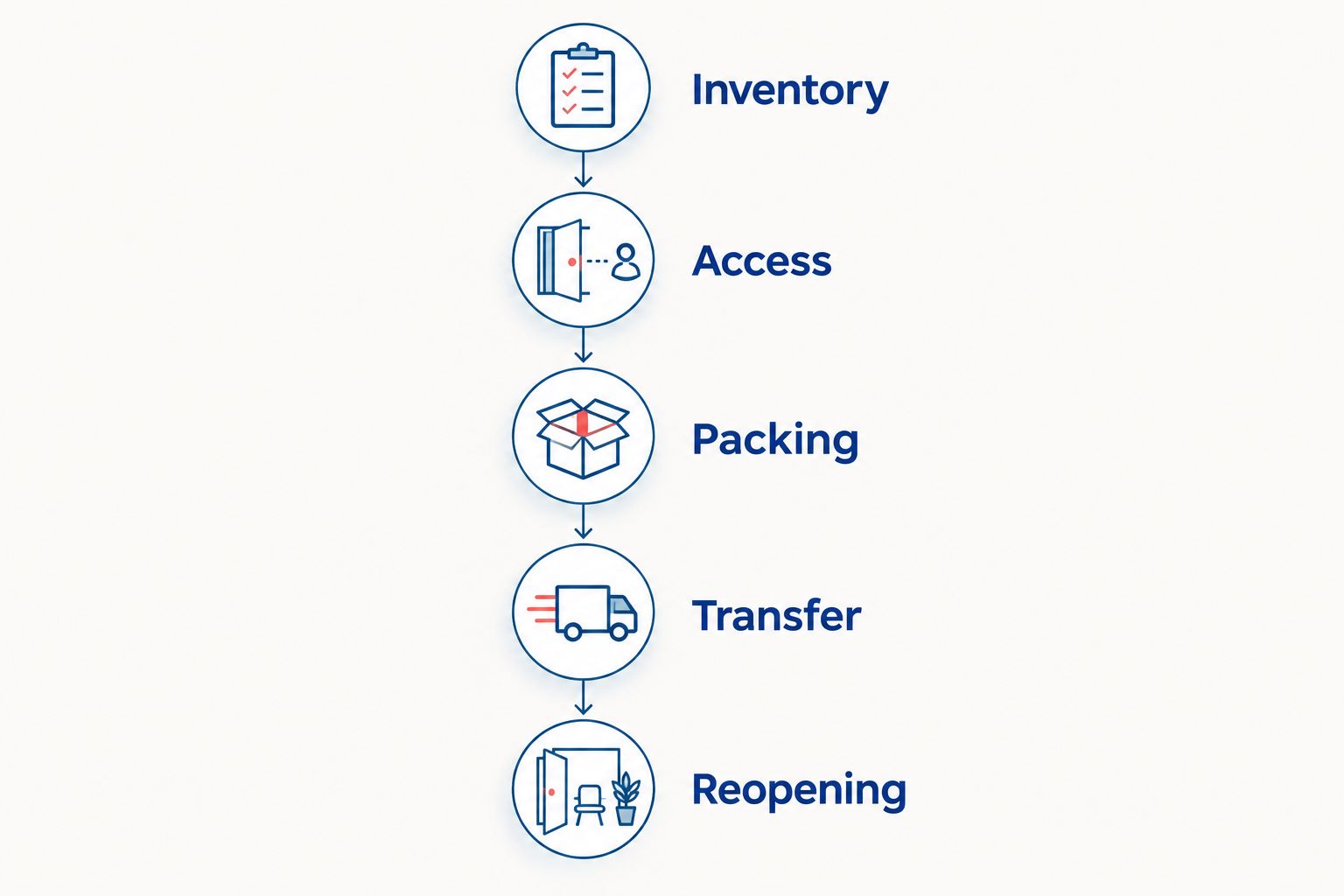
Inventory merchandise and measure fixtures
Build the inventory manually before requesting a moving scope. Use 1 inventory sheet as the master record, with separate tabs or sections for merchandise, fixtures, electronics, and supplies. Keep photographs alongside descriptions so receiving staff can identify items without opening every package.
Record fixture length, width, and height in inches, then compare those measurements with the intended route through doors and elevators. A display that fits the destination floor plan still needs to pass through the building. Check removable parts and assembly requirements before deciding how it travels.
Count merchandise by the identifiers your store already uses, such as SKU, style, or product category. Distinguish sellable stock from damaged items, returns, and display samples. Moving unwanted stock creates extra handling without helping reopening.
- Record item descriptions, quantities, condition, and destination zones.
- Photograph glass cases, mirrors, shelving, and counters before handling.
- Identify fixtures that need disassembly or specialist attention.
- Separate returns, damaged stock, and items marked for disposal.
- Mark valuable or sensitive items for a documented handoff.
Confirm access at both locations
Contact both building managers directly and record their requirements before finalizing transport. Maintain 2 address-specific access checklists: one for pickup and one for delivery. A confirmed elevator at the old store does not settle receiving access at the new one.
Ask about loading areas, freight elevators, approved working hours, entry permissions, and documentation requirements. Record who controls each arrangement. If a building requests a certificate of insurance, send its exact requirements to the mover rather than assuming any certificate will satisfy them.
Walk the route from loading point to stockroom with the fixture measurements in hand. Note stairs, tight turns, thresholds, and shared corridors. Confirm where deliveries can wait without obstructing exits or interfering with other occupants.
- Obtain each building's written moving and receiving requirements.
- Confirm elevator reservations and who holds access keys.
- Measure restrictive doors, turns, and passages.
- Identify approved vehicle loading arrangements.
- Give the mover a named contact at each address.
Choose the service scope before booking
Start by deciding which tasks your employees can complete without leaving essential store work uncovered. A manual task list makes service comparisons clearer: packing, carrying, transport, disassembly, storage, delivery, and unpacking should each have a named owner.
CroMont Moving & Storage offers commercial moving alongside full packing, hourly moving, white-glove service, and storage. These are options to discuss, not interchangeable scopes. Match the requested service to the items and handoffs in your inventory, and get the agreed responsibilities documented.
Do not assume a mover will install retail fixtures or reconnect business systems. Ask specifically about the work required. Where an installer or technical provider is needed, coordinate that person's arrival with delivery rather than expecting the moving crew to absorb the task.
- Request a written list of included moving tasks.
- Identify who supplies packing materials and packs each item category.
- Confirm the handling plan for glass, electronics, and specialty fixtures.
- Establish responsibility for disassembly and reassembly.
- Document storage and redelivery requirements when needed.
- Assign fixture installation and system setup separately.
Pack by destination and handling needs
You can organize packing with ordinary labels and a destination map. Label for the receiving team, not just the person filling the container. A label reading front window display is more useful at delivery than a label reading miscellaneous.
Separate merchandise from tools, cleaning supplies, and loose fixture hardware. Keep components from the same fixture together, with a photograph showing their original arrangement. Follow equipment manufacturers' handling instructions rather than using a general packing method for every object.
For container selection, review moving boxes versus plastic bins and choose according to item shape, protection needs, and handling arrangements. Neither container type removes the need for cushioning, clear labels, or a receiving count.
- Mark destination zone, contents, and handling instructions on each container.
- Keep fixture hardware in labeled bags attached securely to its component.
- Protect merchandise from contact with dirty or abrasive equipment.
- Pack an opening kit containing the supplies needed before unpacking finishes.
- Keep sensitive records and access credentials under designated custody.
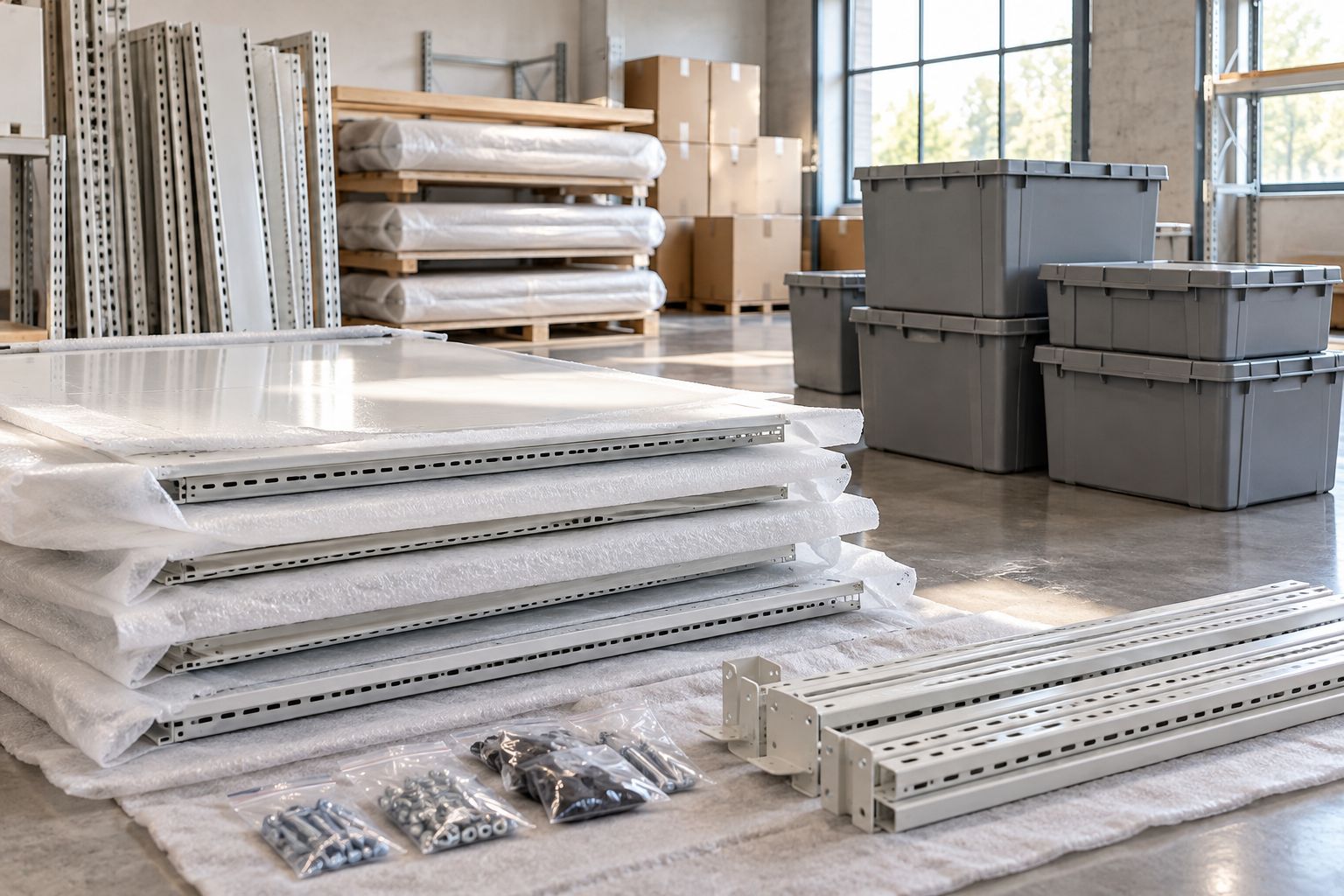
Control the transfer and receiving handoff
Use your inventory to check items out of the old location and into the new one. A printed checklist works if staff consistently record exceptions. Do not replace that process with a quick visual check of a crowded delivery area.
Give the crew a destination map and nominate someone to direct placement at the receiving address. Merchandise, fixtures, and opening supplies should land where the next task happens. Moving everything into one convenient corner simply leaves your employees another relocation inside the store.
If stock goes into storage, identify what must be retrieved first and confirm how it will be located. Keep the stored inventory separate from items delivered directly. Review access, handling, and redelivery arrangements before relying on storage as part of the reopening sequence.
- Record departing and received items against the same inventory.
- Note visible condition issues and missing components at handoff.
- Direct containers to their assigned sales-floor or stockroom zones.
- Keep opening supplies accessible instead of buried behind fixtures.
- Separate stored stock from stock needed for immediate setup.
Test the store before reopening
Reopening is an operational check, not a photograph of finished displays. Use the actual checkout and receiving workflows your employees will perform. Confirm that the relevant technical providers have completed their work before testing connected equipment.
Check payment acceptance, receipt printing, inventory synchronization, and network connectivity through the providers' approved test procedures. Verify that staff can locate stock, process a return, and replenish a display. A neat sales floor does not compensate for an unusable stockroom.
For a 2026 reopening, also check the information customers use to find you: your business profile, website address details, opening hours, and directions. Announce the move with confirmed information rather than a date that still depends on unfinished work.
- Test checkout equipment and connected systems with the responsible provider.
- Walk customer routes and keep exits unobstructed.
- Confirm merchandise locations match the receiving map.
- Check fixture installation with the responsible installer.
- Update public address information and customer-facing notices.
- Record unresolved tasks and assign an owner before opening.
Compare retail moving options for 2026
Choose by responsibility, not by the service label alone. A transport-only arrangement and a packing-inclusive move leave different amounts of work with your employees. Storage solves a timing mismatch only when retrieval and redelivery are also planned.
| Option | Best for | Practical advantage | Key limitation or check |
|---|---|---|---|
| Employee-led move | Small relocations with manageable items and confirmed transport | Direct control over stock organization | Your team owns packing, lifting arrangements, transport, and receiving |
| Transport-focused commercial move | Stores able to pack and manage setup internally | Separates physical transport from store preparation | Packing, installation, and technical work need assigned owners |
| CroMont Moving & Storage | Tri-State retailers seeking commercial moving with packing or storage | Offers the moving, packing, and storage categories within one company | Confirm retail fixture handling, installation boundaries, and technical exclusions |
| Moving with interim storage | Stores whose departure and destination dates do not align | Separates vacating the old location from receiving at the new one | Retrieval order and redelivery require explicit coordination |
| Moving plus specialist installers | Stores with fixtures or systems requiring separate expertise | Gives technical tasks a dedicated responsible provider | More handoffs require a shared schedule and receiving plan |
Ask each provider to respond to the same inventory and task list. Different assumptions about packing, access, or reassembly make proposals difficult to compare, even when both describe commercial moving.
Discuss your retail relocation
Share your inventory, building access requirements, and packing or storage needs.
Common mistakes retailers make
Treating merchandise like ordinary contents
A container count does not tell you which products arrived. Use your existing stock identifiers and reconcile outgoing merchandise with received merchandise. Keep display samples, returns, and sellable inventory distinguishable throughout the move.
Scheduling delivery before fixture installation
Stock arriving before shelving is ready needs somewhere safe to wait. Confirm the installation sequence and receiving space before setting the delivery schedule. Otherwise, merchandise handling competes with the work needed to create its destination.
Packing the opening essentials with everything else
Receipt supplies, scanners, cleaning materials, and basic setup tools belong in an accessible opening kit. Name its custodian and destination. A clearly marked kit is useful only if the receiving team knows where it landed.
Assuming payment equipment works after reconnection
Physical reconnection does not prove that the checkout workflow is ready. Assign testing to the responsible person and follow the payment provider's procedures. Include peripherals and inventory connections rather than checking only whether the terminal powers on.
Leaving address changes until after opening
Customers need consistent directions before they travel. Coordinate address updates, customer notices, and opening information with the confirmed relocation schedule. Check the published details yourself; assigning the task is not the same as verifying completion.
FAQ
What do retail store moving services include?
Retail store moving services cover the agreed physical relocation of merchandise, fixtures, and business equipment. Packing, storage, disassembly, and reassembly depend on the written scope; fixture installation and checkout setup need explicit responsibility.
What's the best way to plan a retail store move in 2026?
Plan a retail store move backward from the conditions required to reopen. Build an inventory, confirm access at both buildings, assign each task, and test the store before welcoming customers.
Can a retail store stay open during its move?
Continued trading requires a plan that keeps essential checkout, stock, and customer access separate from moving activity. Define which operations remain active and confirm the building arrangements before choosing a phased move.
Should store employees pack the merchandise?
Employee packing suits stores whose staff can organize and protect stock without neglecting essential operations. Professional packing is another option, but inventory control and destination labels still need a store-side owner.
Does CroMont Moving & Storage handle commercial moves?
CroMont Moving & Storage offers commercial moving in New York, New Jersey, and Connecticut, along with full packing and storage. Retailers should confirm the exact fixture, merchandise, access, and delivery scope for their location.
What should I check before moving glass display cases?
Check the display case dimensions, condition, removable components, and access route before arranging handling. Confirm protection, disassembly, transport, and reassembly responsibilities with the providers doing that work.
When should a retail store use storage during relocation?
Storage fits a relocation when the store must vacate before the destination can receive its items. Separate opening stock from later-use items and confirm retrieval and redelivery arrangements before the transfer.
One last thing
Place stock according to the first replenishment task, not just the floor plan. Before your 2026 reopening, ask an employee to find a product in the stockroom and bring it to its display using the normal workflow.
That exercise connects receiving placement with everyday store operation. If the employee cannot find the item without asking the move coordinator, improve the location labels and inventory record before customers arrive. Delivery is complete when items arrive; your relocation plan is complete when people can use them.