
Storage for an NYC move requires an inventory-based quote, not a single citywide figure: your total depends on what you store, how long you store it, and which moving services you need. A storage-only estimate does not establish the cost of packing, pickup, retrieval, or final delivery, so request an itemized end-to-end estimate for your 2026 move.
- How much does storage cost for movers in NYC? Compare the complete moving-and-storage quote, not storage alone.
- Cromontmoving offers moving and storage for homeowners and businesses in New York, New Jersey, and Connecticut.
- Get the billing period, access arrangements, packing scope, and final delivery terms in writing.
- Use the same inventory and dates when comparing estimates so differences reflect service, not missing work.
Why this matters
You need a budget for getting your belongings back, not just putting them away. A quote that covers collection and storage but leaves delivery unresolved does not describe the complete job.
Cromontmoving offers residential and commercial moving and storage across New York, New Jersey, and Connecticut. When requesting a 2026 estimate, describe the full route: your current address, the storage period, and the destination when known. If the destination is undecided, ask which parts of the estimate depend on it.
How much does storage cost for movers in NYC?
The useful answer is the written total for your specific inventory and service scope. Separate recurring storage from the work required to move belongings into and out of storage, then check what remains conditional.
Use this breakdown when reading an estimate. These are questions to resolve, not a claim that every provider bills each item separately.
| Estimate component | What to have the provider specify | What to check |
|---|---|---|
| Collection | Origin, inventory, loading, and transport scope | Whether the quote covers the entire pickup |
| Packing | Items being packed, materials, and preparation | Whether furniture protection and unpacking are included |
| Storage | Space or inventory basis, billing period, and duration | How extensions and partial periods are handled |
| Access or retrieval | How you request belongings during storage | Whether handling and transport are separate services |
| Final delivery | Destination, unloading, and placement scope | Which details remain dependent on the destination |
| Protection terms | Applicable coverage, exclusions, and claims process | Whether terms differ during transport and storage |
Ask the provider to mark each component as included, excluded, optional, or dependent on information you have not supplied. A blank line is not the same as an included service.
For your 2026 comparison, keep the estimate date and written terms together. If the inventory or destination changes, request a revised scope rather than treating the original document as unchanged.
Build a comparable estimate
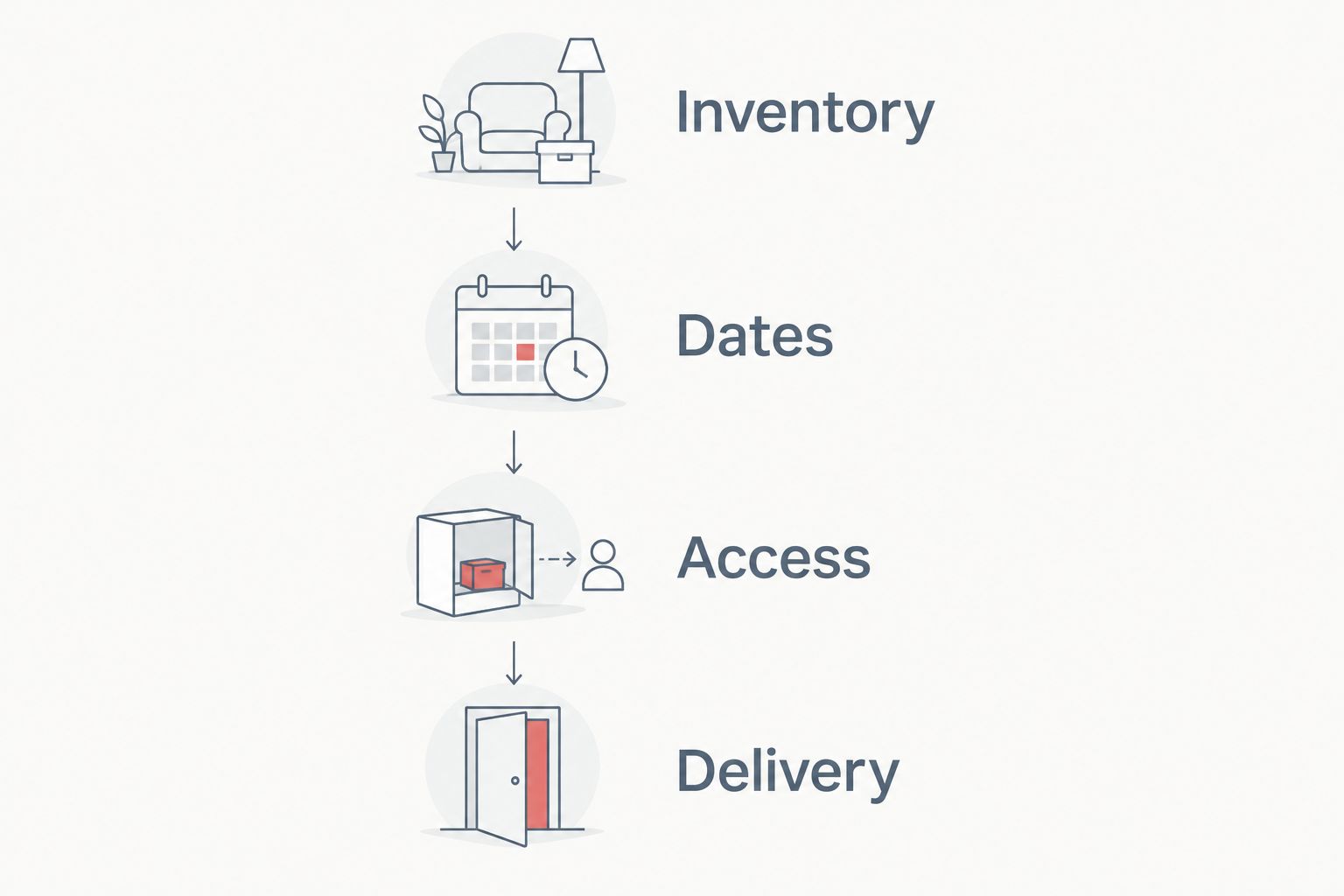
- Inventory. List furniture, packed boxes, fragile belongings, and anything requiring special handling. Identify what is moving directly to the destination and what is entering storage.
- Dates. Give the collection date, expected storage period, and intended delivery date. State clearly when a date is provisional.
- Access. Explain whether belongings can remain untouched or whether you expect to retrieve items during storage.
- Delivery. Provide the destination and building requirements when known. Ask how the provider will update the estimate when those details become definite.
Keep this information in a single document and send the same version to every provider. Comparing estimates built around different inventories will not tell you which service matches your needs.
Moving-company storage: best for a coordinated move
Moving-company storage is the arrangement to discuss when you want the move and storage handled within the same service plan. Confirm who collects the belongings, who stores them, and who delivers them afterward. Do not assume those responsibilities from the company name alone.
Cromontmoving is a fit for homeowners and businesses seeking moving and storage from the same provider. Its stated services also include full packing and white-glove service; request those explicitly if they belong in your scope.
The benefit is having a moving-and-storage service to evaluate together. The limitation is that storage access, retrieval arrangements, and delivery scheduling still require written confirmation. Offering storage does not, by itself, establish those terms.
Self-storage with separate movers: best for managing access yourself
Self-storage with separately arranged moving labor gives you distinct storage and transport agreements. This setup suits someone who wants to choose the facility and manage the relationship directly, provided the facility's access terms meet their needs.
The trade-off is coordination. You must align the movers with the facility's entry rules, loading arrangements, and your own schedule. Confirm who is responsible for placing items in the unit and removing them later.
Do not compare a facility-only quote with an estimate covering collection, storage, and delivery. Add the same service stages to both comparisons first.
Temporary storage between addresses: best for a defined gap
When your move-out and move-in dates do not align, organize the storage request around the gap between addresses. Explain which date is fixed and which remains uncertain. The estimate should address what happens if the gap changes.
The benefit is a plan tied to a specific transition. The drawback is that a delayed handover affects more than storage duration: it also changes the delivery plan you need to confirm.
For a 2026 move tied to a lease or closing, avoid treating the expected handover date as a guaranteed delivery appointment. Ask what notice the provider requires once the destination is ready.
Compare the arrangements by responsibility
| Arrangement | Best for | Main benefit | Main limitation |
|---|---|---|---|
| Moving-company storage | Coordinating moving and storage together | One service plan can address the complete route | Access and delivery terms need explicit confirmation |
| Self-storage with separate movers | Choosing and managing a facility directly | You select the storage agreement independently | You coordinate storage and transport separately |
| Temporary storage between addresses | Bridging a defined housing or office gap | The plan follows your transition dates | Changes to the gap require an updated delivery plan |
Choose the arrangement around your access needs and delivery responsibilities. The storage label alone does not tell you how the service works.
Why storage estimates vary
The details below define different jobs. Give each provider the same information before judging the estimates against one another.
- Inventory and space. Identify what actually enters storage. A room count does not describe furniture dimensions, packed contents, or items needing separate handling.
- Storage duration. State the expected start and end dates. Ask how billing works if you retrieve belongings earlier or extend the stay.
- Packing scope. Specify whether you pack everything, need selected items packed, or want full packing. Distinguish packing from loading and transport.
- Building access. Describe stairs, elevator arrangements, loading restrictions, and the route between the vehicle and your belongings. Ask which conditions the estimate assumes.
- Retrieval needs. Explain whether you need access during storage or only a final delivery. Request the process for retrieving a particular item.
- Destination and handling. Identify the delivery address, placement needs, and belongings requiring special care. Mark unresolved details rather than leaving the provider to infer them.
Ask what event would trigger a revised estimate. Written assumptions make it easier to distinguish a genuine change in scope from work that should have been discussed before collection.
What should you confirm before belongings enter storage?
Start with an inventory that both you and the provider can use. Match descriptions to recognizable items, and identify boxes by their contents or destination room. Photographs help document condition, but they do not replace the provider's written inventory or protection terms.
Next, separate belongings you need during the storage period. Keep essential documents, medication, keys, and immediate-use items with you rather than planning to retrieve them from packed storage.
Confirm these operational details before collection:
- How the provider records belongings entering storage.
- Which items the provider does not accept.
- How you request access, retrieval, or delivery.
- What notice and documentation those requests require.
- Who to contact if your destination or schedule changes.
- Which protection terms apply during each stage.
For the handoff from storage to your new address, use the storage access and moving-day delivery workflow to organize the questions that need answers before delivery.
Is storage included in a moving estimate?
Storage is included only when the written estimate includes it. A reference to moving and storage does not establish the storage period, packing scope, retrieval arrangements, or final delivery obligations.
For a 2026 estimate, ask the provider to identify the services included and the conditions attached to them. If a service is excluded, decide who will arrange it before accepting the plan.
Do you need access while your belongings are stored?
Choose your storage arrangement around whether you need access during the stay. If you expect to retrieve work equipment, seasonal belongings, or household essentials, explain that before requesting the estimate.
Ask whether you visit the facility, request staff retrieval, or arrange delivery. Those are different processes; do not assume the arrangement you used at another facility applies here.
How should you handle an uncertain delivery date?
Request written extension and delivery procedures before collection. Tell the provider what is uncertain, then ask how to confirm the final date and how the estimate changes when the storage period changes.
Keep your building's move-in arrangements separate from the storage agreement until both are confirmed. A ready apartment does not establish that the elevator, loading area, and delivery appointment are reserved.
Plan your move and storage
Discuss your inventory, packing needs, storage period, and delivery requirements.
FAQ
How much does storage cost for movers in NYC in 2026?
An NYC moving-and-storage total requires a quote for your inventory, storage period, and service scope. Ask for collection, packing, storage, retrieval, and final delivery to be identified separately so you can compare the complete job.
Is moving-company storage better than arranging self-storage?
Moving-company storage fits a coordinated moving-and-storage plan; separately arranged self-storage fits someone who wants to choose and manage the facility directly. Compare access arrangements and responsibility for transport before choosing.
Does Cromontmoving offer both moving and storage?
Cromontmoving offers residential and commercial moving and storage in New York, New Jersey, and Connecticut. Ask for a written scope covering the services and dates your move requires.
Can I get individual items out of storage?
Confirm the provider's retrieval process before placing belongings in storage. Ask how you identify an item, what notice is required, and whether retrieval involves separate handling or transport.
What happens if my move-in date changes?
Contact the provider to update the storage and delivery plan as soon as the date changes. Request written confirmation of the extension terms and the process for arranging a new delivery appointment.
Does a storage quote include packing and delivery?
Packing and delivery are included only when the written scope says so. Ask the provider to identify materials, loading, transport, unloading, and placement rather than relying on a general service description.
One last thing
Plan the first night at the destination before packing for storage. Identify the belongings you need first, label them clearly, and ask how the delivery plan will keep them accessible.
This is also a useful final check on the estimate. If you cannot explain how your belongings leave storage and reach the rooms where you need them, the service plan still needs clarification. Resolve that before collection, while you can change the packing and delivery instructions.