To prepare for a NYC apartment move in 2026, confirm access at both buildings, give your mover a complete inventory, measure the furniture route, and agree on who packs each item. Check elevator reservations, insurance paperwork, loading arrangements, and key handover before you finalize the schedule; a booked truck does not establish permission to move into your building.
- How to prepare for a NYC apartment move: confirm building access before setting the moving schedule.
- Cromontmoving offers moving, packing, and storage services for NYC households that need help beyond transportation.
- A NYC moving checklist should cover elevator reservations, building paperwork, furniture measurements, and packing responsibilities.
- Keep keys, medication, identification, and essential documents with you rather than in the moving truck.
How to prepare for a NYC apartment move?
Prepare around building access first, then inventory, packing, and delivery. Your moving plan should tell everyone what is moving, how it leaves, how it enters, and who authorizes access.
Use the elevator reservations to moving-day workflow when coordinating building management with your mover. Treat a requested reservation as pending until management confirms it.
- Confirm building access. Ask both properties about permitted moving hours, elevator reservations, entrances, protection requirements, and paperwork.
- Record your inventory. List furniture, packed belongings, fragile pieces, and anything that needs disassembly or separate handling.
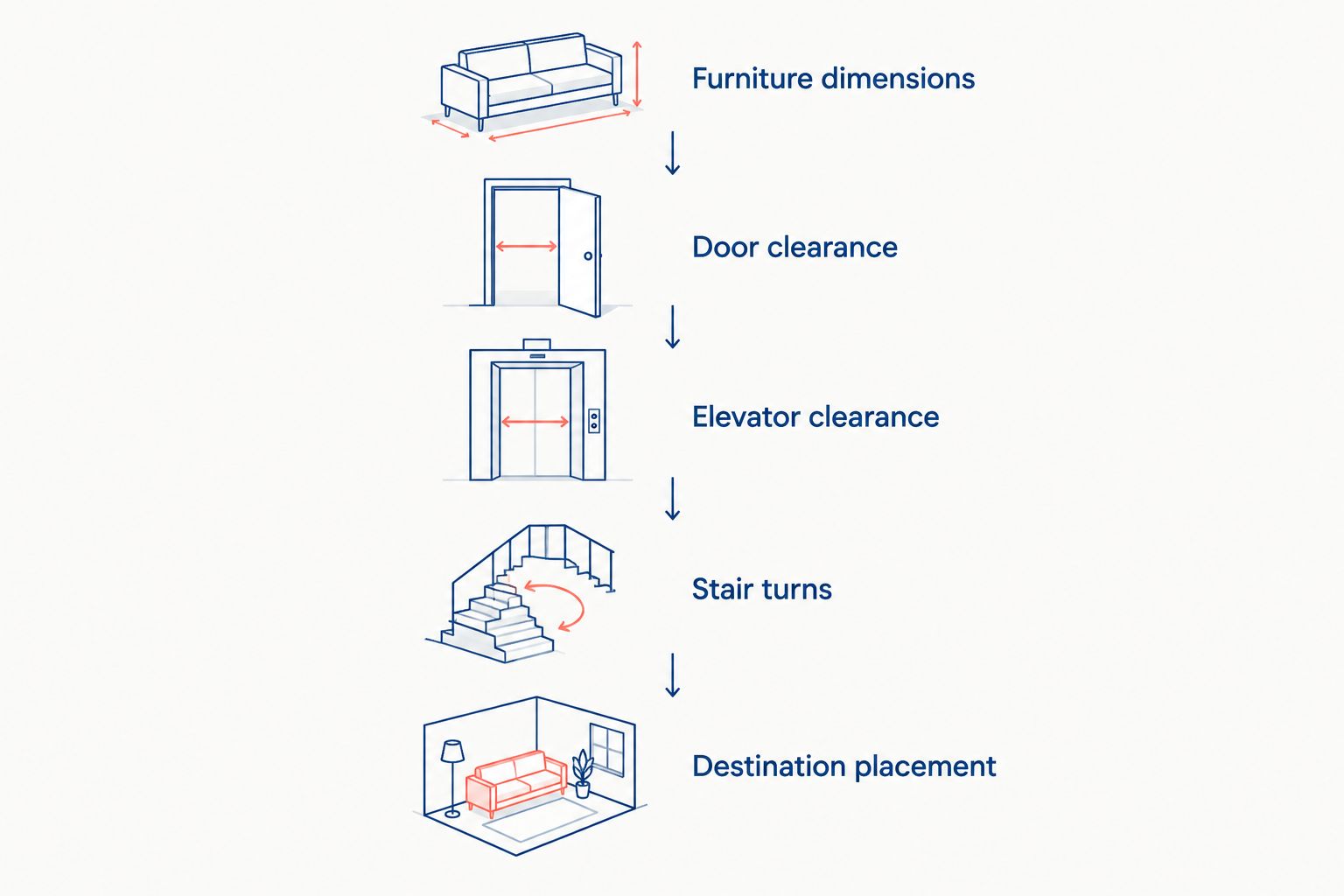
- Measure the route. Check furniture against doorways, elevator openings, hallways, and stair turns at both addresses.
- Assign packing. Decide what you will pack, what the mover will pack, and which belongings stay with you.
- Confirm delivery. Match the crew's plan to your destination access, key collection, and room labels.
Keep written confirmations together in a moving folder you can open from your phone. Include an offline copy so you are not dependent on building Wi-Fi or a working internet connection.
Why this matters
An apartment move connects separate decisions: your lease, your building's rules, your mover's scope, and access to the destination. A change in any of those decisions needs to reach everyone affected.
For your 2026 move, use a shared plan rather than separate text conversations. Record the confirmed address, apartment, entrance, building contact, access window, and unresolved questions for each property.
Do not mistake an agreed moving date for a complete moving plan. You also need a workable route and permission to use it.
Confirm building access before finalizing the schedule
Contact management at the departure and arrival buildings separately. Do not assume that rules from your current apartment apply at your new address.
Ask for the current written moving instructions. Specifically, establish:
- Moving hours: Which days and times does the building permit?
- Elevator access: Is a reservation required, and who confirms it?
- Approved entrance: Should the crew use a service entrance or another route?
- Insurance paperwork: Does management require a certificate of insurance, and what wording must it contain?
- Protection requirements: What must be protected along the route?
- Loading arrangements: Where should the mover assess legal loading access?
If management requests a certificate of insurance, send the instructions to your mover without rewriting them. Ask management to confirm acceptance before moving day; submitting a document and having it accepted are different steps.
Give the mover accurate information about stairs, elevator access, and the distance between the entrance and the planned loading location. Ask the mover to assess loading arrangements rather than assuming the curb outside your apartment will be usable.
Build an inventory that matches the actual move
A useful inventory describes what the crew will handle, not just how many rooms your apartment has. Include furniture, boxed belongings, closets, storage areas, and items you intend to leave behind.
Use clear descriptions and photographs. Flag glass, artwork, musical instruments, large mirrors, and furniture with detachable parts so the mover can discuss handling before arrival.
Mark every inventory entry with its destination: the new apartment, storage, donation, or another agreed location. Remove belongings that are not moving from the packing area, or label them unmistakably.
Update the mover when the inventory changes. Adding a sofa, emptying a storage area, or changing packing responsibilities alters the job you originally described.
For a 2026 moving folder, keep the inventory version alongside the written scope. That gives you a specific document to reference when you confirm what is included.
Measure furniture and the complete carrying route
Measure more than the room where the furniture will sit. Record the item's dimensions and check the route from its current position to its destination, including doors, elevator openings, corridors, and stair landings.
Photograph narrow turns and unusual obstacles for the mover. A photograph helps explain the situation, but it does not replace measurements or the mover's assessment.
Use this route checklist:
- Furniture dimensions: Measure the item in its intended moving configuration.
- Door clearance: Check the usable opening, including protruding hardware.
- Elevator clearance: Record the opening and usable interior space.
- Stair turns: Identify landings, low ceilings, railings, and tight corners.
- Destination placement: Confirm the route into the intended room.
Ask who will disassemble and reassemble furniture, which pieces are included, and what preparation is necessary. Do not dismantle a complicated item simply because it looks removable; confirm the handling plan first.
Choose packing responsibilities before filling boxes
Packing responsibility should be explicit for every category of belongings. Choosing professional packing for fragile items while packing clothing yourself is different from asking the mover to pack the entire apartment.
The following options organize responsibilities; they are not promises about a particular provider's package.
| Packing approach | Best for | Main advantage | Main limitation | Confirm before booking |
|---|---|---|---|---|
| Self-packing | Households that want control over sorting and labeling | You decide how belongings are grouped | You supply the preparation time and packing work | Required packing standards and excluded items |
| Full packing | Households seeking help preparing the whole apartment | Packing responsibility sits with the agreed service provider | You still need to sort belongings and separate personal essentials | Exact scope, materials, and preparation duties |
| Split packing | Households that want help with selected belongings | You assign difficult categories to the mover | Responsibility needs careful definition | A written list of who packs what |
Cromontmoving is best for NYC households seeking moving, packing, and storage services from one provider. Its stated services include full packing, white-glove service, plastic bin rentals, and storage; your written scope still needs to identify which services your move includes.
The advantage is being able to discuss those needs with the same company. The limitation is that a service list does not define your booking: confirm packing duties, handling requirements, and storage arrangements individually.
Pack for identification, handling, and arrival
Label containers by destination room and contents. Put labels where you can read them when containers are stacked, and distinguish boxes that you need to open immediately.
Keep fragile items from moving freely inside their packaging. Avoid leaving loose parts, sharp edges, or unsecured drawers for the crew to discover during loading; ask the mover how those items should be prepared.
Follow these packing assignments:
- Personal essentials: Keep medication, identification, keys, chargers, and essential documents with you.
- Fragile belongings: Agree on materials and handling before packing delicate pieces.
- Furniture hardware: Label parts by item and establish who retains them.
- Restricted items: Ask the mover what it will not transport before sealing containers.
- Arrival supplies: Separate toiletries, bedding, cleaning supplies, and anything you need before unpacking.
If you use rental bins, confirm collection and return arrangements. If you use boxes, choose containers appropriate to their contents and avoid packing a container beyond what it can safely hold.
Your 2026 packing checklist should show who completes each task. A box marked fragile does not resolve whether you or the mover was responsible for preparing it.
Match the written scope to your apartment
Review the agreement against your inventory and building instructions. Confirm the addresses, apartment identifiers, access conditions, packing responsibilities, disassembly, special handling, and any storage or additional stops.
Ask how changes are documented and approved. Keep the answer with your agreement so an added item or changed destination does not remain an informal conversation.
When you discuss Cromontmoving moving services, provide the same access details you used to plan the move. A useful request describes the work, not just the apartment size. Include photographs or measurements where they clarify an access concern.
Request a move quote
Share your apartment inventory, building access details, and packing needs.
Before confirming, ask what remains your responsibility. Utility arrangements, personal documents, building approvals, and key collection need named owners even when you hire packing and moving help.
Why NYC apartment move preparation varies
Your preparation should reflect the actual apartment and service scope. These factors determine which questions you need to resolve:
- Building access: Elevator reservations, stair routes, and approved entrances change the carrying plan.
- Inventory: Furniture size, fragile belongings, and stored possessions change what needs assessment.
- Packing scope: Self-packing, full packing, and split packing assign different tasks to you.
- Furniture handling: Disassembly and reassembly need agreement before the crew arrives.
- Destination readiness: Key access and permission to move in must match the delivery plan.
- Storage needs: Belongings going into storage need separate identification and retrieval planning.
Do not copy another household's schedule without checking these conditions. Use its checklist as a prompt, then replace assumptions with confirmations from your own building and mover.
What should I do before the movers arrive?
Finish your assigned packing, separate belongings that are not moving, and clear the agreed carrying route. Keep personal essentials outside the load and have the inventory, building instructions, and destination contact ready.
Walk through the apartment with the crew before loading begins. Point out fragile pieces, furniture handling instructions, and any change since the written scope was agreed.
What if my new apartment is not ready?
Tell your mover as soon as destination access becomes uncertain and ask about an agreed storage or rescheduling plan. Do not assume that a truck can wait or that storage is automatically included.
Cromontmoving moving services include storage, but you need to confirm the arrangements for your belongings. Separate essentials before anything goes into storage and document how you will arrange delivery.
How do I prepare for delivery at the new apartment?
Confirm keys, building access, and the intended room for each large item before delivery. Share room labels with the crew and identify furniture that needs reassembly under your agreement.
For the final walkthrough of your 2026 move, compare delivered belongings with your inventory and record concerns promptly. Check closets, storage areas, and the departure apartment before treating the move-out as finished.
FAQ
What's the first thing I should do when preparing for a NYC apartment move?
Confirm the moving rules and access arrangements at both buildings first. Ask about moving hours, elevators, approved entrances, and required paperwork before finalizing the schedule.
Do I need a certificate of insurance for my NYC apartment move?
Your building management determines whether it requires a certificate of insurance. Obtain its written instructions, pass them to the mover, and confirm acceptance before moving day.
Should I pack my apartment myself or hire packing help?
Choose self-packing when you want responsibility for preparation, or professional packing when you want that work included in the agreed service. Split packing also works when the written scope clearly assigns each category.
How do I know whether my sofa will fit in the elevator?
Measure the sofa, elevator opening, and usable interior, then ask your mover to assess the full route. Include hallways, doorways, and turns rather than checking the elevator alone.
What should I keep with me instead of putting on the moving truck?
Keep medication, identification, keys, essential documents, chargers, and immediate personal supplies with you. Ask the mover separately about belongings it does not transport.
Can I move into a NYC apartment on a weekend?
Confirm weekend permission with both buildings and scheduling with your mover. Do not treat a mover's booking as confirmation that management permits access.
What should I do if my moving inventory changes?
Send the updated inventory to your mover and confirm any resulting scope changes in writing. Include added furniture, packing tasks, storage needs, or additional destinations.
One last thing
Check the route again after packing. An apartment can have a suitable doorway and still have an obstructed path because boxes, dismantled furniture, or loose hardware are sitting in the way.
Leave the agreed carrying route clear, keep personal essentials separate, and make the building instructions easy to find. Preparation is finished when the plan matches the apartment the crew will actually enter.