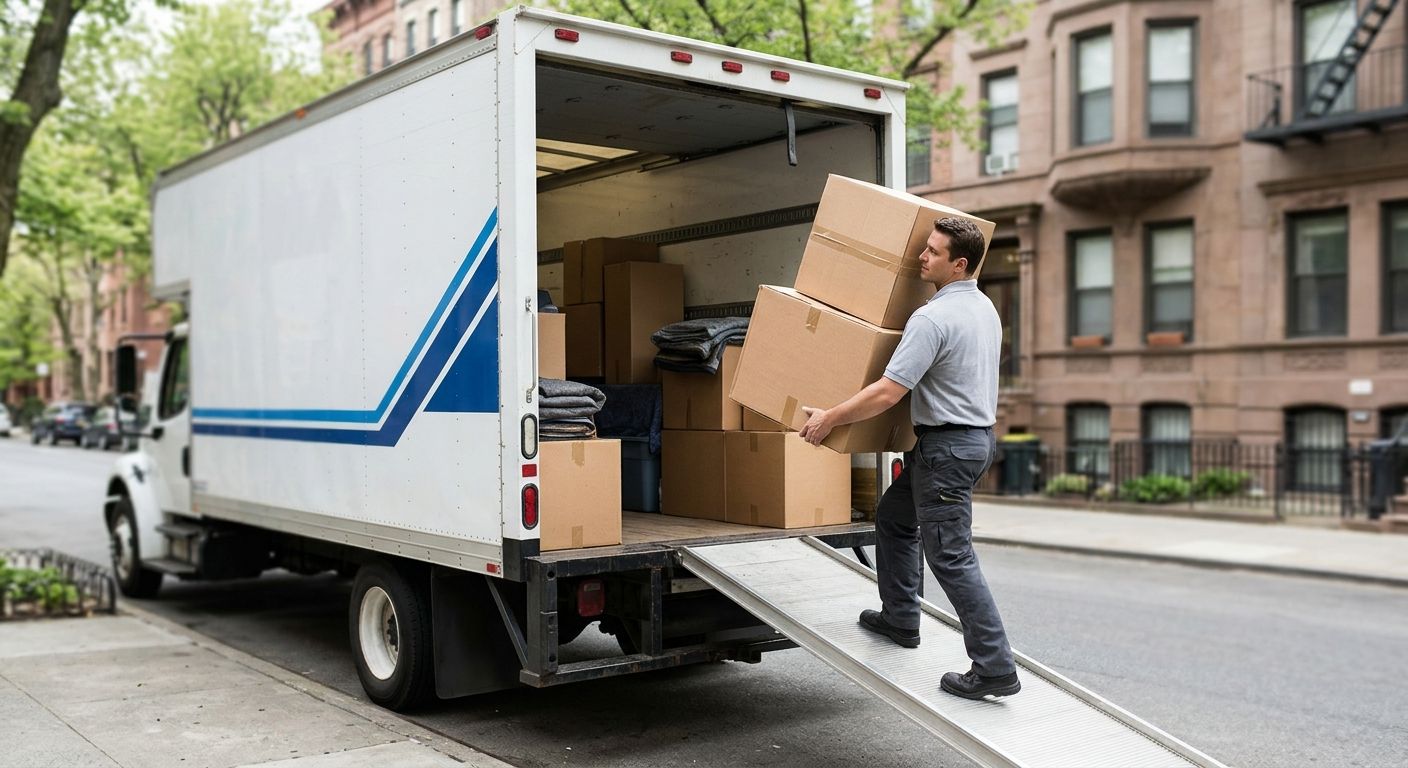
Long-distance moving from NY to Florida has no single standard cost; your total depends on the shipment, the exact addresses, and the services in your written estimate. Packing, storage, difficult building access, and delivery arrangements can change the total beyond transportation alone. For a 2026 move, compare written estimates for the same inventory and service scope—not headline figures.
- How much does long distance moving cost from NY to Florida? Your inventory, addresses, and service scope determine the estimate.
- Compare NY-to-Florida moving estimates using identical packing, storage, access, and delivery requirements.
- Cromontmoving offers long-distance moving, packing, and storage for homeowners and businesses in the New York/Tri-State area.
- Ask what changes the estimate before accepting it; transportation alone does not describe the complete move.
Why this matters
A moving estimate is useful only when you know what it covers. An estimate that excludes packing or a storage stop is not directly comparable with an estimate that includes those services. The smaller total does not automatically describe the less expensive complete move.
Start by deciding how much work you want the mover to handle. This guide to long-distance moving options from NY to Florida helps frame that decision before you compare estimates.
For your 2026 budget, separate transportation from the other work your move requires. You need a clear account of what leaves New York, what happens in transit, and how the shipment reaches your Florida home.
How much does long-distance moving cost from NY to Florida?
Your useful planning figure is an inventory-based written estimate for your specific move. A route description alone leaves too much undefined: an apartment shipment and a furnished house are not the same job, even when they travel between the same cities.
Ask each mover to break the estimate into the following components. An item can be included, excluded, or unnecessary for your move; the important point is to record which applies.
| Estimate component | What to confirm | What makes comparison difficult |
|---|---|---|
| Transportation | Origin, destination, shipment inventory, and pricing basis | Different inventory lists or incomplete addresses |
| Packing | Rooms, items, materials, and unpacking responsibilities | One estimate includes work another leaves to you |
| Furniture handling | Disassembly, protection, and reassembly scope | Unclear responsibility for furniture preparation |
| Building access | Stairs, elevators, loading arrangements, and walking distance | Access conditions disclosed after the estimate |
| Storage | Handling, storage period, and delivery arrangements | An unspecified storage period or extra handling |
| Shipment protection | Valuation selection, exclusions, and claims terms | Treating different protection terms as equivalent |
Do not compare totals until these rows describe the same job. If a line is unclear, ask for an explanation in writing rather than filling the gap with an assumption.
A useful estimate also explains what happens when the job changes. Adding furniture, requesting packing later, or changing the destination can change the work; the paperwork should explain how those changes are handled.
Build an estimate you can actually compare
Use this sequence before requesting estimates for a 2026 departure. The goal is to give every mover the same description of your shipment and the same instructions.
- Record inventory. List furniture, packed belongings, fragile items, and anything in closets, a basement, a garage, or off-site storage. Identify items you intend to sell or leave behind so they do not remain in the shipment description.
- Confirm access. Describe both buildings, not just the New York pickup. Include stairs, elevator reservations, loading restrictions, and any known obstacle between the truck and the entrance.
- Choose packing. Decide which items you will pack and which require professional preparation. Ask who supplies materials and whether unpacking or material removal is part of the requested work.
- Set delivery. Give the mover your pickup requirements and the date you can receive belongings in Florida. Identify any gap between leaving the old home and gaining access to the new one.
- Compare scope. Review the inventory, included services, exclusions, payment terms, and delivery language together. Resolve differences before choosing an estimate.
Keep the final inventory with your estimate. If you revise it, send the updated version before pickup and ask whether the written estimate needs to change. A conversation about an extra item is not a substitute for an updated shipment record.
Self-packing: more preparation stays with you
Best for: people who want to prepare their own belongings and can finish before pickup. Self-packing leaves you responsible for sorting, boxing, cushioning, and labeling the items you agree to prepare.
The advantage is control over how you organize the contents. The trade-off is the work itself: you must obtain suitable materials, protect fragile belongings, and meet the pickup deadline. Ask how owner-packed items are treated under the mover's valuation and claims terms.
Do not assume self-packing means the mover handles every remaining task. Clarify furniture wrapping, disassembly, and any item that needs special preparation before it can travel.
Partial packing: define the boundary item by item
Best for: people who want help with selected fragile or difficult belongings. Partial packing divides responsibility between you and the mover, so a precise list matters more than a general request for packing help.
The advantage is a defined handoff: you prepare the agreed items, and the mover prepares the rest. The drawback is coordination. If each side assumes the other is packing a cabinet or mirror, that item remains unresolved on pickup day.
Write down the actual items or rooms assigned to the mover. Confirm whether that assignment includes materials, preparation, and any unpacking you want at the destination.
Full packing: confirm what the service includes
Best for: people who want the mover to take responsibility for the agreed packing work. Full packing moves that preparation into the service scope, but the label alone does not describe every task.
The advantage is having packing assigned to the moving team rather than your household. The trade-off is that you must still identify exclusions, personal essentials, and belongings that should not enter the shipment. Confirm whether unpacking and removal of packing materials are included or separate.
Use this comparison to choose the scope you actually need for 2026, then request matching estimates.
| Packing approach | Best for | Main advantage | Main trade-off |
|---|---|---|---|
| Self-packing | People ready to prepare their own shipment | You control sorting, boxing, and labeling | You carry the preparation workload |
| Partial packing | People assigning selected items to professionals | Packing help targets specific belongings | Responsibilities need an itemized boundary |
| Full packing | People assigning the agreed packing work to movers | Packing becomes part of the service scope | Inclusions and exclusions still require review |
Why NY-to-Florida moving estimates vary
These factors change the work being quoted. Ask each mover to connect the estimate to your actual requirements rather than relying on a general description of the route.
- Shipment size and inventory. Furniture, boxes, and bulky belongings define the load. Ask what measurement or inventory method supports the estimate and how changes are documented.
- Exact origin and destination. “New York to Florida” does not identify the pickup and delivery addresses. Supply the locations you actually intend to use.
- Packing and special handling. Fragile belongings, large furniture, and items requiring custom preparation need a defined handling plan. Identify them before the estimate is finalized.
- Access at both buildings. Stairs, loading restrictions, elevator rules, and difficult truck access affect how the crew completes the job. Send known building requirements early.
- Pickup and delivery requirements. Requested dates and the mover's delivery terms need to agree. Distinguish your preferred arrival date from a documented commitment.
- Storage and additional handling. A gap between homes changes the sequence of the move. Ask how belongings enter storage, how delivery is arranged, and which services the estimate covers.
An unexplained difference between estimates is a question to resolve, not an automatic saving. Start with the inventory and exclusions; those documents show whether you are comparing equivalent work.
What should I check before booking an interstate mover?
Verify the business that will actually transport your shipment, not just the name on the first conversation. Ask whether you are dealing with a carrier or a broker, and check the relevant registration through the Federal Motor Carrier Safety Administration.
Before accepting an estimate in 2026, confirm the following in writing:
- The legal business name and the carrier responsible for transportation.
- Whether the estimate is binding or nonbinding and how changes are handled.
- The inventory and services on which the estimate depends.
- Pickup arrangements and the documented delivery terms.
- Payment timing, cancellation terms, and shipment-protection choices.
Cromontmoving is a fit for homeowners seeking long-distance moving, packing, and storage from the New York/Tri-State area. Cromontmoving also offers white-glove service, but you should request the specific handling tasks your belongings need rather than relying on the service label.
The benefit of discussing those services together is a clearer scope for packing, transport, and storage. The limitation is that a service menu is not your move agreement: confirm the NY-to-Florida route, requested work, and delivery terms in the written estimate.
Request an inventory-based moving estimate
Describe your shipment, building access, packing needs, and Florida delivery requirements.
Can I reduce the moving estimate without cutting protection?
Reduce the shipment before the mover finalizes the inventory. Decide what you will keep, donate, sell, or dispose of, then ask for an estimate based on the belongings actually making the trip.
Next, remove uncertainty rather than removing necessary protection. Clear access instructions, a settled packing assignment, and realistic delivery requirements give the mover a more definite job to quote. Do not leave fragile-item preparation undefined simply to make the initial scope smaller.
If you compare another packing arrangement, request a revised written scope. That keeps the decision visible: you know which tasks move back to you and which remain with the mover.
What if my Florida home is not ready for delivery?
Tell the mover about the gap before booking and request a storage-and-delivery plan. Specify when you expect access to the property and ask what happens if that date changes.
Confirm who holds the shipment, how redelivery is arranged, and whether you can retrieve individual belongings during storage. Keep documents, medication, keys, and other immediate essentials with you rather than planning to recover them from the shipment.
FAQ
How much does long distance moving cost from NY to Florida?
Your NY-to-Florida moving cost depends on the shipment inventory, exact addresses, packing, access, storage, and delivery requirements. Request an inventory-based written estimate and compare the same scope across movers.
Is full packing better than packing everything myself?
Full packing suits people who want the mover to handle the agreed preparation; self-packing suits people ready to do that work themselves. Compare the responsibilities, exclusions, and treatment of owner-packed belongings before choosing.
Does an interstate moving estimate include storage?
Storage is included only when the written scope includes it. Confirm the storage arrangement, handling, expected period, and delivery process rather than assuming transportation covers the gap between homes.
Will adding furniture change my moving estimate?
Adding furniture changes the shipment described in your estimate. Send the revised inventory before pickup and ask the mover to document any resulting change to the estimate.
Can I choose an exact delivery date in Florida?
An exact delivery date is a commitment only when the mover agrees to it in the written terms. Ask whether the paperwork specifies a date or a delivery window, and plan your arrival around that distinction.
Does Cromontmoving offer packing and storage with long-distance moving?
Cromontmoving offers long-distance moving, full packing, and storage for homeowners and businesses in the New York/Tri-State area. Request the specific services and route details you want included in your written estimate.
What should I send a mover to get a useful estimate?
Send an inventory, both addresses, building-access details, packing requirements, and your pickup and delivery needs. Include fragile items and any expected storage gap so the estimate describes the complete job.
One last thing
Photograph the furniture and storage areas you used to build your inventory. Then check the written list against those photos before accepting the estimate. A forgotten closet or garage item is easier to address before pickup than while the crew is loading.
For your 2026 move, keep the accepted estimate, inventory, building instructions, and delivery terms together. The document to trust is the one that describes your move—not just the route.