
Instead of manually reconciling closing emails with truck reservations, build your closing date moving day schedule around confirmed possession, building access, and a written mover update. Reserve a provisional moving window, but authorize delivery only after your real estate representative confirms when you can take possession and your building confirms access.
- Your closing date moving day schedule should follow confirmed possession, not just the closing appointment.
- CroMont Moving & Storage fits NY, NJ, and CT homeowners seeking moving and storage services from one company.
- Keep closing, key handoff, elevator access, and delivery as separate calendar entries.
- Choose direct delivery only when possession and building access align; otherwise, plan a storage handoff.
Why this matters
A closing appointment and permission to move in are different checkpoints. Signing documents does not, by itself, tell your moving crew when the seller will leave, when keys will reach you, or when your building will admit a truck.
CroMont Moving & Storage is best for NY, NJ, and CT homeowners who want moving and storage services from one company. Its moving and storage services cover both needs; your closing team still determines possession, and your building controls its own moving access.
For your 2026 move, use one shared schedule with separate entries for closing, possession, pickup, and delivery. Connecting those entries means recording their dependencies—not treating them as interchangeable dates.
Before you start
- Gather transaction access: Have your contract’s possession provisions, closing contact, seller handoff contact, and written updates from your attorney or real estate representative. Ask that representative to explain any possession language you do not understand.
- Gather moving access: Have your mover’s booking details, inventory, origin departure deadline, destination building rules, and the contact responsible for elevator reservations or insurance documentation.
- Resolve the hidden dependency: Confirm whether possession starts at closing or under a separate arrangement. A scheduled closing does not replace permission to enter; an elevator reservation does not grant possession either.
You do not need specialized software. A shared calendar and a document or spreadsheet are enough. The worksheet labels below are suggested labels you create, not buttons in a particular application.
Your closing and possession record
Start by separating the legal handoff from the physical move. Build your 2026 schedule around written confirmations rather than assumptions passed between phone calls.
- Create the master record. Add fields labeled Closing appointment, Possession authorization, Key handoff, Origin departure deadline, Pickup window, and Delivery window. Record a date, time, responsible contact, and confirmation status for each.
- Identify the possession authority. Ask your attorney or real estate representative who will confirm that you are entitled to occupy the property. Record that person under Possession contact.
- Document the handoff condition. Ask what must happen before possession begins and how you will receive confirmation. Do not translate a lender update or a scheduled signing into a moving authorization yourself.
- Separate keys from permission. Record who provides keys, how you receive them, and whether any agreed occupancy arrangement affects entry. Ask your representative to resolve discrepancies before you dispatch delivery.
- Add an open-issues field. List unresolved items such as seller departure, building approval, or access arrangements. Assign an owner to each issue so an unanswered question does not disappear inside an email thread.
Expected result: You can point to a specific possession confirmation and a named contact, rather than relying on the closing appointment as your only reference.
A useful test is simple: if the closing appointment moves, can you immediately identify which moving entries need review? If not, the record still contains disconnected dates.
Your building and mover reservations
Possession answers whether you can enter. Building rules and the mover’s agreed schedule answer whether delivery can happen during your preferred window.
- Collect both buildings’ requirements. Ask origin and destination management about permitted moving hours, loading access, elevator reservations, and required insurance documentation. Record the actual rules instead of applying one building’s instructions to both addresses.
- Request a provisional moving window. Give the mover your inventory, addresses, closing target, possession conditions, and known restrictions. Ask how schedule changes work under your booking agreement; do not assume a reservation can move without consequences.
- Separate pickup from delivery. Enter each window independently. Note whether the booking covers direct delivery or a storage handoff, and ask the mover to confirm the agreed arrangement in writing.
- Check the whole route. Compare loading access at the origin with unloading access at the destination. Tell the mover about stairs, restricted entrances, and elevator limits before the schedule is finalized.
- Resolve access conflicts. If your proposed delivery falls outside the building’s permitted window, revise the delivery plan rather than hoping the crew can work around the restriction.
Expected result: Your proposed move fits the possession arrangement, both buildings’ rules, and the mover’s written booking terms.
Use the elevator reservations to moving day workflow when your building requires a reserved service elevator. Keep that reservation linked to delivery, not merely to the closing date.
Your delivery release checklist
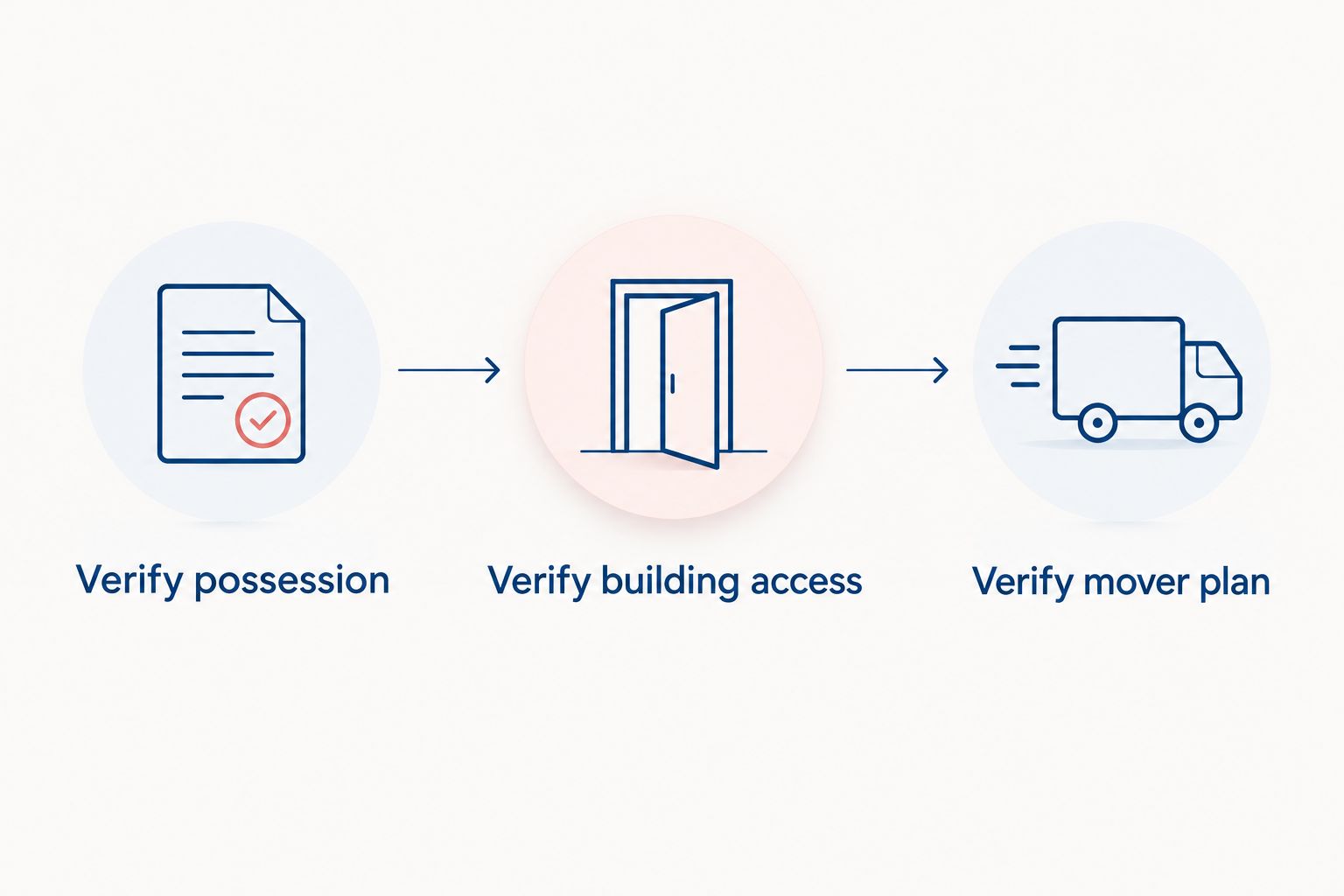
Use 3 release checks: possession, building access, and mover confirmation. These are planning checkpoints, not a promised closing timeline.
- Verify possession. Obtain the confirmation your real estate representative identified. Record who confirmed it and when; if the position is unclear, return the question to that representative.
- Verify building access. Confirm the delivery window, required paperwork acceptance, and entry instructions with the building’s responsible contact. Keep the confirmation available to whoever will meet the crew.
- Verify the mover’s plan. Send the confirmed address, access window, receiving contact, and any changed instructions. Ask the mover to acknowledge the delivery arrangement in writing.
- Publish one current version. Mark the record Confirmed delivery only after those checks are complete. Label older calendar entries as superseded so nobody follows an obsolete appointment.
- Prepare the arrival handoff. Decide who will meet the crew, provide entry, and identify rooms. Keep essential documents, medication, keys, and chargers with you rather than inside the shipment.
Expected result: Everyone responsible for arrival is working from the same authorized delivery window and access instructions.
For a 2026 closing, keep 1 master record rather than separate competing schedules. Calendar reminders help people act, but the record should identify which confirmation each appointment depends on.
Your closing-change update
A changed closing appointment should trigger a review, not an automatic truck reschedule. The possession arrangement, origin deadline, and building reservation determine what actually needs to change.
- Record the change. Update Closing appointment and note who supplied the revised information. Leave unresolved possession or delivery fields marked as awaiting confirmation.
- Check affected dependencies. Ask your representative whether possession changes. Then check the origin departure obligation, building reservations, and mover agreement separately.
- Request revised arrangements. Contact the mover and building manager with the specific change. Ask for written confirmation of the revised plan before replacing an agreed window.
- Notify the full handoff group. Send the current record to the receiving contact, mover, building contact, and anyone helping you leave the origin. State what changed and what remains unchanged.
Expected result: A closing change produces a controlled update, not conflicting instructions or an unapproved arrival.
When pickup must happen before possession
Use a storage handoff when you must leave the origin before you can receive belongings at the destination. Do not treat a loaded truck as an agreed waiting arrangement; discuss the gap with your mover before pickup.
Choose between these 2 workflows based on confirmed access, not convenience alone:
| Workflow | Best for | Advantage | Limitation | Release condition |
|---|---|---|---|---|
| Direct delivery | Households with confirmed possession and a matching delivery window | Avoids an intermediate storage handoff | Requires origin, destination, and mover schedules to align | Possession and building access confirmed |
| Storage handoff | Households whose departure deadline comes before destination access | Separates leaving the origin from entering the new home | Adds storage arrangements and a separate delivery coordination step | Storage instructions confirmed before pickup; destination access confirmed before final delivery |
Choose direct delivery only when the required access windows align. Choose a storage handoff when the dates do not align and the mover confirms the arrangement.
CroMont Moving & Storage offers moving and storage services, but that service scope does not determine your transaction’s possession terms. Confirm handling instructions, storage terms, and delivery arrangements for your own booking.
For a storage handoff, identify belongings you need during the gap before packing begins. Keep documents and daily essentials separate, and tell the mover which items require special handling. Arrange your own accommodation independently of the shipment’s storage plan.
Troubleshooting your moving schedule
Closing is confirmed, but possession is unclear
Hold destination delivery instructions until your representative resolves possession. Ask exactly when you can occupy the property and what confirmation establishes that permission. A closing invitation alone is not the answer.
Possession is confirmed, but the elevator window conflicts
Contact building management and the mover before selecting a replacement delivery window. Keep pickup and delivery separate while you resolve the conflict. Do not instruct a crew to arrive outside the building’s approved moving hours.
You must leave the origin before the new home is accessible
Ask the mover to document a storage handoff or another agreed shipment plan before pickup. Separately arrange where you and your household will stay. Neither need should depend on an unconfirmed same-day handoff.
Different people have different dates
Send a single update identifying the current pickup, possession, and delivery entries. Ask recipients to acknowledge changes affecting their responsibilities. Remove or clearly mark obsolete calendar events instead of leaving both versions active.
The destination is accessible, but belongings are still in storage
Request delivery under the storage and moving arrangements you agreed to. Confirm the destination’s access rules again before accepting a proposed window; possession does not create an elevator reservation or finalize the mover’s schedule.
Customize your workflow
Build your 2026 moving checklist around the handoffs your household actually needs. Add packing, specialty-item handling, plastic bin rentals, or storage only when those services belong in your plan.
CroMont Moving & Storage offers full packing, white-glove service, plastic bin rentals, and storage alongside moving services. The advantage is a service scope that can cover several moving tasks; the boundary is that closing authorization and building approvals remain separate responsibilities.
Assign a named owner to every handoff. Your closing contact confirms possession, your building contact confirms access, and your mover confirms shipment arrangements. One household coordinator can maintain the record without taking over those decisions.
FAQ
Can I schedule moving day for my closing date?
Schedule same-day delivery only when possession, building access, and the mover’s agreed window align. A closing appointment alone does not establish all of those conditions.
What is the best closing date moving day schedule?
The best closing date moving day schedule keeps closing, possession, pickup, and delivery separate until their dependencies are confirmed. Use direct delivery when access aligns and an agreed storage handoff when it does not.
Do I get the keys as soon as I sign closing documents?
Your transaction’s agreed handoff determines when you receive keys and can take possession. Ask your attorney or real estate representative to confirm the arrangement rather than treating signing as automatic permission to enter.
What should I tell my mover if closing is delayed?
Tell your mover the revised closing information, whether possession is confirmed, and which access windows are affected. Request written confirmation of any changed pickup, storage, or delivery arrangement.
Is storage better than moving directly after closing?
Storage is the better fit when you must leave the origin before you can receive delivery at the destination. Direct delivery avoids an intermediate handoff when possession and building access already align.
Who should coordinate my closing and moving schedule?
Assign one household coordinator to maintain the shared schedule. Your real estate representative, building contact, and mover should each confirm the decisions within their responsibility.
What should I recheck before a 2026 closing-day move?
Recheck possession authorization, key handoff, building access, and the mover’s written delivery arrangement. Keep essentials with you and make sure the receiving contact has the current instructions.
One last thing
The most useful moving-day field is not the date—it is who confirms it. Put a named contact beside every unresolved checkpoint in your 2026 schedule. That turns a calendar entry into an actionable handoff.